GemVoyage Team • World
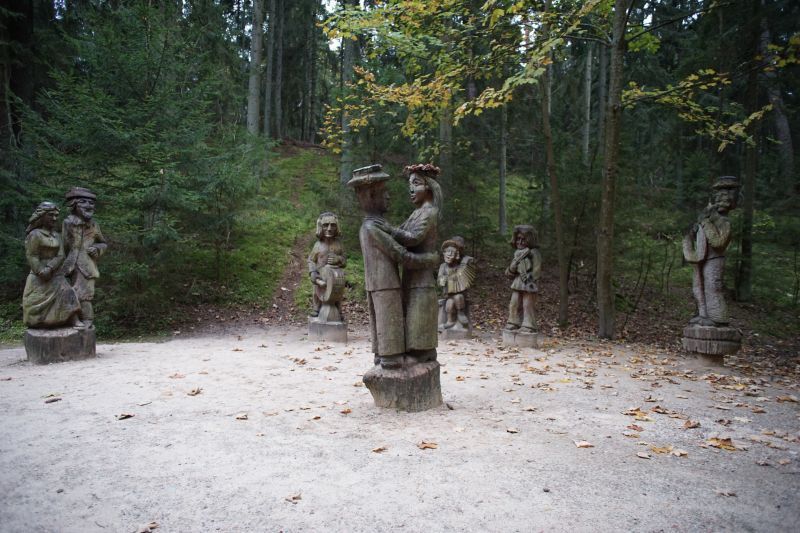
Little-known facts: many sculptures are replaced or restored periodically because of the coastal weather; the site has also hosted temporary contemporary art installations connecting modern voices to age-old tales. Additionally, the hill was intentionally designed to blend with the natural dune and forest so that the art feels like an organic part of the landscape rather than an imposition.
The site is both poetic and family-friendly, with hauntingly beautiful carvings that are approachable for children while thought-provoking for adults. Seasonal cultural events sometimes include storytelling evenings and folklore workshops.
How to get there: Neringa is reachable by ferry or car via Klaipėda and then over the Curonian Spit road; public buses connect Klaipėda with Nida and other Spit settlements. From Juodkrantė center, the Hill of Witches is an easy walk along marked paths.
Q: Are the sculptures original?
A: Many are original but are periodically replaced or restored due to weathering.
Q: Is there an entrance fee?
A: There may be a modest fee for some event programs, but the site is generally free to visit.
Q: Can I bring children?
A: Yes—children usually enjoy the sculptural storytelling.
Discover more hidden gems you might love.
Nida
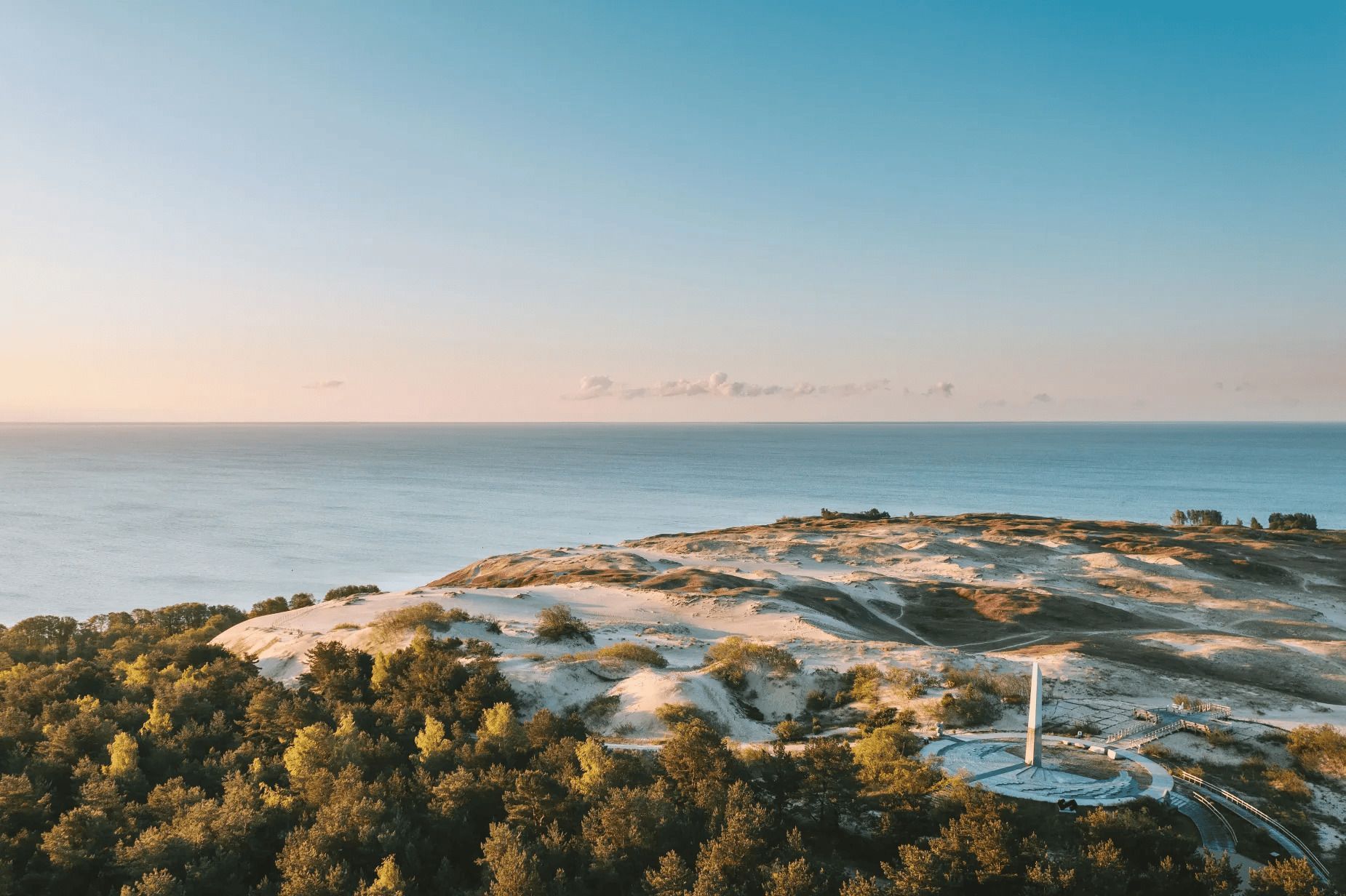
## Description The Parnidis Dune sundial on the Curonian Spit is an elegant meeting point of coastal geology and human curiosity. Carved into a prominent dune ridge near Nida, the sundial uses a simple stone gnomon and stone markers to register the sun’s arc across the sky, while the dune itself provides sweeping views over the Curonian Lagoon and the Baltic Sea. The combination of sculpted sand, long sightlines, and the shifting play of light makes the site both visually stirring and quietly contemplative. Visitors encounter an open landscape shaped by wind and water: dunes that migrate slowly with prevailing winds, vegetation adapted to sandy, saline conditions, and an expansive horizon where sky and water blend. The sundial is part functional instrument, part landscape sculpture: its hour lines and markers are calibrated to local solar time and offer an accessible way to experience astronomical motion at ground level. Restoration and maintenance are ongoing challenges because the dune is dynamic—sand moves, vegetation changes, and repairs must respect both the scientific accuracy of the instrument and the dune’s natural processes. Local authorities and conservation groups work to stabilize key paths and protect fragile slopes so that people can enjoy the views without accelerating erosion. Cultural events and astronomy programs often use the site as a natural amphitheater, further connecting visitors with the seasonal rhythms of sky and sea. ## Location Parnidis Dune is located in Nida on the Curonian Spit, within Neringa municipality in Klaipėda County on Lithuania’s western coast. The dune crowns a ridge that overlooks the Curonian Lagoon on one side and the Baltic Sea on the other, giving it dramatic vantage points in both directions. How to get there: Nida is accessible by car along the Curonian Spit road from Klaipėda; if approaching from mainland Lithuania, a ferry crossing into the spit may be necessary depending on route. Regular buses also run from Klaipėda to Nida during the tourist season. Once in Nida, the Parnidis Dune is a short, well-signed walk from the town center; follow the marked paths to the main observation points and sundial. ## Tips - Visit at sunrise or sunset for the most dramatic light and to see the sundial’s shadows lengthen. - Stay on marked trails and access ramps—dune vegetation is fragile and paths help prevent runaway erosion. - Bring windproof layers and sun protection; the exposed ridge can be quite breezy even on mild days. - Use binoculars or a telephoto lens to scan the lagoon for birds, fishing boats, and shifting sandbars. - Combine a dune visit with a walk through Nida’s quaint center and nearby cultural sites, such as the Thomas Mann museum. - Check local signage for any temporary closures or restoration work; some sections may be rerouted to protect the landscape. ## Conclusion Parnidis Dune’s sundial offers more than a neat photo opportunity: it is an invitation to feel how landscape, time, and human craft can intersect. The ridge’s panoramic views, paired with the simple mechanics of the sundial, make the place an evocative stop for anyone exploring the Curonian Spit. ## FAQ Q: Is there an admission fee to access the dune? A: There is typically no admission fee to reach Parnidis Dune itself; however, parking or guided services may charge fees. Seasonal event programming may require tickets. Q: When is the best time to photograph the sundial and landscape? A: Sunrise and sunset provide warm, low-angle light that accentuates dune textures and long shadows; golden hour is ideal for landscape photography. Q: Can I climb anywhere on the dune? A: No. To protect dune vegetation and prevent erosion, visitors should use the marked trails and observation points only; climbing fragile slopes is discouraged or prohibited. Q: Are there guided tours or astronomy events at the site? A: Yes. Local guides and cultural groups sometimes offer tours that explain the sundial’s construction and the dune’s ecology; astronomy and cultural events are occasionally scheduled—check Nida’s visitor information. Q: Is the area accessible for visitors with limited mobility? A: Some paths and viewpoints may have improved access, but the dune’s terrain is inherently uneven. Check local visitor resources for the latest information on accessible routes. ## Links - [Parnidis Dune (Wikipedia)](https://en.wikipedia.org/wiki/Parnidis_Dune)
GemVoyage Team • World
Yokohama
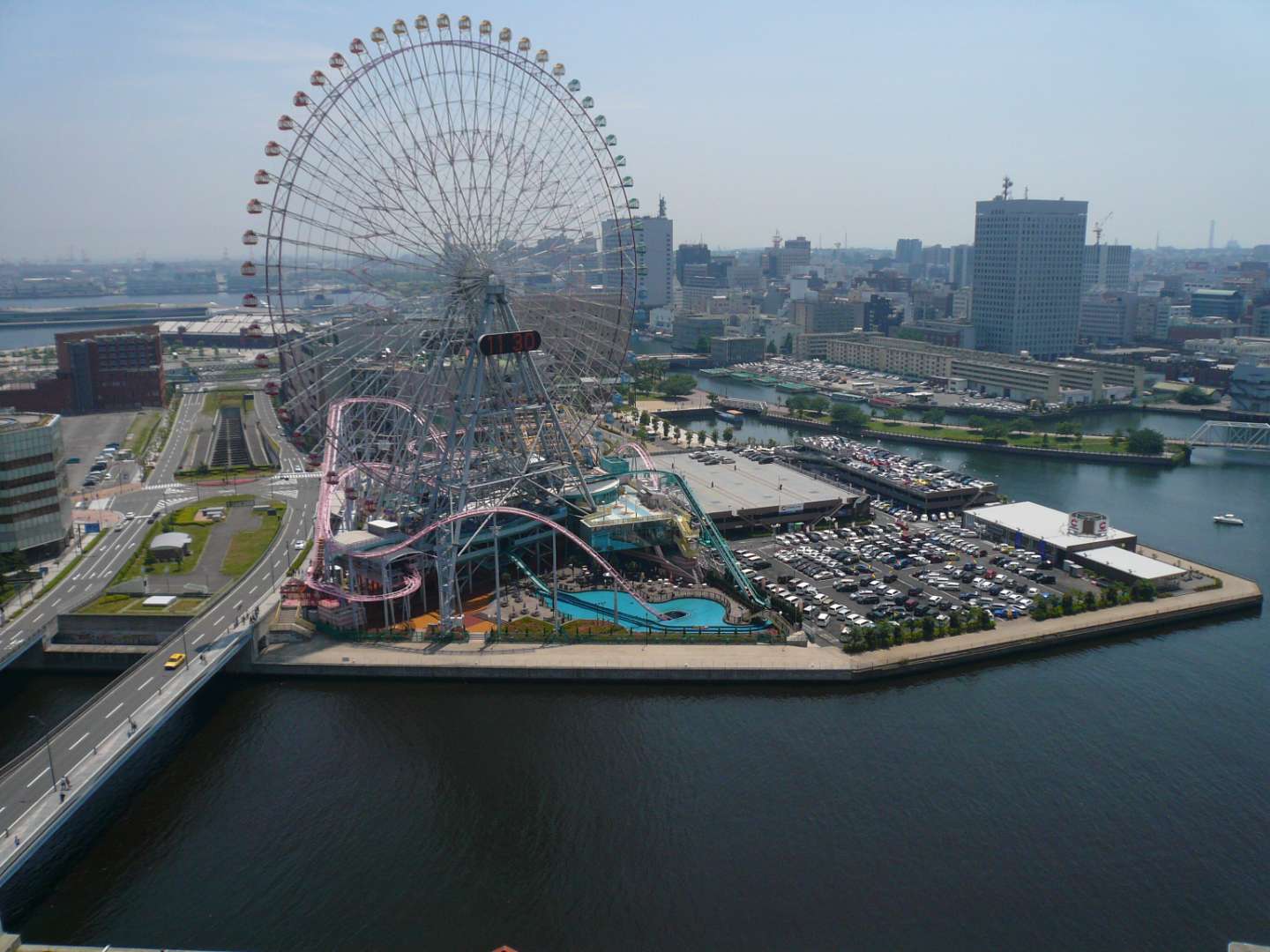
## Description Cosmo World in Yokohama is a vibrant urban amusement park that blends thrilling rides, family-friendly attractions, and waterfront views into one unforgettable experience. Located in the heart of the Minato Mirai 21 district, this compact yet dynamic park is best known for its iconic Ferris wheel, Cosmo Clock 21, which once held the title of the world’s largest Ferris wheel with a clock. Towering over the city skyline, it offers panoramic views of Yokohama Bay and the surrounding urban landscape, especially stunning at night when the wheel lights up in dazzling colors. The park is divided into three distinct zones: the Wonder Amuse Zone, Burano Street Zone, and Kids Carnival Zone. Each area caters to different age groups and interests. The Wonder Amuse Zone features high-adrenaline rides like the Diving Coaster: Vanish, a roller coaster that plunges into a tunnel beneath a pool of water. The Burano Street Zone offers quirky attractions such as mirror mazes and haunted houses, while the Kids Carnival Zone is perfect for younger children with gentle rides and arcade games. A little-known fact: Cosmo World originated from the Yokohama Exotic Showcase in 1989, and the Ferris wheel was part of a temporary exhibition before becoming a permanent fixture. Another unique detail is that admission to the park is free—you only pay for the rides you choose to enjoy, making it an accessible destination for all budgets. ## Location Cosmo World is located in **Japan**, in the **Kanagawa Prefecture**, within the city of **Yokohama**. It sits in the **Minato Mirai 21 district**, a modern waterfront area known for its shopping, entertainment, and cultural attractions. ### How to Get There - **By Train**: The park is a short walk from Minato Mirai Station (Minato Mirai Line) and Sakuragicho Station (JR Keihin-Tohoku Line and Yokohama Municipal Subway Blue Line). - **By Bus**: Several local buses stop near the Minato Mirai area. - **By Foot**: If you're exploring the waterfront, Cosmo World is easily accessible from nearby attractions like Landmark Tower and the Yokohama Red Brick Warehouse. - **By Car**: Parking is available in nearby lots, though public transport is recommended due to traffic and convenience. Its central location makes it an easy addition to any Yokohama itinerary. ## Tips - **Visit in the Evening**: The illuminated Ferris wheel and waterfront views are especially magical after sunset. - **Buy a Ride Pass**: While entry is free, purchasing a ride pass can save money if you plan to try multiple attractions. - **Check Height Restrictions**: Some rides have strict height and age requirements, so check ahead if visiting with children. - **Avoid Peak Hours**: Weekends and holidays can be crowded. Weekday afternoons are generally quieter. - **Bring Cash**: Some ticket booths and vending machines may not accept cards. - **Combine with Nearby Attractions**: Pair your visit with a trip to CupNoodles Museum or a harbor cruise for a full day of fun. ## Conclusion Cosmo World in Yokohama is a compact yet exhilarating amusement park that offers something for everyone—from heart-pounding roller coasters to scenic Ferris wheel rides. Its waterfront location, free entry, and diverse attractions make it a must-visit for families, couples, and solo travelers alike. ## FAQ **1. Is there an entrance fee to Cosmo World?** No, admission is free. You only pay for the rides you choose to go on. **2. What are the operating hours?** Typically, the park operates from 11:00 AM to 8:00 PM, but hours may vary seasonally or due to weather. **3. Is Cosmo World suitable for young children?** Yes, the Kids Carnival Zone is designed specifically for younger visitors. **4. Can I buy tickets online?** Ride tickets are generally purchased on-site. Some packages may be available through travel agencies. **5. Is the Ferris wheel wheelchair accessible?** Yes, Cosmo Clock 21 is accessible for wheelchair users. **6. Are food and drinks allowed inside the park?** Outside food and drinks are not permitted, but there are cafés and vending machines within the park. ## Links - [Cosmo World Official Website](https://cosmoworld.jp/about/?lang=en) - [Yokohama Cosmo World – Wikipedia Overview](https://en.wikipedia.org/wiki/Yokohama_Cosmo_World)
GemVoyage Team • World
Tirana
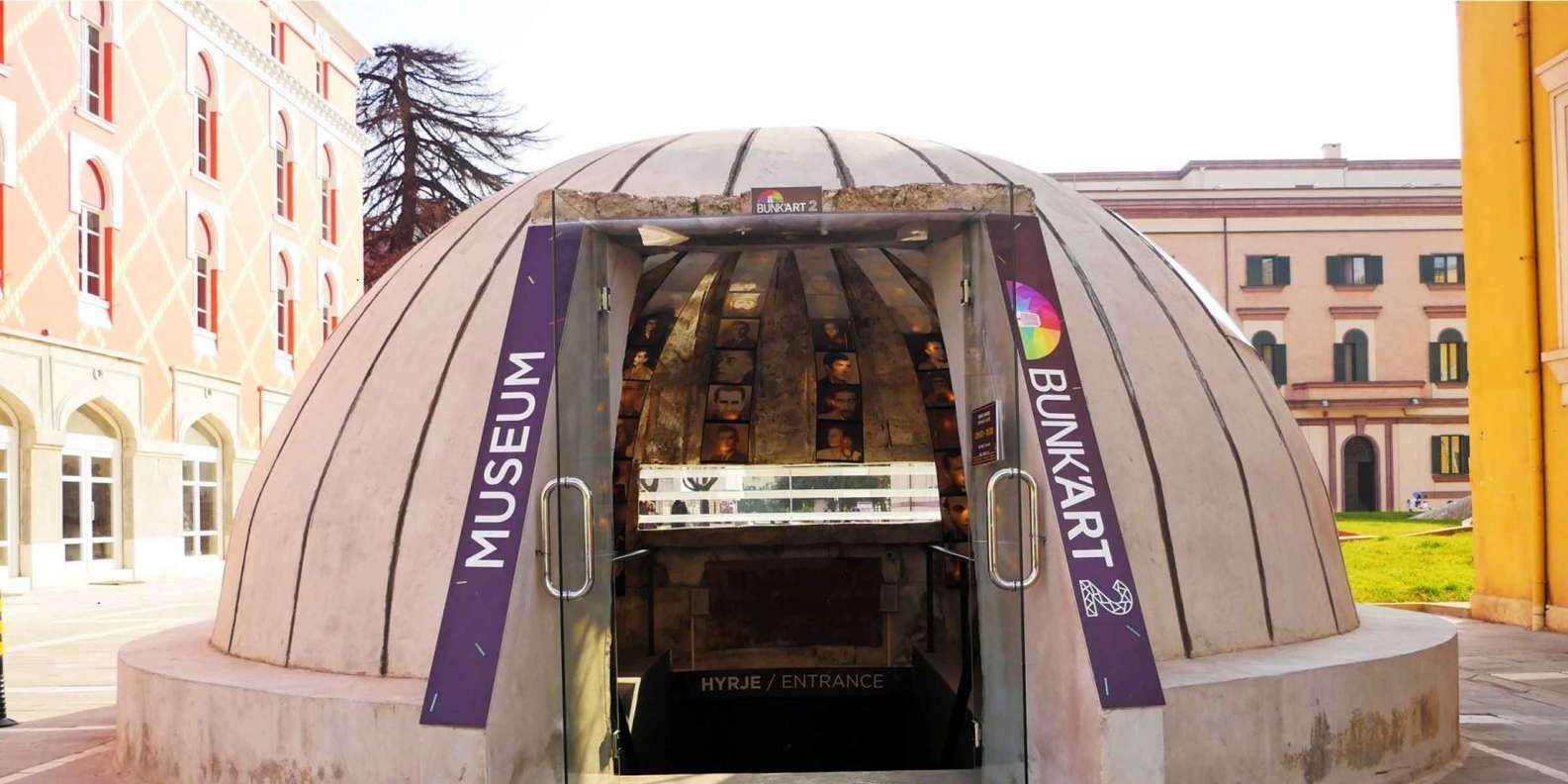
## Description Bunk’Art 2 is one of Tirana’s most powerful and memorable attractions, offering visitors a chance to experience Albanian history in a setting that is both physically and emotionally striking. Set in a former underground bunker, the museum focuses on the country’s recent past, particularly the structures of surveillance, fear, and political control that shaped daily life under the communist regime. It is not a light or decorative museum; it is immersive, sometimes stark, and designed to make the historical material feel immediate. What makes Bunk’Art 2 so compelling is the way the space itself becomes part of the exhibition. The underground architecture creates an atmosphere of confinement and tension, which helps visitors understand the historical context on a sensory level rather than only through text and artifacts. The combination of displays, corridors, and bunker-like rooms turns the visit into a journey through memory and state power. This is one of the reasons the museum has become such a significant stop for travelers who want to understand Albania beyond surface impressions. One little-known fact is that the bunker setting gives the museum a narrative force that would be much harder to achieve in a standard gallery. The physical descent into the space reflects the emotional descent into a difficult chapter of history. Another detail many visitors appreciate is that Bunk’Art 2 complements a wider understanding of Tirana’s transformation. The city today is colorful, active, and outward-looking, which makes the bunker museum even more striking because it reminds visitors of how recent and profound that transformation has been. For travelers interested in history, political systems, memory studies, or Cold War-era narratives, Bunk’Art 2 is particularly valuable. But even general travelers often find it unforgettable because it offers a very direct encounter with the past. It is the kind of museum that stays with you after you leave, not because it is overwhelming in scale, but because it is so effective at combining space and story. ## Location Bunk’Art 2 is in central Tirana, Albania, making it one of the more accessible major historical attractions in the city. Its central location means visitors can reach it easily on foot or by taxi depending on where they are staying. Because it is located in the capital’s core, it is also simple to combine with other downtown sights, cafés, and public spaces. If you are already exploring Tirana’s center, adding Bunk’Art 2 is usually straightforward. It works well as part of a day that includes walking the city, visiting civic areas, and comparing older and newer faces of the capital. The museum’s central placement is especially useful for travelers who want to avoid complicated transport just to visit a major historical site. ## Tips Give yourself enough time to absorb the exhibits. The museum is more meaningful when you slow down and read the displays rather than rushing through the bunker corridors. The space is atmospheric, but the interpretation is what turns that atmosphere into understanding. Prepare for a serious visit. This is not a playful museum, and the tone can be somber. If you are sensitive to themes of surveillance, repression, or political hardship, be ready for that emotional weight. The reward is a deeper understanding of Albania’s modern history. Visit earlier in the day if possible. That can help you avoid crowds and give you more room to move through the underground spaces at your own pace. If you like photography, be aware that lighting conditions can be dim and challenging. Combine it with an above-ground walk. The contrast between the museum’s underground history and Tirana’s modern, energetic streets is part of what makes the visit so meaningful. Spending time outdoors before or after can help you reflect on what you have seen. ## Conclusion Bunk’Art 2 is one of Tirana’s most important museums, turning an underground bunker into a powerful historical experience. It is ideal for travelers who want a serious, immersive, and memorable introduction to Albania’s recent past. ## FAQ ### Is Bunk’Art 2 suitable for all visitors? It is suitable for most adults and older children who can engage with serious historical material. Because of its subject matter, it may be intense for some visitors. ### How long should I plan for the visit? Many visitors spend one to two hours, depending on how deeply they read the exhibits and move through the space. ### Is it different from Bunk’Art 1? Yes. The two museums are related but distinct experiences, with different locations and emphases. ### Do I need to know Albanian history beforehand? No, but a little context helps. The museum is designed to be informative for visitors who are learning about the topic for the first time. ### Is photography allowed? Policies can change, so it is best to check current rules on site. Even when photos are allowed, the museum’s atmosphere is often better appreciated with focused attention rather than constant shooting. ## Links - [Official website](https://www.bunkart.al/)
GemVoyage Team • World
Venice
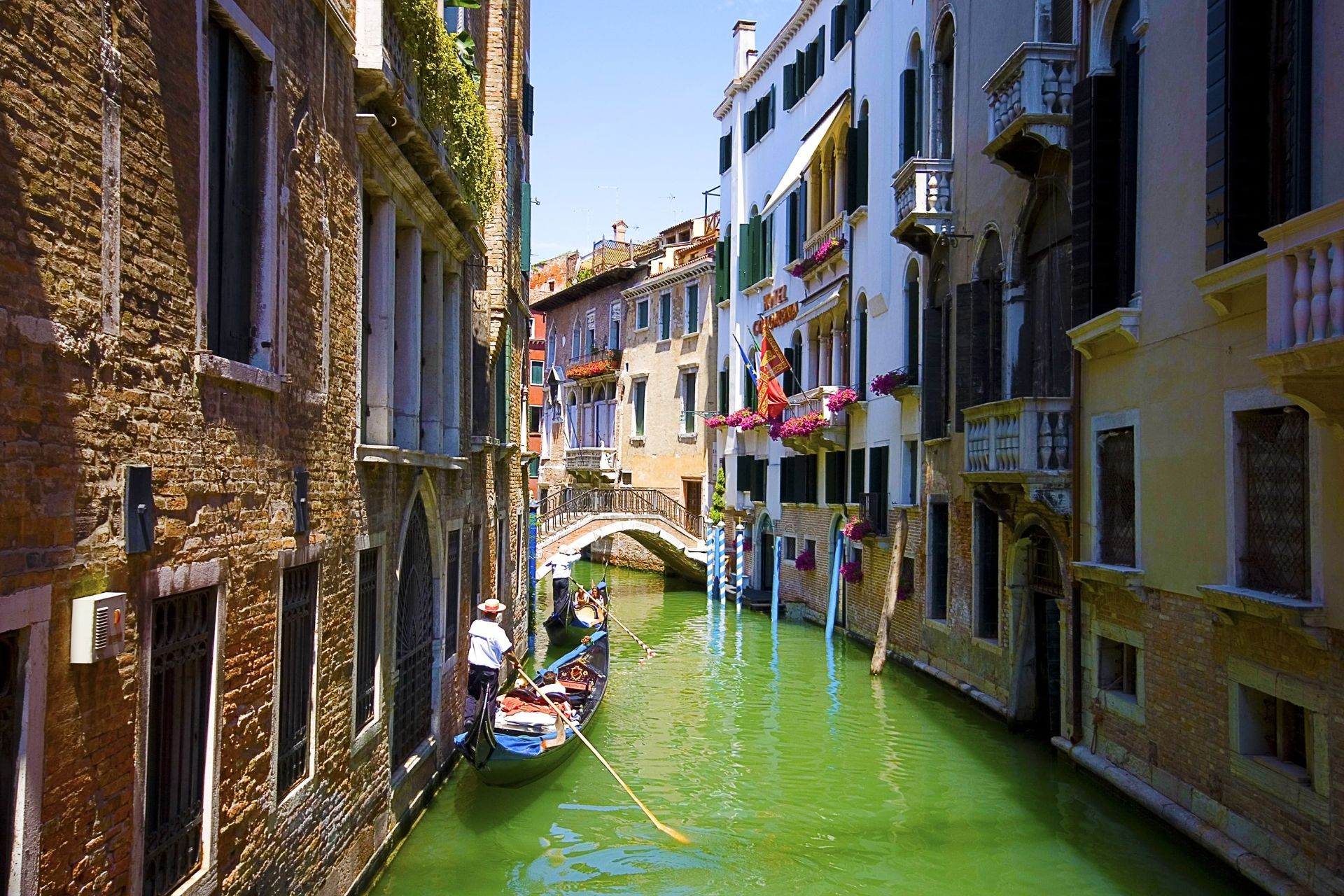
## Description Cannaregio is one of Venice's most atmospheric districts, often compared to Rome's Trastevere because of its neighborhood feel, lively streets, and balance of local life with visitor appeal. Unlike the most crowded parts of Venice, Cannaregio still feels residential in many places, which gives travelers a richer sense of how the city works beyond the postcard landmarks. Narrow canals, modest bridges, traditional houses, and hidden courtyards create an experience that is quieter than St. Mark's but often more memorable. The district is especially appealing for travelers who enjoy wandering without a strict plan. Its streets reward curiosity: you may turn a corner and find a small bacaro serving cicchetti, a church with centuries of history, or a canal scene that looks almost unchanged from the past. The famous Venetian rhythm of walking, pausing, and crossing bridges feels more relaxed here, and that makes Cannaregio a good place to appreciate the city at a slower pace. One lesser-known fact is that Cannaregio is home to the historic Venetian Ghetto, one of the earliest ghetto districts in Europe and an important site in the history of Jewish life in the city. Another is that, despite its relative calm, the district has one of the longest and most distinctive canal fronts in Venice, giving it some of the best opportunities for scenic strolls away from the major tourist flows. Cannaregio also offers an excellent food and drink scene for those who want a more local feel. Small bars, bakeries, and neighborhood restaurants are often less formal than those around the busiest monuments. The area can feel lively in the evening without becoming overwhelming, which makes it especially appealing for travelers who like to settle into a district rather than simply pass through it. Architecturally, Cannaregio presents a satisfying mix of ordinary and elegant Venice. You will find grand palazzi near the water, smaller homes deeper in the district, and a canal network that makes almost every route slightly different. For photographers, the area is full of soft light, reflections, and everyday scenes that capture Venice's character without the heavy staging of its most famous squares. If you want Venice to feel lived-in, intimate, and walkable, Cannaregio is one of the best places to spend time. It does not compete with the city's headline attractions; instead, it reveals the Venice that locals actually use, which is often the version travelers remember most. ## Location Cannaregio is the northernmost of Venice's six historic districts, located in Venice, Veneto, Italy. It stretches from the train station area into the heart of the city and includes parts of the Grand Canal, the Venice Ghetto, and many quiet side canals. It is easy to reach on foot from Venezia Santa Lucia railway station or by vaporetto along the Grand Canal. Because Venice is a walking city, the best way to explore Cannaregio is simply to arrive at the station or a nearby stop and start wandering through the district's streets and canals. ## Tips Visit late afternoon into evening if you want to combine sightseeing with aperitivo and dinner. Do not rush. Cannaregio is best experienced through detours, side streets, and pauses along the canal. Bring a map or use offline navigation, because Venice's layout can be confusing at first even though Cannaregio is relatively straightforward. Respect the residential character of the district. Many of its most charming areas are also people's homes. Look for bacari rather than only formal restaurants if you want a more local food experience. If you are interested in history, set aside time for the Venetian Ghetto and nearby Jewish heritage sites. ## Conclusion Cannaregio offers a more intimate and authentic side of Venice, combining local rhythm, historical depth, and canal-side beauty in a district that is easy to love and hard to forget. ## FAQ ### Why is Cannaregio compared to Trastevere? Both districts are known for local character, lively but not overly formal streets, and a strong mix of food, history, and neighborhood atmosphere. ### Is Cannaregio less crowded than central Venice? Yes, it is generally calmer than the most famous parts of Venice, though it can still be busy near the station and major landmarks. ### What is the most important historic site in Cannaregio? The Venice Ghetto is one of the area's most significant historical sites. ### Can I stay in Cannaregio as a base for Venice? Yes, many travelers prefer it because it is walkable, well connected, and usually less hectic than the busiest tourist zones. ## Links - [Cannaregio](https://en.wikipedia.org/wiki/Cannaregio) - [Venice tourism](https://www.veneziaunica.it/en)
GemVoyage Team • World
Berlin
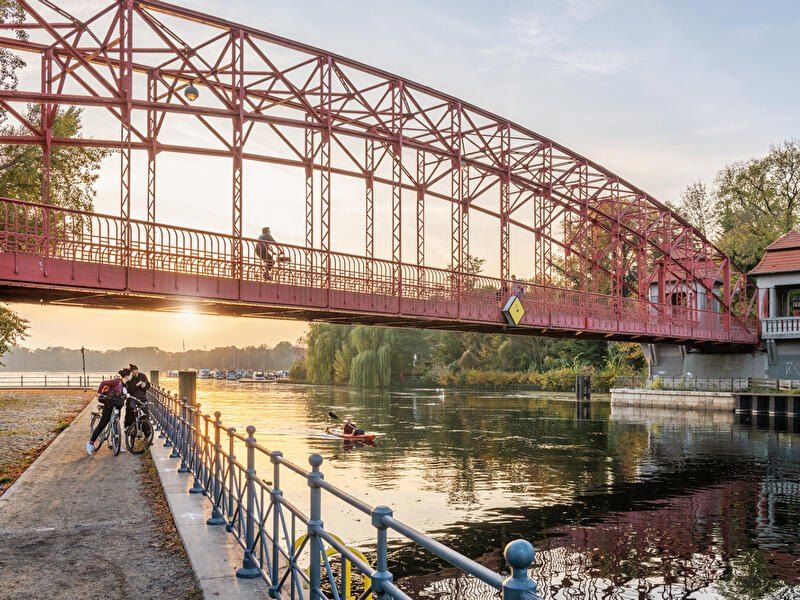
## Description **Tegeler See** is one of Berlin’s largest and most beloved lakes, offering a rare combination of **deep forest landscapes, wide open water, historic promenades, and recreational freedom** within a major European capital. Unlike the carefully curated parks of central Berlin, Tegeler See feels **expansive, natural, and quietly powerful**, a place where the city dissolves into wind, water, and tree canopy. The lake stretches across the northern edge of Berlin and forms part of a much larger **interconnected water system** linking rivers, canals, and smaller lakes. Its shoreline alternates between **elegant promenades, dense woodland, sandy bathing areas, hidden coves, and small harbors**, giving every section a distinct character. On one walk you might pass joggers and cyclists near cafés, and moments later find yourself alone on a forested shoreline with only birds and passing sailboats for company. What makes Tegeler See especially unique is its **scale and visual openness**. The lake is wide enough to feel almost coastal in certain sections. Wind patterns shape large ripples across the surface, and on clear days the sky reflects endlessly into the water. Sailboats, paddleboards, kayaks, ferries, and swimmers all share the same space, creating an ever-moving ecological and recreational system. The western and northern edges of the lake are bordered by the **Tegel Forest (Tegeler Forst)**, one of Berlin’s largest continuous woodland zones. This forest contains long hiking paths, wildlife corridors, thick pine stands, and historic hunting routes that once served Prussian royalty. This direct interface between **urban lake and protected forest** is one of Tegeler See’s defining strengths. Few European capitals offer this scale of natural immersion without leaving city limits. From an urban perspective, the lake is closely tied to the borough of **Reinickendorf** and the historic district of **Alt-Tegel**. The Alt-Tegel promenade along the eastern shoreline functions as a social spine, lined with restaurants, ice cream shops, boat docks, beer gardens, and terraces overlooking the water. This area transforms in summer into one of Berlin’s most relaxed outdoor social scenes, blending families, cyclists, couples, and long-term residents. A little-known fact is that Tegeler See was once part of the **Havel River’s natural floodplain system**, and its modern form is the result of long-term hydraulic engineering dating back centuries. Another lesser-known detail is that the famous German poet and philosopher **Gotthold Ephraim Lessing** once lived near the lake, and the nearby Tegel Palace was home to the Humboldt family, including **Alexander von Humboldt**, one of history’s most influential natural scientists. Tegeler See’s emotional identity is shaped by **seasonality**. In spring, the forest releases fresh green layers and migrating birds return. Summer brings swimming, paddleboarding, lakeside dining, and long evening sunsets. Autumn covers the surrounding hills in gold and copper tones. Winter transforms the lake into a minimalist landscape of cold light, mist, and silence, occasionally frozen at the edges. Unlike Berlin’s central landmarks, Tegeler See does not present itself as a destination of spectacle. Its appeal is built on **duration rather than intensity**. People do not come for a single photo; they come to spend hours walking, reading, boating, cycling, swimming, and simply existing beside water and forest. It is one of the few places in Berlin where **time visibly slows down**. In a city often defined by density, history, and cultural pressure, Tegeler See functions as a **pressure valve**. It absorbs excess motion and releases calm. ## Location **Tegeler See** is located in **northwestern Berlin**, primarily within the borough of **Reinickendorf**, near the historic district of **Tegel**. **City:** Berlin **State (Region):** Berlin **Country:** Germany **Primary Area:** Reinickendorf / Alt-Tegel ### How to Get There: * **By S-Bahn:** * Take **S25** to **Tegel Station**, then walk 10 minutes to the lakeside. * **By U-Bahn:** * Take **U6** to **Alt-Tegel**, which places you directly at the main promenade. * **By bus:** Multiple bus routes connect Tegel with central and northern Berlin. * **By bicycle:** A well-developed bike network connects Tegeler See to the city center. * **By car:** Parking is available but is limited on busy summer days. The lake is easily combined with visits to **Alt-Tegel old town, Tegel Forest hiking trails, and the Havel River network**. ## Tips * **Visit on weekdays if you prefer quiet:** Weekends can be very busy in summer. * **Walk both the promenade and the forest side:** Each offers a completely different experience. * **Bring swimwear in summer:** Designated bathing areas are popular and well maintained. * **Sunset is the most atmospheric time:** Especially from western shoreline viewpoints. * **Boat rentals are widely available during the warm season.** * **Dress for wind:** The open water creates noticeable temperature shifts. * **Combine with Alt-Tegel dining:** Lakeside restaurants are a core part of the experience. * **Winter visits are underrated:** The silence and mist create a dramatic, cinematic mood. ## Conclusion **Tegeler See** is Berlin at its most expansive and elemental. It is where the city trades architecture for horizon, traffic for water movement, and density for breathing space. By uniting forest, lake, promenade, and history into one continuous landscape, Tegeler See offers a version of Berlin that is **slower, wider, and deeply restorative**. ## FAQ **1. Is Tegeler See suitable for swimming?** Yes. Several **official bathing areas** operate during the summer season. **2. Can you rent boats on Tegeler See?** Yes. **Paddleboats, kayaks, and small sailboats** are available for rent. **3. Is Tegeler See family-friendly?** Yes. It is widely used by **families, cyclists, walkers, and swimmers**. **4. How long does it take to walk around Tegeler See?** Walking the full perimeter can take **2.5 to 4 hours**, depending on pace and route. **5. Is Tegeler See good in winter?** Yes, especially for **quiet walks, photography, and forest exploration**. **6. Is there wildlife around the lake?** Yes. The area supports **water birds, foxes, deer, and diverse forest species**. ## Links * [Visit Berlin](https://www.visitberlin.de)
GemVoyage Team • World
Tokyo
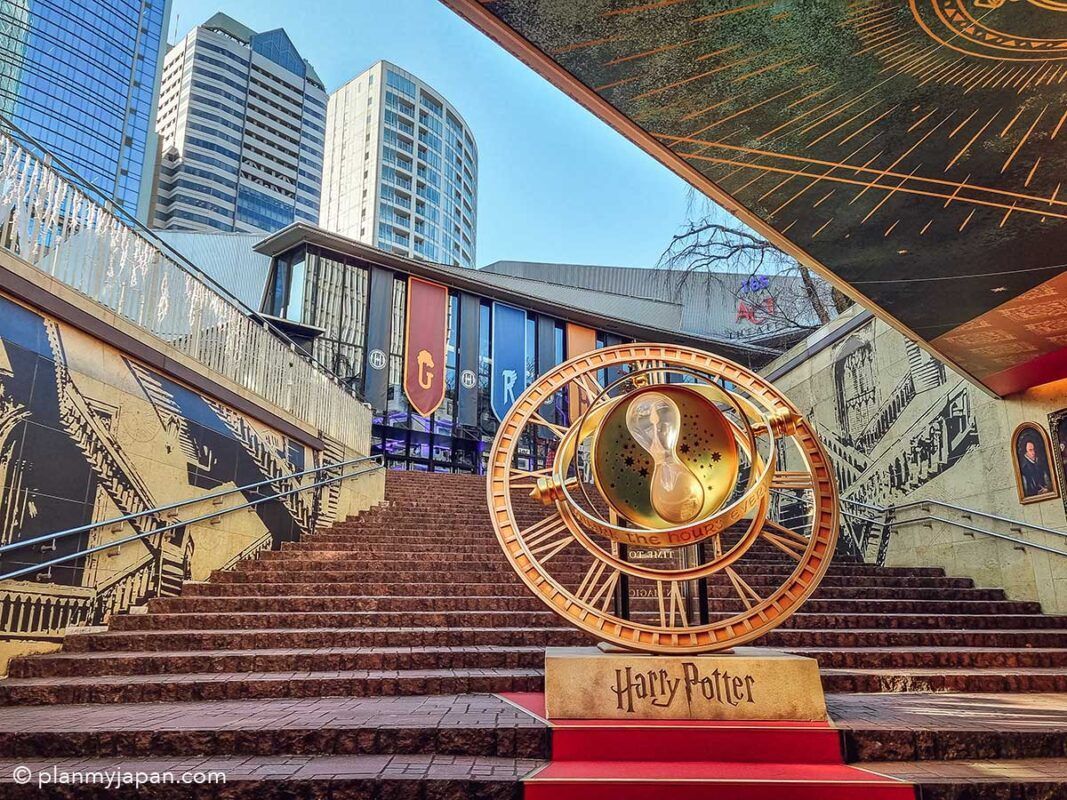
## Description The **Harry Potter Stairs & Time Turner (ハリー・ポッター階段とタイムターナー)** in Tokyo is one of the city’s most popular **pop-culture photo landmarks**, blending cinematic fantasy with modern urban design. This attraction is not a historical monument or a traditional museum—it is a **themed visual installation inspired by the Harry Potter film series**, designed specifically for fans who want to step inside the wizarding world without leaving central Tokyo. The installation recreates two of the most iconic visual elements from the films: the **magical moving staircase of Hogwarts** and **Hermione Granger’s Time Turner** from *Harry Potter and the Prisoner of Azkaban*. The staircase evokes the illusion of shifting directions and hidden passages, while the oversized Time Turner sculpture serves as a symbolic centerpiece representing time travel, destiny, and choice—core themes in the Potter universe. What makes this location truly unique is that it exists **inside a contemporary commercial complex rather than a theme park**. This means visitors do not need to buy expensive tickets or travel to a resort location to enjoy an immersive Harry Potter-themed environment. The installation uses **cinematic lighting, reflective metallic surfaces, stone textures, and enchanted-style typography** to create a convincing atmosphere of fantasy within a very modern architectural setting. The stairs are often used as a **staged photo zone**, where visitors recreate scenes, cosplay as characters, or simulate stepping into a time-loop narrative. The Time Turner sculpture is particularly photogenic when illuminated in the evening, when its rotating rings and glowing accents transform the space into a dramatic visual set piece. Many visitors describe the experience as feeling like walking into a **film trailer set inside a shopping mall**—brief, stylized, and designed for visual impact rather than storytelling depth. A little-known fact is that the stairs and Time Turner installation were part of a **long-term promotional collaboration connected to Warner Bros. Japan and official Harry Potter licensing projects**, timed to coincide with renewed franchise activity in Tokyo. Another lesser-known detail is that the space is frequently **updated with seasonal lighting themes and limited-time character visuals**, which means repeat visits can feel subtly different across the year. Importantly, this site is not meant to replace **The Making of Harry Potter Studio Tour Tokyo**; rather, it acts as a **public teaser-style landmark**, accessible to anyone passing through the district. It attracts an extremely diverse crowd: international tourists, Japanese fans, casual shoppers, cosplayers, couples, and social-media creators all intersect in the same space. The emotional appeal of the installation lies in its ability to deliver **instant recognition and nostalgia**. Even a short visit—often no more than 10 to 15 minutes—can trigger powerful emotional connections for fans who grew up with the books and films. It is, at its core, not a storytelling space but a **symbolic photo experience**, built for visual memory rather than narrative immersion. ## Location The **Harry Potter Stairs & Time Turner** installation is located in **central Tokyo**, inside a major commercial complex in the **Akasaka / Roppongi area**, which has become a hub for large-scale themed entertainment projects. **City:** Tokyo **Region:** Kantō **Country:** Japan **District:** Minato Ward (Akasaka / Roppongi area) ### How to Get There: * **By Tokyo Metro:** * **Chiyoda Line** to **Akasaka Station** * **Hibiya Line or Toei Oedo Line** to **Roppongi Station** * **By JR Train:** Use JR lines to nearby hubs such as **Shinjuku or Tokyo Station**, then transfer to the metro. * **By taxi:** Easy and accurate if you show the Japanese attraction name. * **On foot:** The area is highly walkable and well-connected through underground passages and plazas. The installation is typically integrated into a **shopping, dining, and entertainment complex**, making it easy to combine with cafés, retail stores, and evening nightlife. ## Tips * **Visit in the evening:** The lighting effects are significantly more dramatic after sunset. * **Go on weekdays for clearer photos:** Weekends often bring long lines of people waiting for their turn. * **Bring a small tripod if allowed:** For steady night photos, especially around the Time Turner. * **Do not expect a full “attraction experience”:** This is a **visual installation**, not a ride or museum. * **Cosplay is common:** Light cosplay is generally accepted and often encouraged by visitors. * **Respect queue etiquette:** Japanese photo spots usually operate with informal but strict order. * **Combine with nearby Harry Potter experiences:** If you are a serious fan, this pairs well with the Studio Tour Tokyo. * **Check for seasonal updates:** Lighting schemes and banners occasionally change. ## Conclusion The **Harry Potter Stairs & Time Turner in Tokyo** is a compact yet powerful example of how modern cities translate cinematic fantasy into everyday urban space. It is not a destination for long exploration, but a **precise, visually engineered moment of nostalgia**, crafted for fans who want a tangible connection to the wizarding world without committing an entire day to a theme park. For Harry Potter enthusiasts, it delivers something precise and valuable: **a magical pause inside the rhythm of real city life**. ## FAQ **1. Is the Harry Potter Stairs & Time Turner a real theme park attraction?** No. It is a **public visual installation**, not a ride or ticketed experience. **2. Is it free to visit?** Yes. Access is **free**, as it is located inside a public commercial complex. **3. How long does a visit typically take?** Most visitors spend **10 to 20 minutes**, depending on photo queues. **4. Is it suitable for children?** Yes. It is **family-friendly**, though it can get crowded. **5. Is this the same as the Harry Potter Studio Tour Tokyo?** No. This is a **small themed photo landmark**, whereas the studio tour is a full museum-style experience. **6. Can I take professional photos there?** Casual photography is allowed. **Commercial shoots may require permission** from the property management. ## Links * [Warner Bros. Japan](https://www.warnerbros.co.jp) * [Harry Potter Studio Tour Tokyo](https://www.wbstudiotour.jp)
GemVoyage Team • World

Comments