GemVoyage Team • World
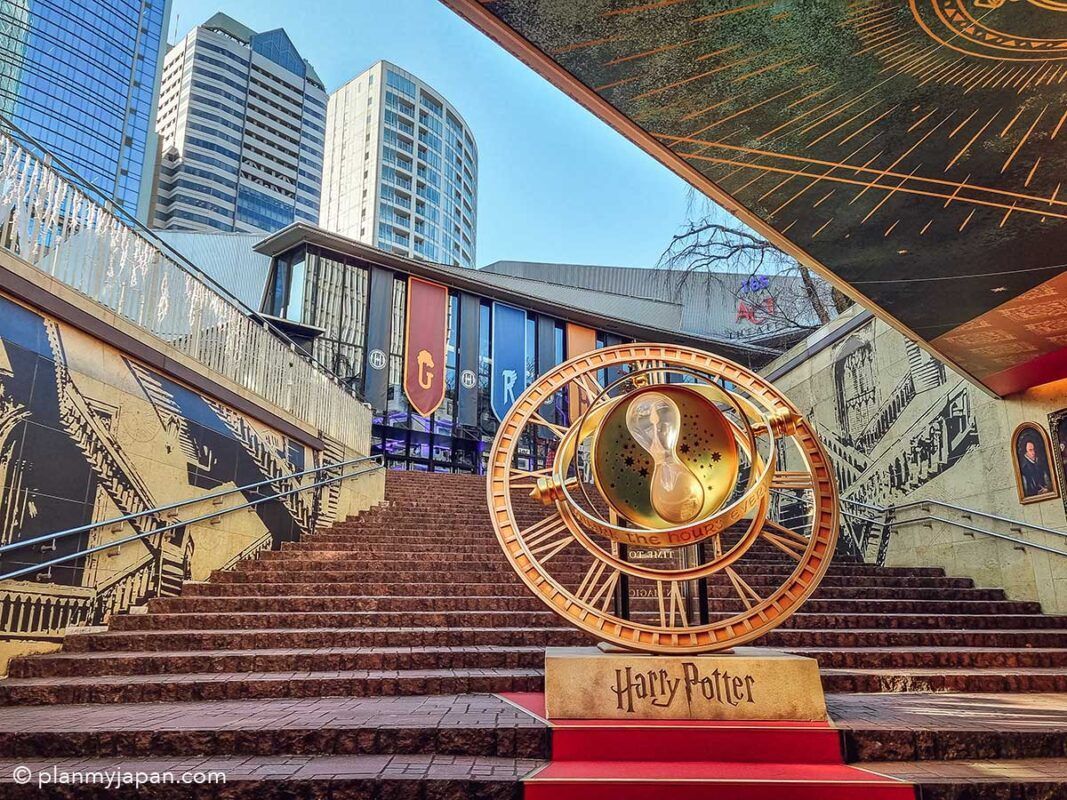
The Harry Potter Stairs & Time Turner (ハリー・ポッター階段とタイムターナー) in Tokyo is one of the city’s most popular pop-culture photo landmarks, blending cinematic fantasy with modern urban design. This attraction is not a historical monument or a traditional museum—it is a themed visual installation inspired by the Harry Potter film series, designed specifically for fans who want to step inside the wizarding world without leaving central Tokyo.
The installation recreates two of the most iconic visual elements from the films: the magical moving staircase of Hogwarts and Hermione Granger’s Time Turner from Harry Potter and the Prisoner of Azkaban. The staircase evokes the illusion of shifting directions and hidden passages, while the oversized Time Turner sculpture serves as a symbolic centerpiece representing time travel, destiny, and choice—core themes in the Potter universe.
What makes this location truly unique is that it exists inside a contemporary commercial complex rather than a theme park. This means visitors do not need to buy expensive tickets or travel to a resort location to enjoy an immersive Harry Potter-themed environment. The installation uses cinematic lighting, reflective metallic surfaces, stone textures, and enchanted-style typography to create a convincing atmosphere of fantasy within a very modern architectural setting.
The stairs are often used as a staged photo zone, where visitors recreate scenes, cosplay as characters, or simulate stepping into a time-loop narrative. The Time Turner sculpture is particularly photogenic when illuminated in the evening, when its rotating rings and glowing accents transform the space into a dramatic visual set piece. Many visitors describe the experience as feeling like walking into a film trailer set inside a shopping mall—brief, stylized, and designed for visual impact rather than storytelling depth.
A little-known fact is that the stairs and Time Turner installation were part of a long-term promotional collaboration connected to Warner Bros. Japan and official Harry Potter licensing projects, timed to coincide with renewed franchise activity in Tokyo. Another lesser-known detail is that the space is frequently updated with seasonal lighting themes and limited-time character visuals, which means repeat visits can feel subtly different across the year.
Importantly, this site is not meant to replace The Making of Harry Potter Studio Tour Tokyo; rather, it acts as a public teaser-style landmark, accessible to anyone passing through the district. It attracts an extremely diverse crowd: international tourists, Japanese fans, casual shoppers, cosplayers, couples, and social-media creators all intersect in the same space.
The emotional appeal of the installation lies in its ability to deliver instant recognition and nostalgia. Even a short visit—often no more than 10 to 15 minutes—can trigger powerful emotional connections for fans who grew up with the books and films. It is, at its core, not a storytelling space but a symbolic photo experience, built for visual memory rather than narrative immersion.
The Harry Potter Stairs & Time Turner installation is located in central Tokyo, inside a major commercial complex in the Akasaka / Roppongi area, which has become a hub for large-scale themed entertainment projects.
City: Tokyo
Region: Kantō
Country: Japan
District: Minato Ward (Akasaka / Roppongi area)
* Chiyoda Line to Akasaka Station
* Hibiya Line or Toei Oedo Line to Roppongi Station
The installation is typically integrated into a shopping, dining, and entertainment complex, making it easy to combine with cafés, retail stores, and evening nightlife.
The Harry Potter Stairs & Time Turner in Tokyo is a compact yet powerful example of how modern cities translate cinematic fantasy into everyday urban space. It is not a destination for long exploration, but a precise, visually engineered moment of nostalgia, crafted for fans who want a tangible connection to the wizarding world without committing an entire day to a theme park. For Harry Potter enthusiasts, it delivers something precise and valuable: a magical pause inside the rhythm of real city life.
1. Is the Harry Potter Stairs & Time Turner a real theme park attraction?
No. It is a public visual installation, not a ride or ticketed experience.
2. Is it free to visit?
Yes. Access is free, as it is located inside a public commercial complex.
3. How long does a visit typically take?
Most visitors spend 10 to 20 minutes, depending on photo queues.
4. Is it suitable for children?
Yes. It is family-friendly, though it can get crowded.
5. Is this the same as the Harry Potter Studio Tour Tokyo?
No. This is a small themed photo landmark, whereas the studio tour is a full museum-style experience.
6. Can I take professional photos there?
Casual photography is allowed. Commercial shoots may require permission from the property management.
Discover more hidden gems you might love.
Barcelona
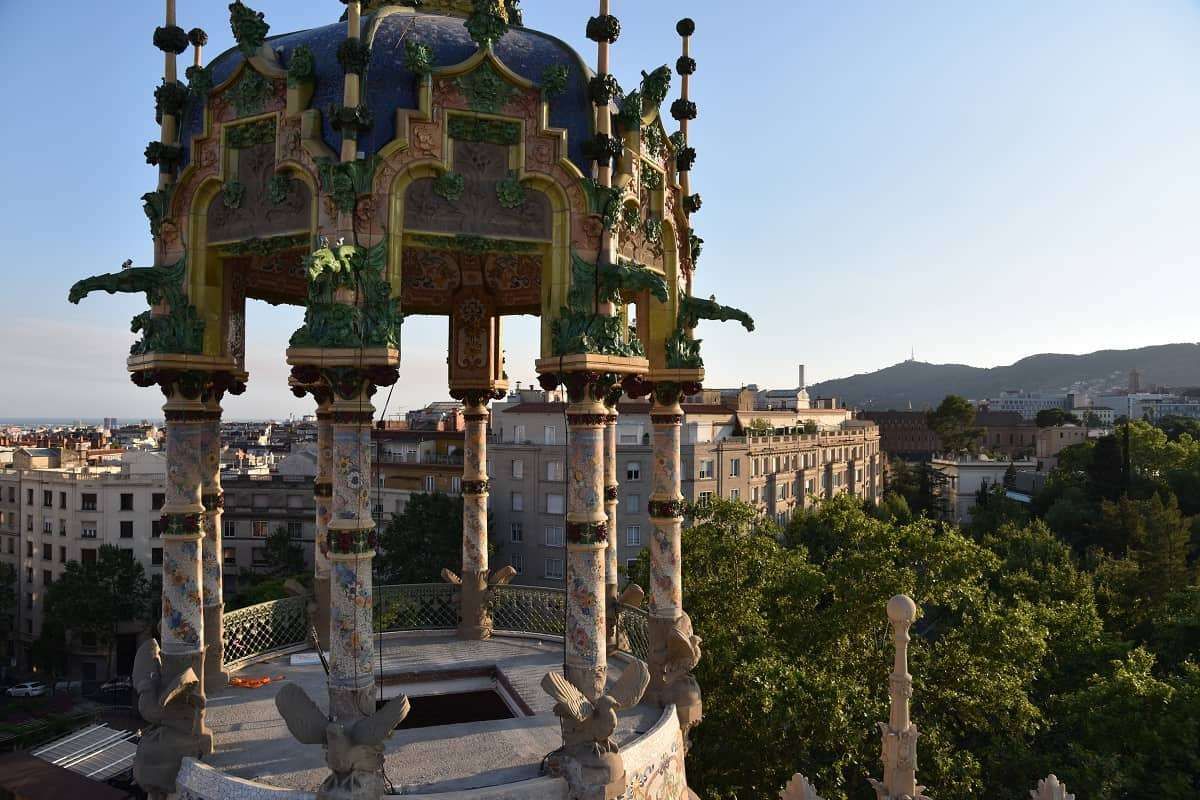
## Description **Torre Andreu**, more commonly known as **La Rotonda**, is one of Barcelona’s most distinctive yet often overlooked pieces of **Modernisme architecture**. Located at the upper edge of the city near the foothills of Tibidabo, this circular, turreted building looks more like a **fairytale castle than a residential structure**, making it one of the most visually unusual landmarks in Barcelona. The building was originally constructed in **1906** as a **luxury private residence** for a wealthy industrial family at a time when Barcelona’s elite were moving uphill away from the dense urban core. Its architectural language reflects the late phase of Catalan Modernisme, but with a lighter, more playful character than the monumental works of Gaudí. The structure’s curved form, decorative balconies, stained glass, floral stonework, and rooftop tower give it a **whimsical, almost theatrical presence**. What truly sets La Rotonda apart is its **cylindrical layout**, which is extremely rare in Barcelona’s residential architecture. While most Modernist buildings rely on flat façades and vertical symmetry, Torre Andreu embraces a soft, flowing geometry that produces constantly shifting perspectives as you walk around it. From different angles, the building seems to change character—from grand to intimate, from playful to mysterious. After serving as a private mansion, the building was later transformed into a **luxury hotel**, gaining the nickname “La Rotonda” due to its circular shape. Over the decades, it hosted visiting elites, business figures, and international guests. Its decline began in the late 20th century as the area lost its tourism focus, and the building passed through phases of limited use, abandonment, and restoration attempts. A little-known fact is that Torre Andreu spent many years in a **state of legal and architectural limbo**, with disputes over ownership and protection status delaying proper restoration. Another lesser-known detail is that its rooftops once hosted **social gatherings with views stretching across the entire city and toward the Mediterranean**, making it one of the most exclusive view points in pre-war Barcelona. Today, La Rotonda stands as a **symbol of architectural memory suspended between preservation and neglect**. While parts of the structure have undergone restoration at different times, it remains largely inaccessible to the public. Despite this, it continues to attract architects, photographers, and urban explorers who see it as a **ghost of Barcelona’s upper-class expansion era**, frozen between past luxury and uncertain future use. Emotionally, Torre Andreu is a place of contrast. It feels playful yet melancholic, elegant yet isolated. It reminds visitors that not all architectural masterpieces sit in crowded tourist centers—some survive quietly at the city’s edges, waiting to be rediscovered. ## Location **Torre Andreu (La Rotonda)** is located in the **Sant Gervasi–La Bonanova area**, near the start of **Avinguda del Tibidabo**, one of Barcelona’s most elegant upper-city avenues. **City:** Barcelona **Region:** Catalonia (Catalunya) **Country:** Spain **District:** Sarrià-Sant Gervasi **Nearby Landmark:** Plaça Kennedy ### How to Get There: * **By Tramvia Blau:** Take the historic **Blue Tram** from Plaça Kennedy up toward Tibidabo and get off at the early stops. * **By FGC (Train):** Take **FGC Line L7** to **Avinguda Tibidabo Station**, then walk about 10–12 minutes uphill. * **By bus:** Several lines from the city center serve Plaça Kennedy and Avinguda Tibidabo. * **By taxi:** A convenient option given the uphill location. * **By car:** Limited street parking is available; traffic can be heavy during peak hours. This location places La Rotonda along a scenic route that connects the city to **Tibidabo Mountain, the funicular, and the upper residential quarters**. ## Tips * **Admire it from the street:** The building is **not generally open to the public**, so plan for an exterior visit. * **Visit during daylight:** Details in stone, glass, and ironwork are best visible in strong natural light. * **Combine with Avinguda Tibidabo:** The walk itself features some of Barcelona’s most impressive mansions. * **Photography enthusiasts:** A wide-angle lens works best due to the building’s curved geometry. * **Do not expect tourist facilities:** No tickets, gift shops, or official visitor services are available on-site. * **Urban-exploration atmosphere:** The charm lies in observing a historic building existing quietly within daily city life. * **Respect private property limits:** Security patrols may restrict close access to entrances. ## Conclusion **Torre Andreu (La Rotonda)** is one of Barcelona’s most unusual Modernist buildings—**playful in form, dramatic in history, and quiet in presence**. Once a symbol of luxury living at the city’s upper edge, it now stands as a reminder that architectural brilliance does not always remain in the spotlight. For those willing to explore beyond the standard tourist circuit, La Rotonda offers a rare encounter with **Barcelona’s forgotten elegance and unresolved heritage**. ## FAQ **1. Why is Torre Andreu called “La Rotonda”?** Because of its **distinct circular shape**, which is rare in Barcelona’s residential architecture. **2. Can visitors go inside La Rotonda?** No. It is **not generally open to the public** and is viewed from the exterior only. **3. Who designed Torre Andreu?** It was designed in the early 20th century in the **Catalan Modernisme style**, attributed to architect **Adolf Ruiz i Casamitjana**. **4. Was it always a hotel?** No. It was originally built as a **private luxury residence** and later converted into a hotel. **5. Is Torre Andreu protected as a heritage site?** Yes. It is recognized as part of **Barcelona’s protected architectural heritage**, though restoration has been slow. **6. How long does a visit typically take?** About **10 to 20 minutes**, mainly for observation and photography. ## Links * [Visit Barcelona](https://www.barcelonaturisme.com)
GemVoyage Team • World
Amazonas
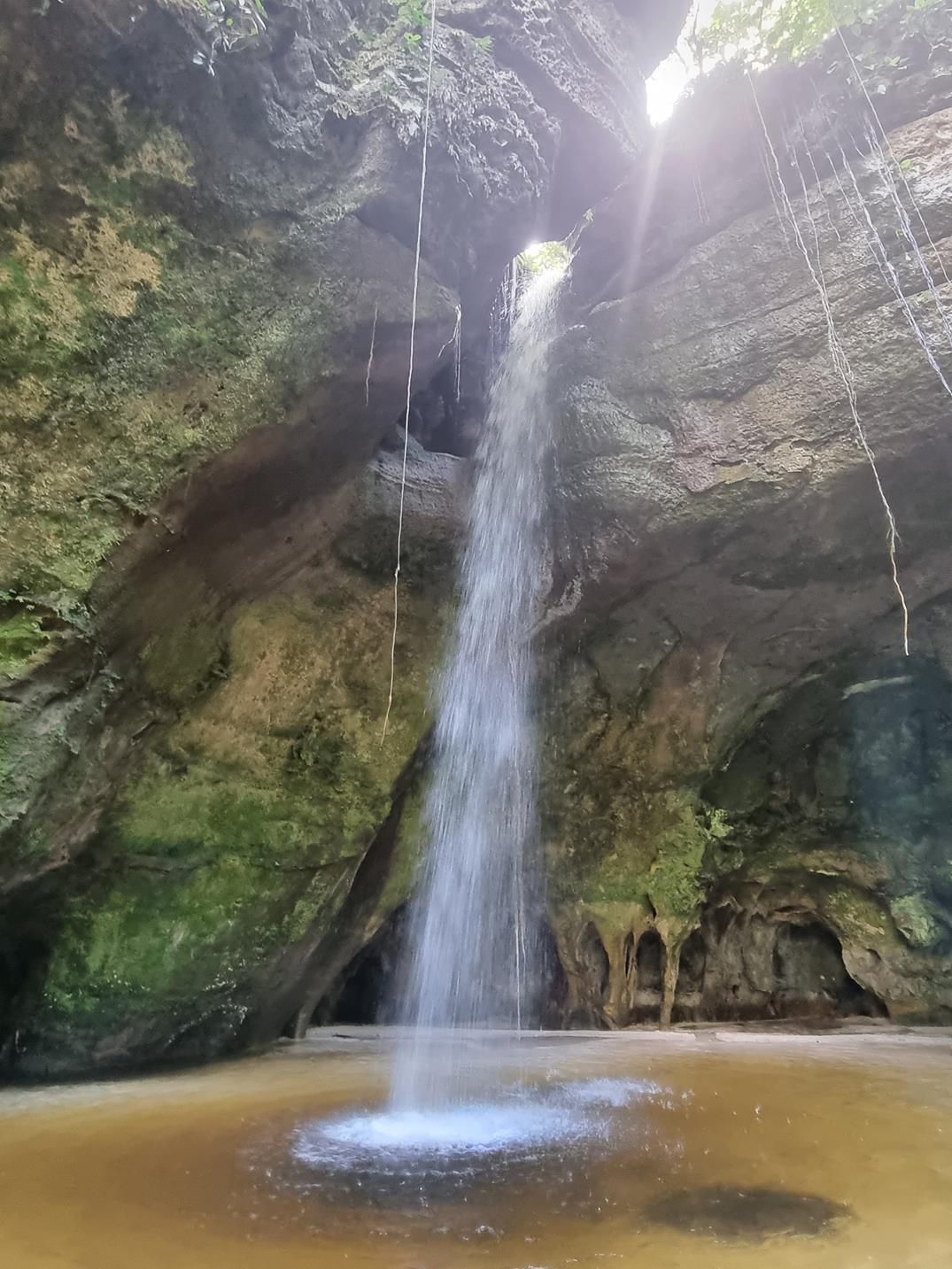
## Description Deep within the lush rainforest of the Amazon lies a pair of natural wonders: **Caverna do Maroaga (Maroaga Cave)** and **Caverna da Judeia (Judeia Cave)**. These caves are part of the Presidente Figueiredo municipality in northern Brazil, often nicknamed the “Land of Waterfalls and Caves” due to its unique geology and landscapes. The **Maroaga Cave** is famous for its dramatic sandstone formations and a stream that flows directly from within, creating a mystical atmosphere as the water emerges from the cave’s dark interior. Sunlight filtering through the forest canopy reflects on the water, giving the cave a magical glow. Its name comes from a local indigenous chief, Maroaga, who is said to have used the cave as a hideout, adding a layer of legend to its natural beauty. The nearby **Judeia Cave** is equally captivating. It features a more intimate setting, with a waterfall cascading over its entrance and forming a natural curtain of water. Walking behind the waterfall offers visitors a unique and refreshing perspective, with the sound of rushing water echoing throughout the cave. A little-known fact is that both caves are part of the same ecological reserve, which shelters a vast variety of flora and fauna. Biologists have recorded rare species of bats and amphibians in these caves, making them not only scenic wonders but also important ecological habitats. ## Location Caverna do Maroaga and Caverna da Judeia are located in **Presidente Figueiredo**, a municipality in the state of **Amazonas**, in northern **Brazil**. The region lies about 107 kilometers north of **Manaus**, the capital of Amazonas, along the BR-174 highway. The most common way to reach the caves is by car or organized tour from Manaus. The drive takes about two hours and passes through dense rainforest landscapes. Once at the entrance to the reserve, guided hikes of varying lengths lead to the caves. The trails are not particularly difficult, but they can be muddy and slippery, especially during the rainy season. For international visitors, the easiest route is to fly into Manaus and then book a day trip or multi-day tour that includes the caves as part of a broader itinerary of waterfalls and natural attractions. ## Tips * **Wear proper footwear:** Hiking boots or sturdy shoes are recommended, as the trails can be wet and uneven. * **Hire a guide:** Local guides not only ensure safety but also provide insights into the caves’ legends, geology, and biodiversity. * **Bring swimwear and a towel:** The waterfalls and streams around the caves are perfect for cooling off after a hike. * **Pack insect repellent:** The Amazon rainforest is home to mosquitoes and other insects, especially near water sources. * **Visit during the dry season:** From June to November, the trails are easier to access, although the rainy season offers stronger waterfalls and a wilder atmosphere. * **Respect the environment:** Avoid leaving litter, and do not disturb the caves’ wildlife, particularly bats and amphibians. ## Conclusion Caverna do Maroaga and Caverna da Judeia showcase the wild beauty and hidden wonders of Brazil’s Amazon rainforest. With their waterfalls, sandstone formations, and legendary history, they are must-visit sites for eco-tourists and adventurers seeking an authentic experience in the heart of nature. Together, they represent not just geological marvels but also living ecosystems that deserve protection and respect. ## FAQ **1. Do I need a guide to visit the caves?** Yes, local guides are highly recommended for safety, navigation, and to ensure the preservation of the natural environment. **2. Can I swim near the caves?** Yes, swimming is allowed in the pools and streams near the caves, but always follow local safety advice. **3. How difficult are the hikes to the caves?** The hikes are moderate in difficulty, with some slippery and uneven sections. Good footwear is essential. **4. Are the caves accessible year-round?** Yes, but the experience differs by season. The rainy season (December–May) offers stronger waterfalls, while the dry season (June–November) makes trails easier to navigate. **5. What wildlife might I see?** Bats, amphibians, tropical birds, and a wide variety of insects inhabit the area. Lucky visitors may even spot monkeys in the surrounding forest. **6. How long should I plan for a visit?** Most tours include both caves in a half-day excursion, though spending a full day allows more time to explore nearby waterfalls and trails. ## Links * [Amazons Wiki](https://en.wikipedia.org/wiki/Amazonas_(Brazilian_state))
GemVoyage Team • World
New York
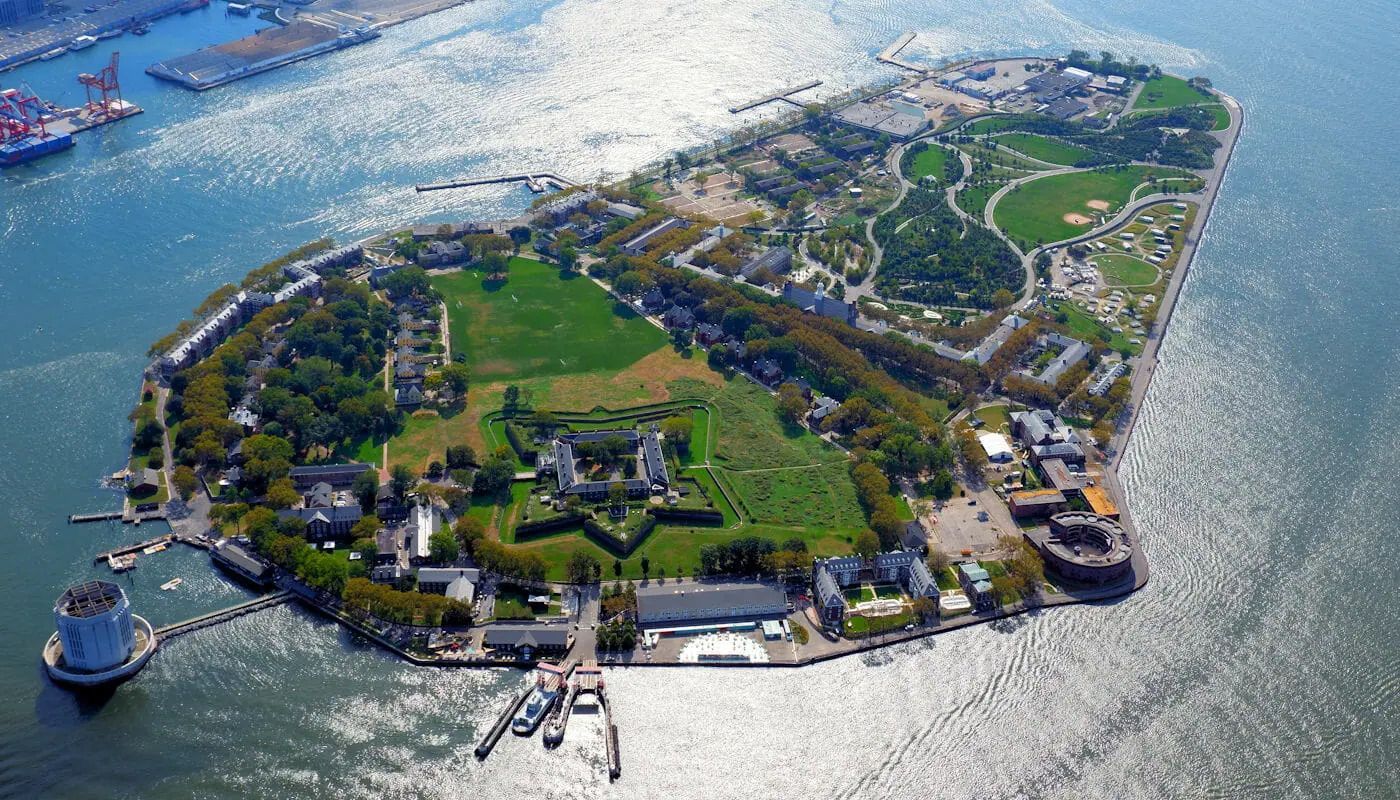
## Description Governors Island is one of New York City's best day trip destinations because it combines harbor views, historic buildings, open green space, and a sense of distance from the city without actually leaving it. The island feels spacious and refreshing in a way that is rare in Manhattan, making it appealing to visitors who want a slower rhythm, bike paths, and outdoor relaxation. The experience is especially strong in warm weather, when the ferry ride itself becomes part of the outing and the skyline views are at their most memorable. What makes Governors Island particularly interesting is that it has moved from a former military and administrative site to a public destination with recreation, arts, and heritage uses. A lesser-known fact is that much of the island's character comes from its reuse: old structures now sit alongside lawns, paths, and public programming. Another detail many first-time visitors appreciate is how easy it is to build a flexible day there, whether you want to picnic, explore, rent bikes, or simply enjoy the harbor air. ## Location Governors Island is in New York Harbor, just south of Manhattan in the United States. It is reached by ferry from designated terminals in Manhattan and sometimes Brooklyn, depending on the season and service schedule. Because access is by boat, the visit naturally feels like a break from the city. The short ride is part of what makes the island appealing and memorable. The best way to visit is to check ferry times ahead of time and plan enough hours on the island to make the crossing worthwhile. Once there, the grounds are easy to explore on foot or by bike. It is one of the most straightforward and rewarding day trips in the New York area. ## Tips - Check the ferry schedule before you go so you can make the most of your time on the island. - Bring food, water, or a picnic plan if you want to enjoy the green space more fully. - Rent a bike if you want to see more of the island without spending the whole day walking. - Go in good weather if possible, since the outdoor setting is a major part of the appeal. - Bring layers, because harbor breezes can make the island feel cooler than Manhattan. - Leave time for skyline views on the return ferry, which are often one of the highlights. ## Conclusion Governors Island is one of the easiest ways to feel removed from New York City while still being within sight of it. Its combination of history, green space, and harbor views makes it an excellent, low-stress escape. ## FAQ ### How do I get to Governors Island? You usually take a ferry from Manhattan or, depending on the season, from Brooklyn. The ferry is simple to use and is part of the experience because it gives you immediate harbor and skyline views. ### Is Governors Island worth visiting for a short trip? Yes, but it is even better if you have several hours. The island's appeal comes from unhurried exploration, open space, and the ferry ride itself, so a longer visit feels more rewarding. ### Can I bike there? Yes, and biking is one of the best ways to cover more ground. The island is well suited to cycling because it is relatively open and easy to navigate. ### Is it family-friendly? Very much so. Families often appreciate the car-free environment, open lawns, and relaxed pace. It is one of the more comfortable outdoor outings in the New York area. ### What should I bring? Water, comfortable walking shoes, sun protection, and perhaps food if you want a picnic. Because the island is such a good open-air destination, it helps to prepare for spending most of the day outside. ## Links - [Official website](https://www.govisland.com/) - [Wikipedia](https://en.wikipedia.org/wiki/Governors_Island)
GemVoyage Team • World
Aswan
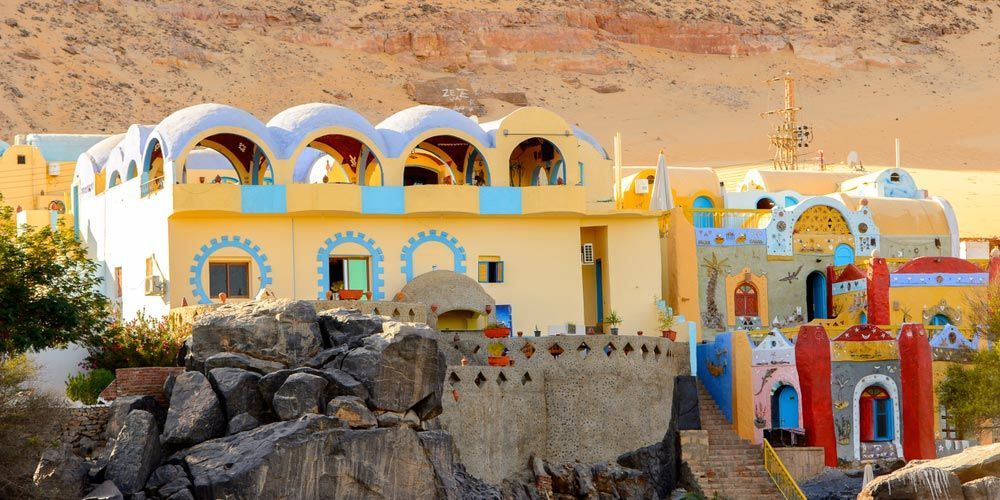
## Description The Nubian Village near Aswan is one of the most memorable cultural experiences in Upper Egypt. Famous for its bright houses, warm hospitality, and strong Nubian identity, the village offers visitors a chance to see a living culture that is distinct from the mainstream Egyptian tourist circuit. The colors of the buildings, the rhythm of the Nile, and the presence of local traditions create a setting that feels both welcoming and deeply rooted. What makes the Nubian Village special is that it is not merely a scenic stop. It is a place where everyday life, architecture, food, music, and crafts come together. Visitors often arrive expecting a photo opportunity and leave having learned about Nubian history, language, and resilience. The district's visual style is striking, with painted walls, decorative motifs, and domed or vaulted forms that reflect a practical response to climate as well as aesthetic preference. One lesser-known fact is that Nubian communities have faced major displacement over the 20th century, especially due to dam construction and changing river conditions, which makes cultural preservation particularly important. Another is that many decorative motifs on homes and walls are not random ornamentation; they often carry symbolic references to fertility, protection, heritage, or local storytelling. These details give the village a richness that rewards close observation. Food and hospitality are central to the experience. Meals may include local dishes, tea ceremonies, and conversations that help visitors understand the social fabric of the community. Music and handicrafts are also common parts of the visit, giving travelers a chance to see how traditions are maintained through daily practice rather than only through museums. The setting near the Nile adds another layer of beauty. The river shapes the village's pace and identity, and many visits include boat access or riverside views that connect the community to the wider Aswan landscape. This is not an isolated theme park version of culture; it is a place where river life, memory, and domestic space remain closely connected. For travelers who value cultural encounters over checklist tourism, the Nubian Village offers one of the most rewarding experiences in Aswan. It is colorful, welcoming, and meaningful, especially for visitors who take time to listen and engage respectfully. ## Location The Nubian Village is located near Aswan in southern Egypt, along the Nile River. It is associated with the Nubian communities of the Aswan area and is often reached by boat from the city or nearby riverfront points. The easiest way to visit is usually through a local boat transfer or an organized excursion from Aswan. Because access can vary depending on the exact village and seasonal river conditions, it is wise to confirm arrangements with a local guide or hotel before departure. ## Tips Bring small cash if you plan to buy crafts or refreshments, as small local purchases are common. Ask before taking close-up photos of people or private homes. Respectful behavior matters in a community setting. Go with a guide if you want a fuller understanding of Nubian history and symbolism. Try the local food or tea if offered, but do so in a way that feels thoughtful rather than rushed. Wear comfortable clothing suitable for warm weather and walking through village streets. Remember that the village is a living community, not just a tourist stop, so keep your pace and expectations respectful. ## Conclusion The Nubian Village near Aswan combines river scenery, cultural depth, and genuine hospitality, making it one of the most meaningful places to experience Nubian heritage in Egypt. ## FAQ ### What is the Nubian Village known for? It is known for colorful houses, Nubian culture, hospitality, crafts, and its setting along the Nile near Aswan. ### Can I visit the village independently? Often yes, but many visitors go by boat or with a guide to simplify access and improve the experience. ### Is it appropriate to take photos? Yes, but always ask before photographing people or private spaces. ### What should I buy there? Common souvenirs include crafts, textiles, and handmade items associated with Nubian culture. ## Links - [Aswan](https://en.wikipedia.org/wiki/Aswan)
GemVoyage Team • World

Chiang Mai
## Description Kad Luang Warorot Market, often simply called **Warorot Market**, is one of the oldest and most vibrant traditional markets in Chiang Mai, Thailand. Beloved by both locals and tourists, it offers a truly authentic glimpse into Northern Thai culture, daily life, and culinary traditions. Unlike the more tourist-focused night bazaars, Warorot Market is where locals shop for fresh produce, clothing, fabrics, household goods, and everyday essentials. What makes Warorot Market unique is its **blend of tradition and modernity**. You’ll find everything from fragrant herbs and spices to modern street fashion, all under one roof. Food lovers will particularly enjoy the market’s wide selection of Northern Thai specialties, such as **sai oua (spicy northern sausage)**, **nam prik ong (tomato chili dip)**, and an array of exotic fruits. A little-known fact is that Warorot Market has been serving the Chiang Mai community for over **a century**, making it not just a commercial hub but also a cultural landmark. Another interesting detail is that the market is busiest during important Thai festivals, such as **Loi Krathong and Songkran**, when it becomes a central point for celebration and shopping. ## Location Warorot Market is located in **Chiang Mai, Northern Thailand**, in the **Wat Ket district**, near the banks of the **Ping River**. It sits just a short walk from the **Chang Moi Gate** of the Old City, making it very accessible for travelers staying in central Chiang Mai. ### Recommendation on How to Get There From Chiang Mai’s Old City, you can easily reach Warorot Market on foot in about **10–15 minutes**. Alternatively, you can take a **red songthaew (shared taxi truck)**, tuk-tuk, or Grab (ride-hailing app) for a quick ride. If you’re staying farther away, taxis and scooters are also convenient options. Since parking in the area can be limited, it’s best to use public or shared transportation. ## Tips To make the most out of your visit to Warorot Market, here are some helpful tips: * **Go Early**: The market opens early in the morning, making it the best time to see locals shopping and to find the freshest food items. * **Try Local Snacks**: Don’t miss the chance to sample Chiang Mai’s famous northern sausage, sticky rice, and fried snacks sold at small food stalls. * **Bring Cash**: While some vendors may accept mobile payments, cash is still the most convenient method for small purchases. * **Explore Both Indoors and Outdoors**: The market consists of multiple levels and side streets, so take your time wandering beyond the main stalls. * **Check Out the Fabrics**: The market is also known for selling colorful textiles and hill tribe clothing, perfect for souvenirs. * **Respect Local Etiquette**: Bargaining is acceptable, but always do so politely with a smile. ## Conclusion Kad Luang Warorot Market is not just a place to shop—it’s an experience that immerses you in the everyday life of Chiang Mai. With its wide range of food, clothing, and cultural items, it offers visitors a taste of authentic Northern Thai traditions. Whether you’re hunting for souvenirs, trying local delicacies, or simply enjoying the lively atmosphere, Warorot Market is a must-visit destination in Chiang Mai. ## FAQ **1. What is Warorot Market famous for?** It is famous for its variety of goods, especially Northern Thai food, fresh produce, fabrics, and traditional clothing. **2. What are the market’s opening hours?** Warorot Market typically opens around **5 AM and closes by 6 PM**, though some food stalls remain open later in the evening. **3. Is Warorot Market suitable for tourists?** Yes, while it primarily serves locals, tourists are welcome and will find plenty of unique food and souvenirs to enjoy. **4. Can I bargain at Warorot Market?** Yes, bargaining is common, especially for clothing and non-food items, but it should always be done politely. **5. How far is the market from Chiang Mai’s Old City?** It’s just a 10–15 minute walk from the Old City, making it very accessible for most visitors. **6. Are there vegetarian or vegan food options available?** Yes, many stalls sell vegetarian-friendly dishes, fruits, and snacks, though it’s helpful to ask vendors about ingredients. ## Links * [Chiang Mai Tourism Office](https://www.tourismthailand.org/Destinations/Provinces/Chiang-Mai/101)
GemVoyage Team • World

Austin
## Description South Congress Avenue, often called SoCo, is one of Austin’s most recognizable streets and one of the easiest places to understand the city’s personality. It blends independent retail, live music, vintage style, public art, great food, and a laid-back but still very energetic street culture. For visitors, the appeal is immediate: you can walk a few blocks and encounter boutique stores, local coffee shops, iconic signs, food trucks, music venues, and skyline views that make Austin feel both creative and unmistakably Texan. What makes South Congress especially interesting is the way it combines old Austin and new Austin in one corridor. It is fashionable without feeling sterile, and busy without feeling anonymous. A little-known fact is that the nickname SoCo became part of Austin’s urban identity only after the street’s modern revival, so the district’s current fame is actually quite recent in the city’s long history. Another detail travelers may not realize is that the avenue has long been a place where local creativity surfaces first: murals, small independent brands, and neighborhood spots often appear here before they become broader trends elsewhere in the city. South Congress is also one of the best places to absorb Austin’s social rhythm. During the day, it feels relaxed, with people moving between shops, patios, and casual lunch spots. In the evening, it becomes more vibrant, especially when people are heading out for dinner, live music, or sunset views near the river and the downtown skyline. The street is not only about commerce; it is about atmosphere. Even if you buy nothing, the walk itself is part of the attraction. ## Location South Congress Avenue is in Austin, Texas, United States, running south from downtown toward the southern part of the city. It is one of the most central and accessible visitor areas in Austin, especially if you are staying downtown or near the river. The street is easy to reach by rideshare, city bus, bicycle, or on foot from nearby neighborhoods. Many visitors also combine it with the Ann and Roy Butler Hike-and-Bike Trail or with a downtown sightseeing day. Because parking can be limited and the area often gets busy, public transport, biking, or walking are usually the smartest options. Once there, the best way to explore is to move slowly and let the block-by-block mix of shops and cafés shape your route. South Congress does not need a complicated plan. The street itself is the itinerary, and the surrounding cross streets offer enough variety to fill several hours without ever feeling repetitive. ## Tips - Visit in the late afternoon or evening if you want the most energetic atmosphere. - Weekday mornings are better for a quieter stroll and easier parking. - Wear comfortable shoes, because the best way to enjoy SoCo is to walk it. - Leave room in your schedule for shopping, coffee, live music, and an unplanned stop. - Watch the skyline at sunset for one of the best views linked to the district. - If you want a more local feel, step beyond the main retail blocks and explore nearby side streets. ## Conclusion South Congress Avenue is one of Austin’s best introductions to the city’s creative side. It is colorful, lively, walkable, and full of character, making it a strong stop for first-time visitors and returning travelers alike. ## FAQ ### What is South Congress Avenue known for? It is known for boutiques, music, food, murals, and its strong association with Austin’s local identity. ### Is South Congress worth visiting at night? Yes. Evening is one of the best times to experience the street’s energy, dining, and nightlife. ### How long should I spend there? Two to four hours is a good range, though it is easy to stay longer if you shop or dine. ### Is the area walkable? Yes. South Congress is one of Austin’s most walkable visitor districts. ## Links - [Austin tourism information](https://www.austintexas.org/)
GemVoyage Team • World

Comments