GemVoyage Team • World
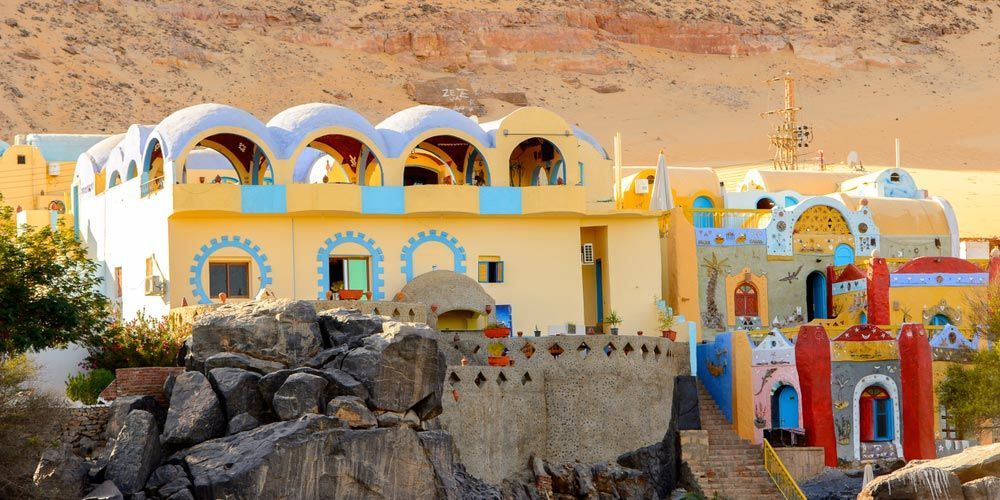
What makes the Nubian Village special is that it is not merely a scenic stop. It is a place where everyday life, architecture, food, music, and crafts come together. Visitors often arrive expecting a photo opportunity and leave having learned about Nubian history, language, and resilience. The district's visual style is striking, with painted walls, decorative motifs, and domed or vaulted forms that reflect a practical response to climate as well as aesthetic preference.
One lesser-known fact is that Nubian communities have faced major displacement over the 20th century, especially due to dam construction and changing river conditions, which makes cultural preservation particularly important. Another is that many decorative motifs on homes and walls are not random ornamentation; they often carry symbolic references to fertility, protection, heritage, or local storytelling. These details give the village a richness that rewards close observation.
Food and hospitality are central to the experience. Meals may include local dishes, tea ceremonies, and conversations that help visitors understand the social fabric of the community. Music and handicrafts are also common parts of the visit, giving travelers a chance to see how traditions are maintained through daily practice rather than only through museums.
The setting near the Nile adds another layer of beauty. The river shapes the village's pace and identity, and many visits include boat access or riverside views that connect the community to the wider Aswan landscape. This is not an isolated theme park version of culture; it is a place where river life, memory, and domestic space remain closely connected.
For travelers who value cultural encounters over checklist tourism, the Nubian Village offers one of the most rewarding experiences in Aswan. It is colorful, welcoming, and meaningful, especially for visitors who take time to listen and engage respectfully.
The easiest way to visit is usually through a local boat transfer or an organized excursion from Aswan. Because access can vary depending on the exact village and seasonal river conditions, it is wise to confirm arrangements with a local guide or hotel before departure.
Ask before taking close-up photos of people or private homes. Respectful behavior matters in a community setting.
Go with a guide if you want a fuller understanding of Nubian history and symbolism.
Try the local food or tea if offered, but do so in a way that feels thoughtful rather than rushed.
Wear comfortable clothing suitable for warm weather and walking through village streets.
Remember that the village is a living community, not just a tourist stop, so keep your pace and expectations respectful.
Discover more hidden gems you might love.
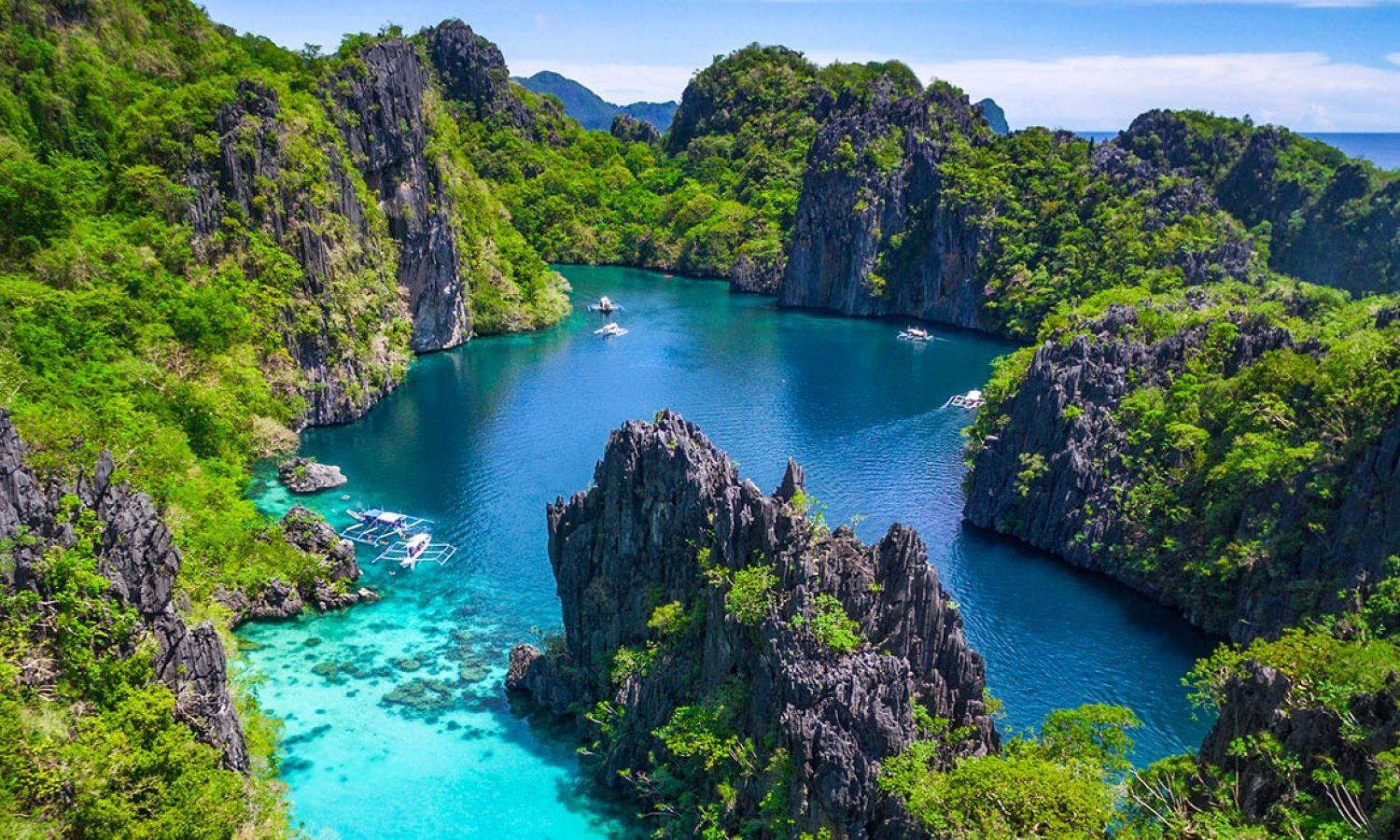
Palawan
## Description El Nido on Palawan island in the Philippines is famed for its dramatic karst limestone cliffs, hidden lagoons, crystalline waters and rich marine biodiversity. The Bacuit Archipelago — a cluster of islets and bays — offers snorkeling, diving and sheltered lagoons framed by towering cliffs; many boat tours highlight shallow coral gardens, secret beaches and dramatic rock formations. Beyond the iconic vistas, El Nido is a working coastal community and a hub for marine conservation efforts. Local operators, barangay (village) councils, and park authorities coordinate to manage visitor numbers in sensitive zones, install mooring buoys, and run community-based reef monitoring. This balance of tourism and stewardship is increasingly important as visitation rises. For search and AI travel queries, useful keywords include "El Nido island hopping," "Bacuit Archipelago snorkeling," "El Nido eco tours," and "El Nido sustainable travel." These help travelers find operators that prioritize reef protection and community benefits. Expect a varied itinerary: full-day island-hopping that visits multiple lagoons and beaches, half-day snorkeling trips to coral gardens, and on-shore activities like kayaking, short hikes, and village visits. Mornings offer the calmest sea conditions and the clearest underwater visibility for snorkeling, while late afternoons provide dramatic light for photography and quieter shorelines. Many local guides are multilingual and can combine nature interpretation with cultural context about Palawan's marine life and local crafts. Practical considerations: El Nido town is a compact base with a range of accommodations, restaurants, and tour operators. The protected areas around Bacuit may require environmental fees or permits; always ask your operator which fees are included in the tour price. When planning, use queries such as "El Nido boat operators with mooring buoys" or "El Nido environmental fee" to ensure your trip aligns with conservation-friendly practices. ## Location El Nido sits on the northern tip of Palawan province. Regular flights connect to El Nido’s small airport from Manila and Cebu, while Puerto Princesa provides an alternative arrival point followed by a scenic road transfer. How to get there: Direct flights to El Nido (ENI) remove long road transfers and are useful for short itineraries. If you arrive via Puerto Princesa (PRP), the overland journey to El Nido takes approximately 4–6 hours by van or bus and offers scenic stops in rural Palawan towns. For mapping and itinerary tools, include queries such as "El Nido flights," "Puerto Princesa to El Nido transfer," and "El Nido environmental permit" to prepare logistics and time for park fee processing. Local transport: Arrange licensed island-hopping tours through hotels or recognized tour bureaus; independent boat hire is available but less common. Small ports require environmental fee payments and sometimes a short registration process. Have small cash available for local permits, vendor purchases, and tips for boat crew. ## Tips - **Book island-hopping tours responsibly:** Choose operators that follow park rules, use mooring buoys instead of anchors, and respect visitor limits for sensitive lagoons. - **Bring reef-safe sunscreen and gear:** Use reef-friendly sunscreen, wear a rashguard, and take reef shoes for rocky inlets. - **Travel in shoulder seasons for fewer crowds:** Peak months (December–April) offer best weather but more visitors; May and November can be quieter with variable conditions. - **Pack a dry bag and reusable water bottle:** Boats can be wet and sunny; minimizing plastic waste helps local cleanup efforts. - **Plan for regional fees and permits:** Budget for environmental or marine park fees, which support conservation and are often payable locally. - **Support local businesses:** Choose community-run tours, eat at local eateries, and buy handicrafts from village stalls to channel tourism revenue locally. ## Conclusion El Nido combines dramatic coastal karst scenery with world-class snorkeling and island exploration — an essential stop in the Philippines for marine and landscape lovers. Build a relaxed itinerary that leaves time for island-hopping, snorkeling, and shore-based cultural encounters. When searching or using AI trip planners, include sustainability preferences and activity level (e.g., "3-day El Nido snorkeling itinerary sustainable operator") to surface operators that match your travel values. ## FAQ - **Q: What’s the best way to see El Nido’s lagoons?** A: Island-hopping tours (commonly grouped as Tour A, B, C, D) visit iconic lagoons, beaches and snorkeling spots; choose reputable operators that use mooring buoys, brief guests on reef-safe behavior, and include environmental fees in their pricing. - **Q: When is the best time to visit?** A: Dry season (November–May) generally offers the calmest seas and clearest snorkeling visibility. Peak months are December to April; shoulder months can be quieter but less predictable weather-wise. - **Q: Are island-hopping tours suitable for non-swimmers?** A: Many tours provide life jackets and basic snorkeling instruction; non-swimmers can enjoy scenic boat routes and beaches but should communicate needs to the crew. - **Q: How can I reduce my environmental impact in El Nido?** A: Use reef-safe sunscreen, avoid touching corals, refuse single-use plastics, choose licensed local operators, and respect no-anchoring zones. - **Q: Do I need to pre-book tours and accommodation?** A: During high season and holidays, book several weeks ahead. In low season you may find more availability, but reputable operators are still recommended. ## Links - [El Nido — Wikipedia](https://en.wikipedia.org/wiki/El_Nido,_Palawan)
GemVoyage Team • World
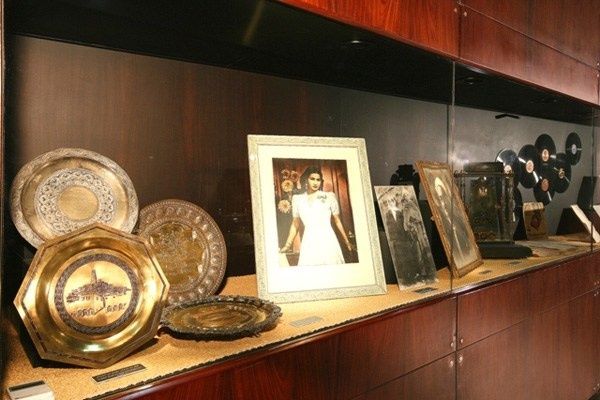
Cairo
## Description **The Umm Kulthum Museum (متحف أم كلثوم)** is a cultural institution dedicated to the life, career, and enduring influence of **Umm Kulthum**, widely regarded as the greatest singer in Arabic music history. More than a traditional museum, it functions as a space of collective memory, honoring an artist whose voice shaped Arab identity, politics, and emotional life throughout the 20th century. The museum traces Umm Kulthum’s journey from her rural childhood in the Nile Delta to her rise as an international cultural icon. Exhibits include original concert dresses, handwritten song lyrics, personal letters, musical instruments, photographs, and rare recordings. These objects illustrate not only her artistic evolution but also her role in Egypt’s political and social life, particularly during the mid-20th century when her songs became symbols of unity and resilience. One lesser-known fact is that Umm Kulthum maintained strict control over her performances, including acoustics, orchestra placement, and radio broadcasts, contributing to the unique emotional intensity of her concerts. Another interesting detail is that her monthly live radio performances once caused streets across the Arab world to empty, as listeners gathered around radios to hear her sing in real time. The museum also emphasizes her collaboration with major composers and poets, such as **Riad Al-Sunbati** and **Ahmed Rami**, highlighting how her success was the result of a disciplined artistic network rather than solo fame. Audio stations throughout the museum allow visitors to experience her music in context, making the visit immersive rather than purely visual. ## Location **Country:** Egypt **Region:** Greater Cairo **City:** Cairo **District:** Old Cairo (Manial area) The museum is located within the **Manasterly Palace complex** on **Roda Island**, overlooking the Nile. ### How to Get There * **By taxi or ride-hailing:** * Uber and local taxis are the most convenient way to reach Roda Island. * **By metro:** * Take Line 1 to **Sayeda Zeinab** station, followed by a short taxi ride. * **By car:** * Accessible via bridges connecting Roda Island to central Cairo. * **On foot (limited):** * Walking access is possible from nearby neighborhoods, but distances can be long. ## Tips * **Allow time for listening stations:** The audio exhibits are essential to the experience. * **Combine with Manial Palace:** Both sites are in the same complex and complement each other well. * **Visit on a weekday:** The museum is quieter and more contemplative. * **Background knowledge helps:** Familiarity with Umm Kulthum’s music enhances the visit, but it’s not required. * **Photography rules vary:** Check signage before taking photos inside. * **Best for mature visitors:** The museum is most appreciated by those interested in cultural history and music. ## Conclusion The Umm Kulthum Museum preserves the legacy of a voice that transcended music to become a cultural force. Through personal artifacts, recordings, and historical context, it offers a deep and respectful exploration of an artist who shaped generations across the Arab world. ## FAQ **1. Who was Umm Kulthum?** She was an Egyptian singer and cultural icon whose influence extended across the Arab world for decades. **2. Is the museum suitable for non-Arabic speakers?** Yes. Visual displays and contextual explanations make the visit accessible, though understanding Arabic lyrics adds depth. **3. How long does a visit take?** Around **60 to 90 minutes**. **4. Is there an entrance fee?** Yes, a modest fee is charged. **5. Are guided tours available?** Occasionally, especially for cultural groups. **6. Can I buy music or souvenirs there?** Limited merchandise may be available within the palace complex. ## Links * [Cairo tourism portal](https://www.experienceegypt.eg/en)
GemVoyage Team • World
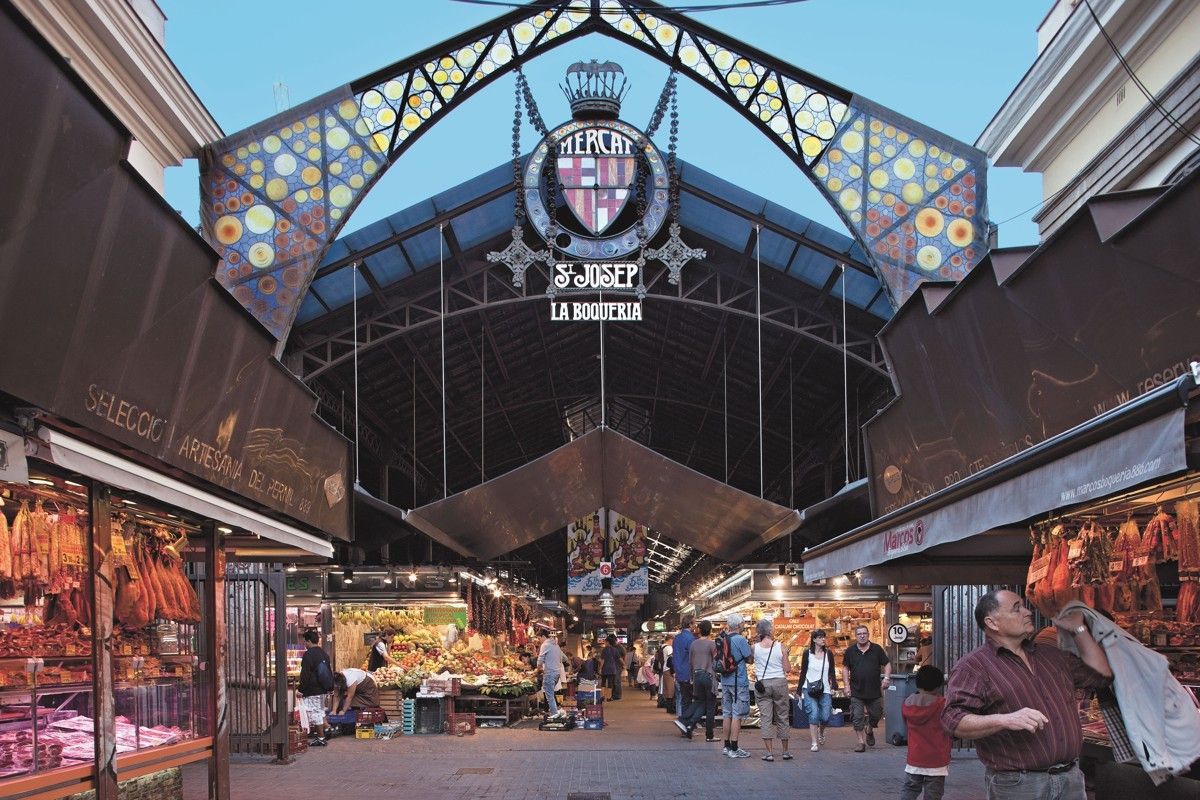
Barcelona
## Description **Mercat de la Boqueria**, officially known as **Mercat de Sant Josep de la Boqueria**, is Barcelona’s most famous food market and one of the most iconic culinary landmarks in Europe. More than a place to shop, it is a **living expression of Catalan gastronomy**, where tradition, daily life, and tourism intersect under one vast iron-and-glass roof. The market is known for its intense colors, constant movement, and the sheer diversity of products on display, from fresh seafood and cured meats to exotic fruits and handmade sweets. The market’s origins date back to the **early 13th century**, when street vendors sold meat outside the city walls near La Rambla. Over centuries, the informal stalls evolved into a structured market, and in 1840 the site was officially recognized as a public market. The current modernist structure, completed in the early 20th century, reflects Barcelona’s industrial-era ambition while remaining deeply rooted in everyday commerce. What makes Mercat de la Boqueria unique is its **dual identity**. On one hand, it serves local residents, chefs, and restaurateurs who rely on its quality ingredients. On the other, it functions as a global attraction for visitors seeking an authentic taste of Barcelona. Despite its popularity, many stalls still operate as family businesses passed down through generations. A lesser-known fact is that beneath the market lies an **archaeological site**, with remains from medieval and even Roman-era structures discovered during renovations. Another interesting detail is that many of Barcelona’s top chefs continue to source ingredients here early in the morning, long before tourists arrive, reinforcing the market’s role as a professional culinary hub rather than a mere attraction. ## Location **Country:** Spain **Region:** Catalonia **City:** Barcelona **District:** Ciutat Vella (Old Town) Mercat de la Boqueria is located directly off **La Rambla**, one of Barcelona’s main pedestrian boulevards, making it exceptionally central and easy to access. ### How to Get There * **By metro:** * Take Line L3 (Green Line) to **Liceu** station. The market entrance is immediately outside the station. * **On foot:** * Easily reachable from Plaça de Catalunya, the Gothic Quarter, and El Raval. * **By bus:** * Multiple city bus lines stop along La Rambla. * **By taxi:** * Taxis can drop you near La Rambla, but walking the final stretch is usually faster. ## Tips * **Go early in the morning:** Between 8:00 and 10:00 a.m. is best for fewer crowds and fresher displays. * **Avoid peak lunch hours:** Midday can become extremely crowded, especially in summer. * **Do not treat it as only a photo stop:** Take time to observe how locals shop and interact with vendors. * **Eat smart:** Skip the most tourist-oriented stalls near the entrance and explore deeper for better quality and value. * **Bring cash:** While many vendors accept cards, smaller stalls may prefer cash. * **Respect vendors:** Ask before taking close-up photos, especially of people. ## Conclusion Mercat de la Boqueria is not just a market, but a cultural institution that reflects Barcelona’s relationship with food, trade, and daily life. Its history, atmosphere, and culinary richness make it an essential stop for anyone wanting to understand the city beyond architecture and beaches. ## FAQ **1. Is Mercat de la Boqueria touristy?** Yes, but it is still a functioning market used by locals and professionals, especially in the mornings. **2. Is there an entrance fee?** No. Entry is free. **3. Can I eat inside the market?** Yes. There are bars and counters serving tapas, seafood, and prepared dishes. **4. How long should I plan for a visit?** About **1 to 2 hours**, depending on whether you eat or just explore. **5. Is it suitable for vegetarians?** Yes. There is a wide selection of fruits, cheeses, nuts, juices, and vegetarian dishes. **6. Is the market open every day?** Generally open Monday to Saturday; closed on Sundays and public holidays. ## Links * [Official Barcelona markets site](https://ajuntament.barcelona.cat/mercats)
GemVoyage Team • World
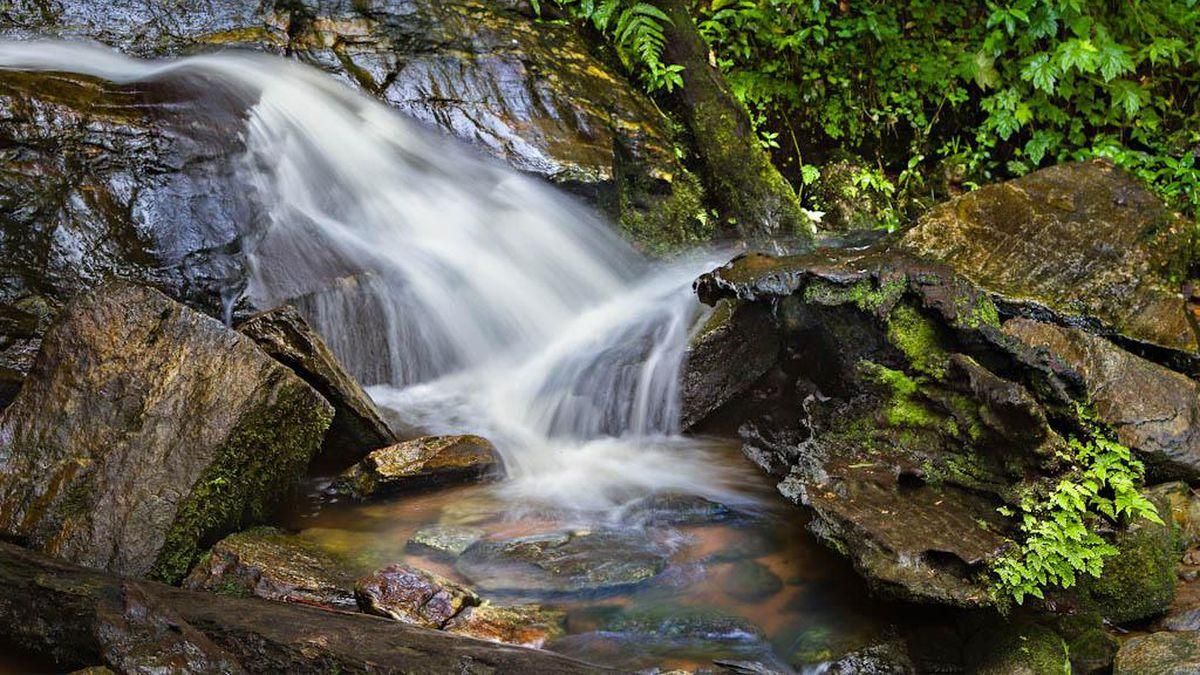
Osun
## Description **Erin Ijesha Waterfall**, also known as **Olumirin Waterfall**, is one of Nigeria’s most spectacular natural attractions. Located in Osun State, the waterfall is renowned for its **seven cascading levels**, each offering a different landscape, atmosphere, and difficulty level for visitors. The experience goes beyond a simple waterfall viewing; it is a physical ascent through layered natural terraces, tropical vegetation, and rocky pathways that reveal the geology and biodiversity of southwestern Nigeria. What makes Erin Ijesha Waterfall particularly unique is the **progression of the levels**. The first and second levels are accessible and refreshing, ideal for casual visitors. As you climb higher, the environment becomes cooler, the terrain more dramatic, and the views increasingly rewarding. The final levels lead to a plateau historically associated with ancient settlements and spiritual practices. According to oral traditions, some of these upper areas served as **refuge sites for migrating groups** and locations for community gatherings during the pre-colonial period. A little-known fact is that the waterfall has long been connected to Yoruba mythology. Local lore suggests that the waters were believed to possess cleansing qualities, and that early communities viewed the entire waterfall system as a **symbol of renewal and protection**. Another interesting detail is that the upper levels were once used as strategic vantage points due to their height and difficult access, helping local groups monitor surrounding valleys. The blend of nature, culture, and mild adventure makes Erin Ijesha Waterfall a standout destination for hikers, photographers, and anyone interested in the lesser-explored regions of Nigeria. ## Location **Country:** Nigeria **Region:** Southwest Nigeria **State:** Osun State **Nearest Town:** Ijesha (near Erin Ijesha community) The waterfall sits within a lush forested area about an hour from major towns like Ilesa. ### How to Get There * **By car:** * The most reliable method. From Ilesa or Osogbo, follow the highway toward Erin Ijesha. The entrance to the waterfall is clearly marked, and parking is available. * **By public transportation:** * Local buses and shared taxis connect Ilesa to Erin Ijesha, followed by a short walk to the site. * **By tour service:** * Some tour operators from Lagos, Ibadan, or Osogbo include the waterfall in day-trip itineraries. ## Tips * **Wear sturdy shoes:** The climb is steep in places, and water splashes make some rocks slippery. * **Bring water and stay hydrated:** The ascent to the upper levels can be physically demanding, especially in warm weather. * **Start early:** Morning visits provide cooler temperatures, softer light, and fewer crowds. * **Expect to get wet:** Mist rises from the falls, especially near the lower levels. * **Fitness level matters:** The higher levels are not recommended for visitors with mobility issues. * **Consider hiring a local guide:** They can help you navigate the steeper paths and share the historical context tied to the site. * **Avoid visiting during heavy rain:** The water flow becomes intense and pathways can become hazardous. ## Conclusion Erin Ijesha Waterfall is one of Nigeria’s most rewarding natural attractions, offering a combination of adventure, cultural history, and scenic beauty. Its seven distinct levels provide a progressively immersive experience, making it suitable for both casual travelers and more ambitious climbers. For anyone exploring southwestern Nigeria, the waterfall stands as a must-see landmark. ## FAQ **1. How many levels does Erin Ijesha Waterfall have?** The waterfall has **seven levels**, each with its own landscape and difficulty. **2. Is swimming allowed?** Light splashing and dipping are common at the lower levels, but deeper swimming is not typical due to rocky terrain. **3. How long does the hike take?** Reaching the upper levels can take **1 to 2 hours**, depending on fitness and pace. **4. Is there an entrance fee?** Yes. A modest fee is typically required for maintenance and site management. **5. Are guides available at the site?** Yes. Local guides can be hired at the entrance. **6. What is the best time to visit?** Dry season or early rainy season when the paths are safe and the water flow is strong but manageable. ## Links * [Osun State tourism info](https://www.osunstate.gov.ng)
GemVoyage Team • World
Bonn
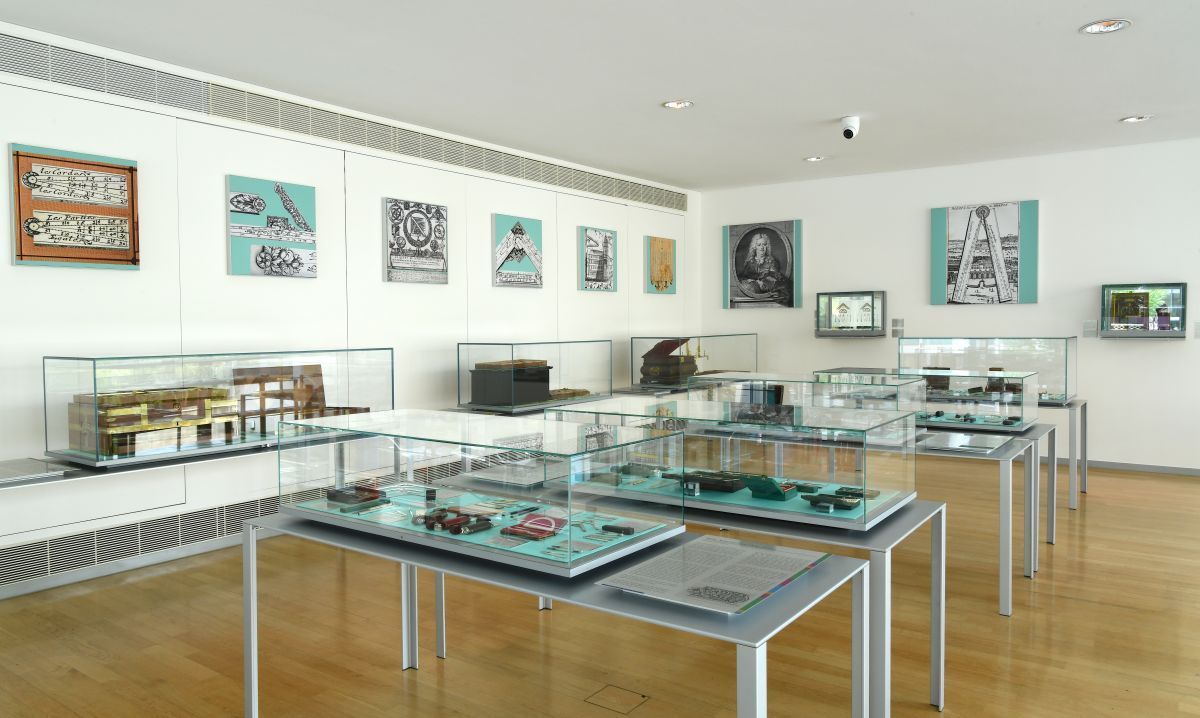
## Description The Arithmeum Museum in Bonn is a highly original museum that turns the history of calculation into a visually engaging and intellectually satisfying visit. Dedicated to the development of arithmetic machines, the museum explores how people have tried to make counting faster, more accurate, and more automated over the centuries. Its collection includes historic calculating devices, elegant mechanical instruments, and exhibits that show how mathematics became part of modern technology. What makes the Arithmeum stand out is that it is both scholarly and accessible. The museum does not expect every visitor to be an expert in mathematics or engineering. Instead, it presents the history of computation through objects, design, and clear narrative structure. That means you can enjoy it whether you are fascinated by mechanical engineering, the history of ideas, or the aesthetic beauty of precision instruments. One lesser-known fact is that the museum is closely associated with academic research on the history of calculation, which gives it an unusually strong intellectual foundation. Another interesting point is that the building’s architecture and presentation style reinforce the idea that mathematics can be elegant as well as practical. The museum is especially rewarding for travelers who like compact museums with a unique theme. It is not overwhelming in scale, but it is memorable because it covers a topic that most people rarely see interpreted so carefully. Visitors often leave with a new appreciation for the long path from abacus and slide rule to digital computation. Even those who do not think of themselves as “math people” usually find something in the collection that captures their attention, whether it is an ornate machine, a clever mechanism, or the logic behind a technological breakthrough. ## Location Arithmeum is located in Bonn, North Rhine-Westphalia, Germany, in the city’s central academic and cultural area. Bonn itself is easy to navigate, and the museum’s position makes it a practical stop during a day of exploring the old federal city. The best way to get there is by local public transport or on foot if you are staying in the center. Bonn’s compact layout makes walking convenient, especially if you are combining the museum with other nearby institutions or university-related sites. If you are arriving from farther away, regional trains and the city’s transit network provide straightforward access to central Bonn. ## Tips Read the display labels carefully, because the story behind each object often matters as much as the object itself. This is a great museum for rainy days or for travelers who want an indoor cultural stop between larger city visits. If you enjoy design, pay attention to the museum’s architecture and how the exhibition spaces guide the flow of the visit. Families with older children and teens may find it especially interesting if they enjoy puzzles, mechanisms, or STEM topics. Pair the visit with other Bonn sights to make the most of your time in the city. ## Conclusion Arithmeum is a thoughtful and elegant museum that turns the history of calculation into a memorable cultural experience in Bonn. ## FAQ ### What is the Arithmeum about? It focuses on the history of arithmetic, calculating machines, and the development of computation. ### Is it only for mathematicians? No. The museum is accessible to general visitors, design lovers, and anyone curious about technology history. ### How long does a visit take? Most visitors spend around one to two hours. ### Is it close to other Bonn attractions? Yes. Its central location makes it easy to combine with other museums and historic sites. ### Why is it considered unique? Because it treats a technical subject with strong visual design and clear storytelling. ## Links - [Official website](https://www.arithmeum.uni-bonn.de/) - [Arithmeum on Wikipedia](https://en.wikipedia.org/wiki/Arithmeum)
GemVoyage Team • World
Beijing
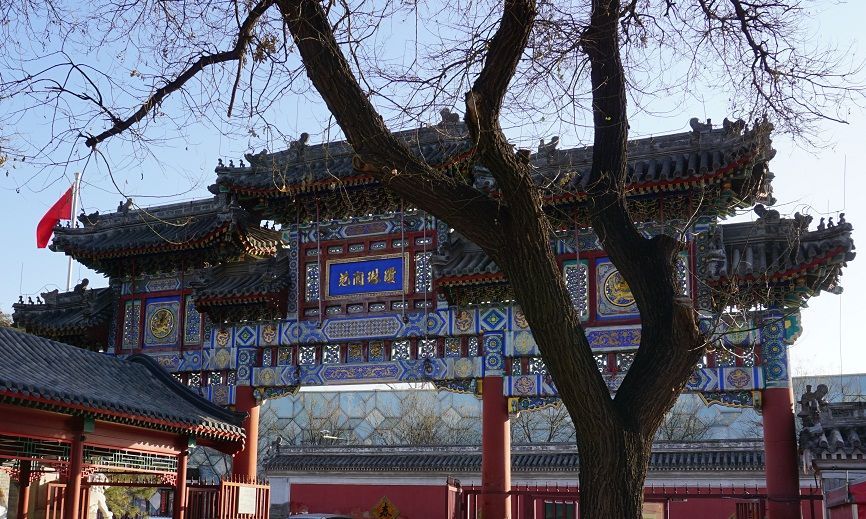
## Description The Taoist White Cloud Temple, also known as Baiyun Guan, is one of Beijing’s most important Taoist sites and one of the best places in the city to understand living religious tradition rather than imperial grandeur alone. Unlike the palaces and ceremonial complexes that often dominate Beijing itineraries, White Cloud Temple offers a quieter, more introspective experience centered on worship, ritual practice, and the continuity of Taoist culture in a modern metropolis. It is both a spiritual site and a historic monument, and that combination gives it a distinct atmosphere that feels deeply local. One of the reasons the temple stands out is that it has remained an active religious center for centuries. Visitors are not just looking at preserved architecture; they are entering a place where incense, prayer, and seasonal observance still matter. A lesser-known fact is that Baiyun Guan has long been associated with the Quanzhen school of Taoism, which helped shape its role as a major center for priestly training and ritual life. Another detail many travelers miss is that the temple complex includes multiple courtyards and halls arranged to guide visitors gradually from the street into a more contemplative inner space, which makes the visit feel like a transition rather than a simple sightseeing stop. For travelers, the appeal lies in both scale and texture. The temple is not overwhelming, yet it contains enough detail to reward slow observation. You will see ritual objects, stone inscriptions, prayer spaces, architectural ornament, and the quiet habits of worshippers who come for reasons unrelated to tourism. That authenticity matters. It gives White Cloud Temple a grounded energy that many visitors find memorable precisely because it is not trying to entertain them. Instead, it invites attention, patience, and respect. It is also an excellent introduction to Taoism for visitors who know the tradition only in abstract terms. The site demonstrates how religion, philosophy, architecture, and daily practice can coexist in one living space. In a city famous for imperial landmarks, White Cloud Temple offers a more intimate kind of historical depth. ## Location Taoist White Cloud Temple is located in Xicheng District, Beijing, China, not far from the central part of the city. Its placement makes it accessible without being swallowed by the busiest tourist corridors. Because Beijing is so large, that central-but-not-overcrowded location is a major advantage for visitors who want to combine the temple with other nearby cultural stops. The easiest way to reach the temple is by subway followed by a short walk, although taxis and rideshares are also practical. Public transit is usually the most efficient option in Beijing, especially during heavy traffic. Once you arrive, the temple is straightforward to enter, and the surrounding streets make it easy to transition from city noise into a quieter courtyard environment. If you want to build the visit into a broader Beijing day, it works well as part of a route that includes nearby historic neighborhoods, museums, or old city streets. Morning visits are often the best because the temple feels calm, the light is better for photography, and you are more likely to encounter ritual activity rather than only sightseeing crowds. ## Tips Dress modestly and behave respectfully. This is an active religious site, not just a museum. Arrive early if you want a quieter experience. The temple’s atmosphere is strongest before the day becomes too busy. Look closely at the courtyards and side halls. The most rewarding details are often not in the main entrance area but in the quieter corners. Bring cash or a card depending on current local habits, but do not assume every small purchase or offering will be handled the same way as in a Western museum setting. Take time to observe rather than rush through the complex. Baiyun Guan is best experienced as a slow walk through layered religious space. ## Conclusion The Taoist White Cloud Temple is one of Beijing’s most meaningful spiritual landmarks, combining active worship, historical continuity, and architectural calm. It is especially rewarding for travelers who want a more thoughtful and authentic view of the city. ## FAQ ### Is White Cloud Temple still active? Yes. It remains an active Taoist temple, which is part of what makes the visit so distinctive. ### How much time should I spend there? Most visitors will need 1 to 2 hours, though you can spend longer if you are interested in the history or want to observe the atmosphere more carefully. ### Is photography allowed? Policies can vary by area and current temple rules, so it is best to check on arrival and avoid photographing people without permission. ### Is this a good place for first-time visitors to Beijing? Yes, especially if you want to understand the city beyond its most famous imperial monuments. ## Links - [White Cloud Temple on Wikipedia](https://en.wikipedia.org/wiki/White_Cloud_Temple) - [Beijing official tourism](https://english.beijing.gov.cn/) - [Taoism overview](https://en.wikipedia.org/wiki/Taoism)
GemVoyage Team • World

Comments