GemVoyage Team • World
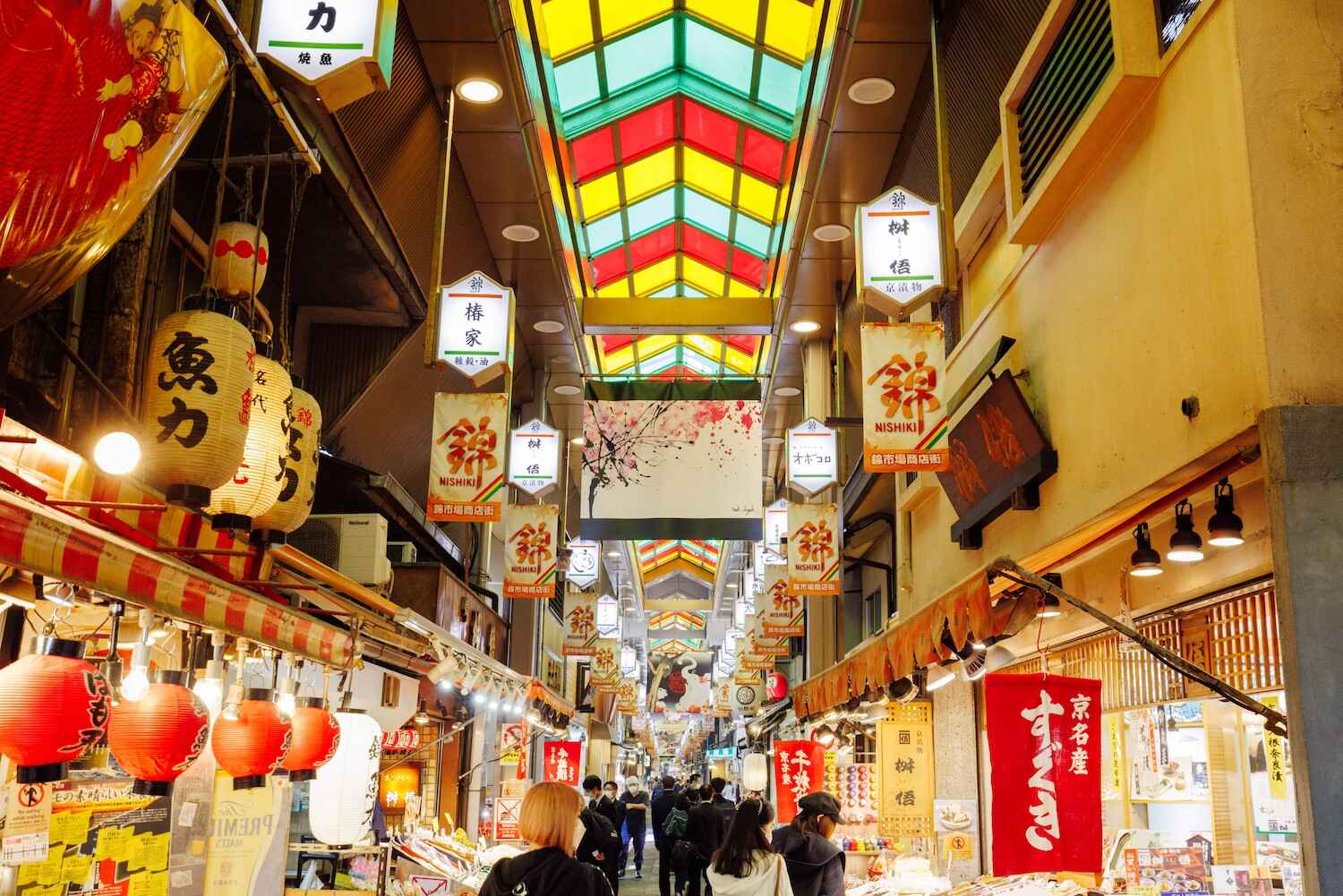
Nishiki Market, often called “Kyoto’s Kitchen”, is one of the most famous traditional markets in Japan. Stretching about 400 meters through the heart of Kyoto, this lively covered arcade is lined with more than 120 shops and stalls, each offering a unique slice of local culture. From fresh seafood and seasonal produce to traditional sweets, pickles, and kitchenware, Nishiki Market provides an authentic experience of Kyoto’s culinary heritage.
What makes Nishiki Market truly unique is its focus on local and specialty products. Many of the vendors have been running family businesses for generations, preserving recipes and traditions that date back hundreds of years. As you wander through, you’ll notice the atmosphere is both bustling and intimate—a blend of locals doing their shopping and tourists sampling delicacies for the first time.
A little-known fact is that Nishiki Market dates back to the early 14th century, making it more than 700 years old. It originally started as a wholesale fish market before expanding into a diverse food street. Another interesting detail is that some stalls offer free samples, encouraging visitors to try everything from roasted chestnuts to unusual treats like octopus stuffed with quail eggs.
Nishiki Market is located in Kyoto, within the Kansai region of Japan. More precisely, it lies in the downtown Nakagyo Ward, running parallel to Shijo Street and between Teramachi and Takakura streets. Its central location makes it easy to access and an ideal stop while exploring other nearby attractions such as Gion, Pontocho Alley, and Nishiki Tenmangu Shrine.
How to get there:
Because of its central location, Nishiki Market can easily be combined with a day of shopping in Shijo-Kawaramachi or sightseeing in Gion.
To fully enjoy Nishiki Market, here are some practical tips for visitors:
Nishiki Market is more than just a shopping street—it’s a living museum of Kyoto’s culinary traditions. With its centuries-old history, diverse food offerings, and lively atmosphere, the market provides visitors with an unforgettable journey into the flavors and culture of Japan’s ancient capital. Whether you’re sampling street food, buying souvenirs, or soaking in the ambiance, Nishiki Market is a must-visit destination in Kyoto.
1. What is Nishiki Market famous for?
Nishiki Market is known as “Kyoto’s Kitchen,” offering traditional foods, local specialties, and cultural goods that represent the essence of Kyoto’s culinary heritage.
2. What are the opening hours of Nishiki Market?
Most shops open around 9:00 AM and close by 6:00 PM, though hours vary by vendor. It’s best to visit during the daytime.
3. Is Nishiki Market free to enter?
Yes, entry is free. You only pay for the food or items you buy.
4. How long does it take to walk through Nishiki Market?
The market itself can be walked in 20–30 minutes, but most visitors spend 1–2 hours browsing, eating, and shopping.
5. Is Nishiki Market suitable for vegetarians?
Yes, while many stalls sell seafood and meat, there are plenty of vegetarian options like tofu, yuba, pickles, and sweets.
6. Can I buy souvenirs at Nishiki Market?
Absolutely. In addition to food, the market has shops selling kitchenware, chopsticks, ceramics, and traditional Kyoto crafts.
Discover more hidden gems you might love.
Alkmaar
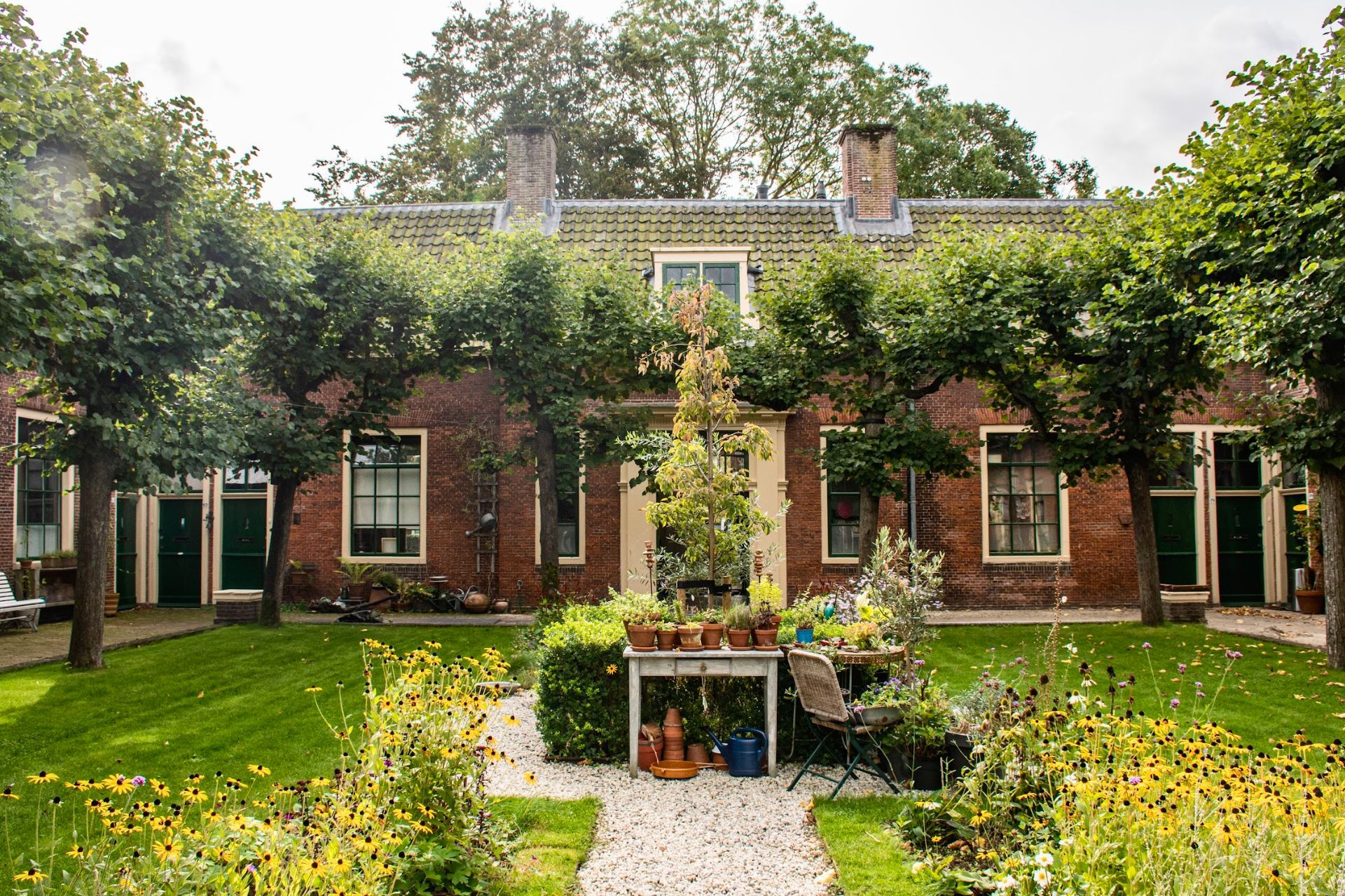
## Description The hofjes of Alkmaar are among the city’s most charming and quietly rewarding sights. A hofje is a small courtyard surrounded by houses, often originally built as charitable housing or sheltered living spaces. In Alkmaar, these courtyards offer visitors a chance to step away from the busier streets and discover a softer side of the historic center. They are not usually flashy attractions, but they carry a strong sense of place and reveal how Dutch urban life has long balanced practicality, community, and privacy. What makes the hofjes especially appealing is their atmosphere. Behind relatively modest entrances, you may find tranquil gardens, neat facades, and a sense of order that contrasts beautifully with the livelier market streets outside. Many travelers notice that visiting a hofje feels different from visiting a museum: there is less interpretation and more immediate experience. One lesser-known fact is that hofjes were often tied to local philanthropy, religious duty, or social care, which means they are not only architectural curiosities but also social history in built form. Another interesting detail is how varied they can be from city to city; Alkmaar’s examples reflect local patterns of urban development and domestic life. The hofjes are worth seeking out if you like walking slowly and noticing details. They reward respectful curiosity because they often remain residential or semi-private in character. That means the visitor experience is less about spectacle and more about atmosphere, silence, and contrast. In a city that is also known for markets and canals, the hofjes provide a calmer layer of heritage. For travelers interested in photography, architecture, or the hidden structure of old towns, they add depth to a visit and help make Alkmaar feel more layered than a quick day trip might suggest. ## Location The hofjes are scattered through Alkmaar, North Holland, the Netherlands, mainly within and around the historic city center. Since they are not a single building but a group of courtyard spaces, the best way to experience them is on foot while exploring the old streets. If you arrive by train, the city center is easy to reach, and from there you can include hofjes in a walking route with other historic landmarks. A map or walking guide can help you locate the best examples, since some are more discreet than others. The compact scale of Alkmaar makes it practical to explore several in one visit. ## Tips Move quietly and respectfully, since some courtyards are residential or semi-residential. Look beyond the main facades; the real appeal is often inside the courtyard itself. Combine the hofjes with Alkmaar’s canals, churches, and market streets for a fuller historic experience. Go slowly and allow time for small detours, because the best courtyards are easy to miss if you rush. ## Conclusion The hofjes of Alkmaar are peaceful hidden spaces that reveal the city’s charitable, architectural, and residential history in a subtle and memorable way. ## FAQ ### What is a hofje? A hofje is a courtyard housing complex, often created for social or charitable purposes. ### Are Alkmaar’s hofjes open to visitors? Some are visible or accessible to varying degrees, but visitors should always respect privacy and posted rules. ### Why should I visit them? They show a quieter, more intimate side of Dutch urban heritage. ### How much time do I need? You can see several in a one- to two-hour walking route, depending on how much you stop. ### Do I need a guide? Not necessarily, but a walking map or local information helps you find the best examples. ## Links - [Alkmaar official tourism information](https://www.inalkmaar.nl/en-gb) - [Hofje on Wikipedia](https://en.wikipedia.org/wiki/Hofje)
GemVoyage Team • World
Taiwan
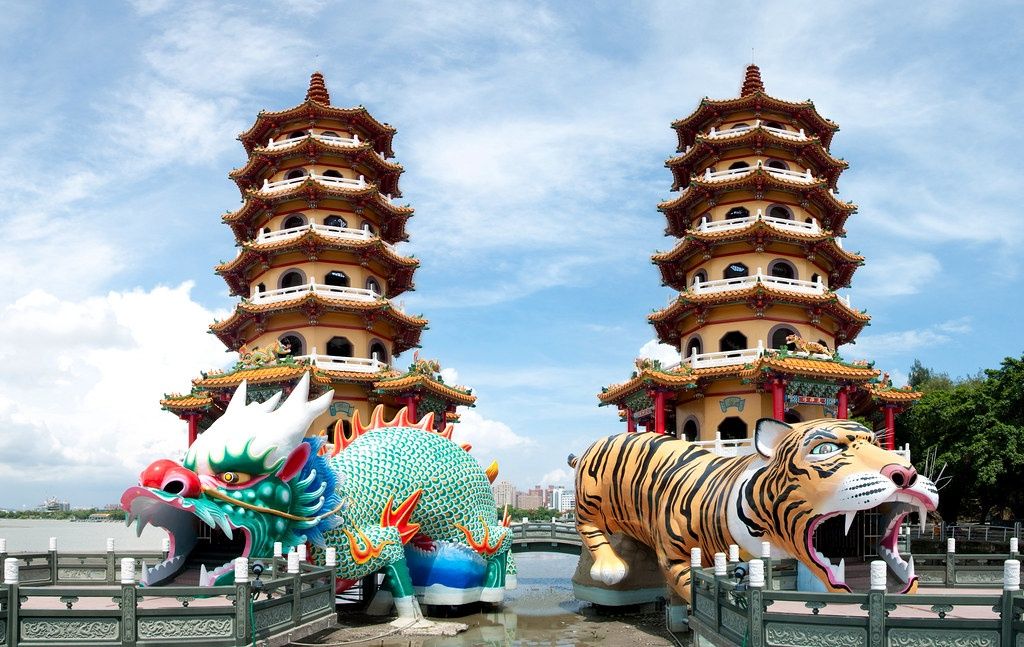
## Description The **Dragon and Tiger Pagodas (龍虎塔)** are among the most iconic landmarks in **Kaohsiung**, Taiwan’s bustling southern port city. Rising gracefully from the edge of **Lotus Pond (蓮池潭)**, these twin seven-story pagodas are not only stunning examples of traditional **Chinese temple architecture** but also powerful symbols of **spiritual balance and good fortune**. Built in **1976**, the pagodas belong to the **Cihji Palace (慈濟宮)**, a Taoist temple dedicated to the deity **Baosheng Dadi**, the God of Medicine. Each pagoda stands approximately **30 meters high** and is colorfully adorned with intricate carvings, ornate balconies, and auspicious motifs depicting dragons, tigers, phoenixes, and deities. The vibrant yellow, red, and gold hues shimmer under the sunlight, reflecting beautifully on the tranquil surface of Lotus Pond. What makes the Dragon and Tiger Pagodas unique is the **way visitors enter and exit**: you must **enter through the dragon’s mouth and exit through the tiger’s mouth**. According to local belief, this symbolizes turning bad luck into good fortune — entering the dragon (associated with strength and virtue) and leaving through the tiger (a symbol of courage and protection) ensures a spiritual cleansing and renewal of destiny. Inside the corridors of each pagoda, visitors find **mural paintings and sculptures** depicting Taoist stories, scenes from Buddhist hell, and images of celestial beings. These serve as both spiritual teachings and vivid works of art. The upper floors of the pagodas offer **panoramic views** of the Lotus Pond area, including nearby temples such as the **Spring and Autumn Pavilions**, the **Confucius Temple**, and the **Five Mile Pavilion**. A lesser-known fact is that the Dragon and Tiger Pagodas were constructed on **pontoons extending over the water**, connected to the shore by zigzagging bridges — a traditional Chinese design believed to **ward off evil spirits**, as they can only travel in straight lines. The pagodas also align perfectly with the **Feng Shui energy** of the surrounding mountains and pond, reinforcing their spiritual significance in Taiwanese culture. ## Location The **Dragon and Tiger Pagodas (龍虎塔)** are located on the **southern shore of Lotus Pond (蓮池潭)** in **Zuoying District**, **Kaohsiung City**, **Taiwan**. **Address:** No. 9, Liantan Road, Zuoying District, Kaohsiung City, Taiwan To get there: * **By MRT:** Take the **Kaohsiung MRT Red Line** to **Zuoying Station (R16)** or **Ecological District Station (R15)**, then walk or take a short taxi ride (about 5–10 minutes). * **By train:** The **Taiwan High-Speed Rail (THSR) Zuoying Station** is nearby; from there, taxis or local buses easily reach the site. * **By bus:** Buses **301, 218, or Red 51A** stop close to Lotus Pond. * **By bike or on foot:** The **Lotus Pond Scenic Area** has well-marked walking and cycling paths, perfect for leisurely exploration. ## Tips * **Enter through the dragon, exit through the tiger:** Follow the traditional route for good luck and spiritual harmony. * **Visit at sunset:** The golden light reflecting off the pond makes the pagodas even more breathtaking. * **Climb to the top:** Each level offers stunning views of Lotus Pond and the Kaohsiung skyline. * **Explore nearby attractions:** Don’t miss the **Spring and Autumn Pavilions**, **Confucius Temple**, and **Pei Chi Pavilion**, all within walking distance. * **Wear comfortable shoes:** There are several steps inside the pagodas, and the paths around the pond are best explored on foot. * **Bring a camera:** The colorful architecture and reflections on the water make it one of the most photogenic spots in southern Taiwan. * **Early morning visit:** For a more peaceful experience, visit before 9 AM when the area is quiet and temperatures are cooler. ## Conclusion The **Dragon and Tiger Pagodas** are not just architectural marvels — they are living embodiments of **Taiwanese spirituality, folklore, and artistry**. From their dazzling colors to the symbolic dragon-and-tiger design, they invite visitors into a world where legend meets serenity. Overlooking the tranquil waters of Lotus Pond, these pagodas remind every traveler of the enduring harmony between nature, faith, and human creativity. Whether you come for photography, culture, or quiet reflection, the Dragon and Tiger Pagodas offer a truly unforgettable window into Taiwan’s spiritual soul. ## FAQ **1. When were the Dragon and Tiger Pagodas built?** They were built in **1976** as part of the **Cihji Palace** complex, dedicated to the Taoist God of Medicine. **2. Why do visitors enter through the dragon and exit through the tiger?** According to tradition, entering the dragon’s mouth and exiting the tiger’s mouth symbolizes **transforming bad luck into good fortune**. **3. How tall are the pagodas?** Each pagoda is approximately **30 meters (98 feet)** tall, offering panoramic views from the upper levels. **4. Is there an entrance fee?** No — **admission is free** for all visitors. **5. What is the best time to visit?** **Early morning or late afternoon (sunset)** provides the best lighting and fewer crowds. Evening visits are also beautiful when the pagodas are illuminated. **6. Can you climb inside the pagodas?** Yes, visitors can climb to the top through interior staircases for views of **Lotus Pond and surrounding temples**. **7. Are the pagodas accessible year-round?** Yes, the site is open **daily**, though opening hours may vary slightly with the seasons. ## Links * [Taiwan Tourism Official Website](https://eng.taiwan.net.tw)
GemVoyage Team • World
Busan
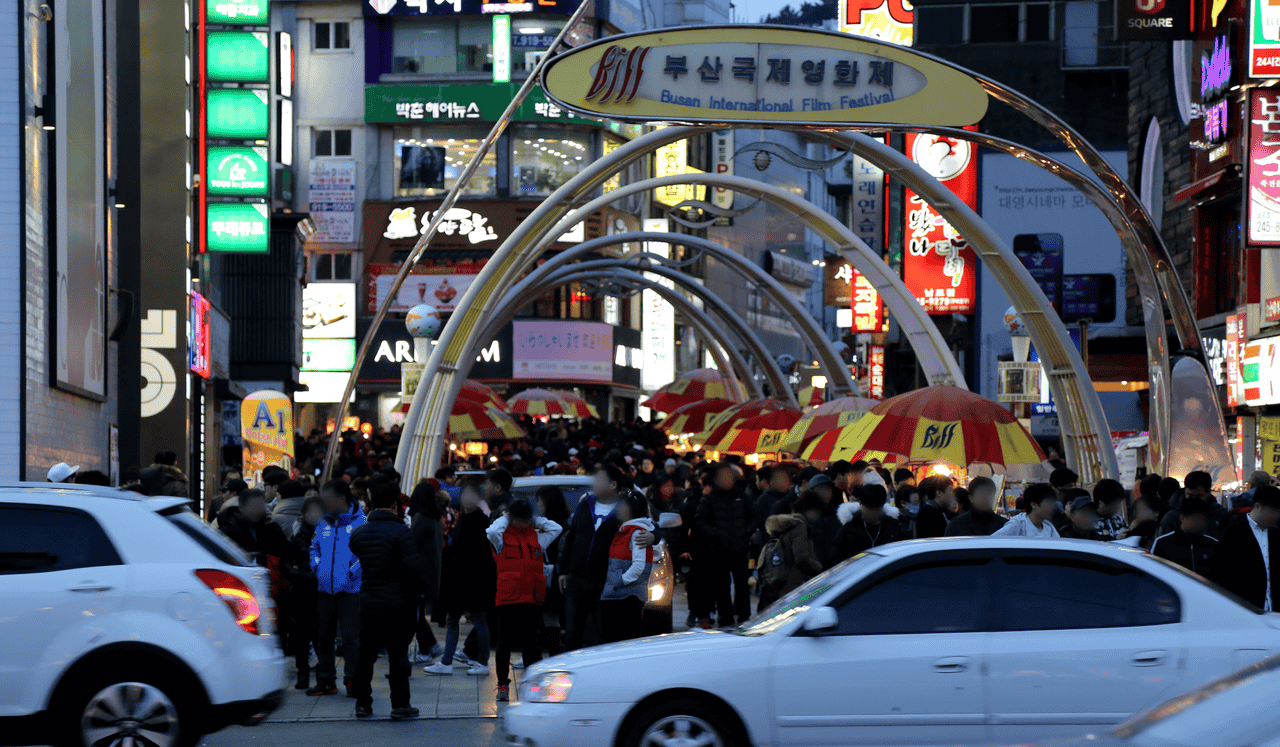
## Description BIFF Street, short for **Busan International Film Festival Street**, is one of the most dynamic and lively areas in **Busan, South Korea**. This bustling district is not only famous for its connection to Asia’s largest film festival but also for its vibrant mix of street food, entertainment, and cultural attractions. The street gained international recognition in 1996, when the first **Busan International Film Festival (BIFF)** was held, and since then it has transformed into a hub for movie enthusiasts and curious travelers alike. One of the most unique features of BIFF Street is the **handprints embedded in the pavement**, similar to the Hollywood Walk of Fame. These belong to famous Korean and international filmmakers and actors who have participated in the festival over the years. Visitors often enjoy comparing their hand size to their favorite celebrities while strolling through the area. A little-known fact is that before becoming BIFF Street, this area was once known as **“Chungmu-dong”**, a traditional market district famous for street snacks and small theaters. Even today, its roots are visible in the countless street vendors selling delicacies like **ssiat hotteok** (a sweet Korean pancake stuffed with seeds and brown sugar) and spicy **tteokbokki** (rice cakes in chili sauce). Another fun detail: some of the oldest theaters in Busan still operate nearby, preserving the nostalgic charm of the city’s cinema culture. ## Location BIFF Street is located in the **Jung-gu district** of **Busan**, in the southeastern region of **South Korea**. It sits in the heart of **Nampo-dong**, a bustling shopping and cultural neighborhood near the city’s port area. How to get there: * **By subway:** Take Line 1 (Orange Line) and get off at **Jagalchi Station** or **Nampo Station**. From either station, it’s just a short 5–10 minute walk to BIFF Street. * **By bus:** Several city buses pass through the Nampo-dong area, making it easy to reach from other parts of Busan. * **By taxi:** For convenience, especially if you’re coming from Haeundae or Gwangalli, a taxi ride is straightforward and affordable. Because it’s centrally located, BIFF Street can easily be combined with visits to nearby attractions such as Jagalchi Fish Market, Yongdusan Park, and Gukje Market. ## Tips To make your visit to BIFF Street memorable, here are some essential tips: 1. **Visit in the evening** – The atmosphere comes alive at night with neon lights, bustling street food vendors, and live performances. 2. **Try the street food** – Don’t miss local favorites like ssiat hotteok, tteokbokki, odeng (fish cakes), and fried snacks. These affordable treats are an essential part of the experience. 3. **Time your trip during BIFF** – If you’re lucky enough to visit during the **Busan International Film Festival** (usually held in October), you’ll see the street transformed with red carpets, celebrity appearances, and outdoor screenings. 4. **Wear comfortable shoes** – The area is best explored on foot, and you’ll likely wander into nearby markets and side streets. 5. **Bring some cash** – While many shops accept cards, small vendors and street food stalls often prefer cash. 6. **Explore beyond the main street** – Side alleys often hide quirky cafés, local eateries, and hidden gems that many tourists miss. ## Conclusion BIFF Street is more than just a pedestrian walkway—it’s a cultural symbol of Busan that blends cinema, food, and local tradition. From tasting mouthwatering street snacks to immersing yourself in the city’s film heritage, this lively neighborhood captures the creative and culinary spirit of South Korea’s second-largest city. Whether you’re a movie lover or a foodie, BIFF Street is a must-see destination in Busan. ## FAQ **1. What does BIFF stand for?** BIFF stands for **Busan International Film Festival**, one of the most prestigious film festivals in Asia. **2. What is BIFF Street famous for?** It is best known for its connection to the film festival, celebrity handprints, and its wide selection of delicious street food. **3. Is BIFF Street open year-round?** Yes, BIFF Street is always open, and visitors can enjoy the food stalls and shops any time of the year. However, the area is especially lively during the festival in October. **4. How long should I spend at BIFF Street?** Most visitors spend 1–2 hours exploring the street and sampling food, but if you plan to visit nearby attractions, you could easily spend half a day in the area. **5. Is BIFF Street family-friendly?** Absolutely! Families with children can enjoy the food, colorful atmosphere, and nearby attractions like the Jagalchi Market. **6. Can I see celebrities at BIFF Street?** During the Busan International Film Festival, it’s possible to spot famous Korean and international actors attending screenings and events in the area. ## Links * [Busan International Film Festival Official Website](https://www.biff.kr) * [Busan Tourism Organization](https://www.bto.or.kr)
GemVoyage Team • World
Tunis
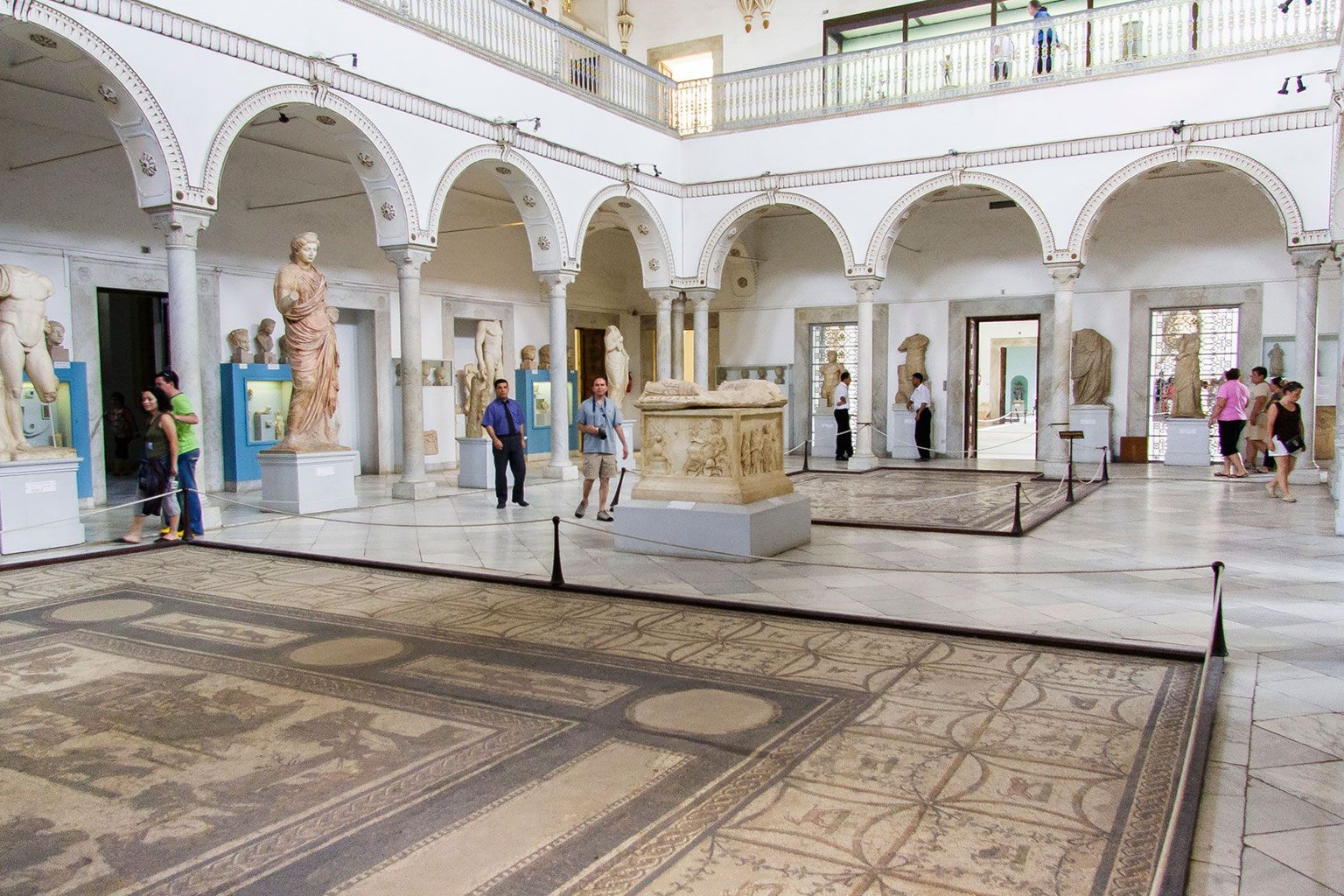
## Description Bardo National Museum is one of North Africa’s most important museums and a highlight for anyone interested in archaeology, history, and art. It is particularly famous for its extraordinary collection of Roman mosaics, but the museum’s significance goes beyond a single category. It offers a broad journey through Tunisia’s layered past, from prehistoric materials and Punic remains to Islamic-era objects and decorative arts. That range makes it one of the best places to understand how many different civilizations have shaped the country. What makes the Bardo especially memorable is the quality of the collection and the setting in which it is displayed. The museum occupies a former palace complex, and that architectural backdrop gives the exhibits a sense of elegance and continuity with the past. Walking through the galleries feels like moving through a living archive. The mosaics are often the first thing people mention, and for good reason: they are vivid, large, and remarkably well preserved. But there is also a quieter pleasure in discovering smaller objects, inscriptions, and artifacts that reveal daily life, trade, belief, and artistic taste across centuries. One little-known fact is that the museum’s collection is not only important for Tunisia, but for the broader Mediterranean world. Many of the objects speak to the country’s position as a crossroads of empires, shipping routes, and cultural exchange. Another is that the palace setting helps create a more immersive experience than a plain modern gallery might. The rooms, courtyards, and architectural details remind you that the museum itself is part of Tunisia’s heritage story. For travelers, the Bardo works well because it gives context to the rest of a Tunis itinerary. If you have already seen medinas, ruins, or coastal sites, the museum ties many of those threads together. It is not just about looking at beautiful objects. It is about seeing how Tunisia’s geography and history produced a remarkably rich material culture. ## Location Bardo National Museum is in Le Bardo, a suburb just west of central Tunis, Tunisia. Its position outside the old medina makes it easy to reach while still being close enough to the capital to fit into a normal sightseeing day. The most practical way to get there is by taxi or local transport from central Tunis. Because the museum is a major institution, drivers will usually know it well. If you are already exploring Tunis, it is straightforward to combine the museum with a medina visit or another city-center stop. The museum is also a sensible first stop if you want historical context before branching out to other parts of Tunisia. Plan enough time for a proper visit. The collection is substantial, and rushing would mean missing some of the strongest mosaics and broader historical displays. This is best approached as a serious museum outing rather than a quick photo stop. ## Tips Start with the mosaics if you are short on time, but do not skip the rest of the museum. Some of the most rewarding moments come from smaller objects that are easy to overlook. Check opening information before you go, especially if your trip is part of a tight itinerary. Museums sometimes have schedule changes, and it is better to confirm in advance. If you are interested in ancient history, a guide or a bit of background reading will help you get more out of the collection. The objects are impressive on their own, but the context makes them much richer. Allow time to walk slowly through the galleries. The Bardo is not only about seeing famous pieces; it is also about noticing the range and depth of Tunisia’s past. ## Conclusion Bardo National Museum is an essential Tunis attraction for anyone who wants to understand Tunisia’s artistic and historical heritage. Its mosaics, palace setting, and wide-ranging collections make it one of the region’s most important museums. ## FAQ **What is the Bardo Museum best known for?** Its Roman mosaics are among the most famous in the Mediterranean world. **How much time should I spend there?** At least two hours is a good baseline, and more is better if you want to see the museum thoroughly. **Is it easy to get to from central Tunis?** Yes. It is in Le Bardo and can be reached conveniently by taxi or local transport. **Is the museum only about Roman history?** No. It covers a much wider range of Tunisia’s history and culture. **Is it suitable for first-time visitors to Tunis?** Absolutely. It is one of the most useful places to visit early in a trip. ## Links - [Official Website](http://bardomuseum.tn/index.php?lang=en)
GemVoyage Team • World

Nürnberg
## Description The **Nürnberg Zoo and Dolphinarium** (Tiergarten Nürnberg) in Germany is one of the most fascinating zoological gardens in Europe, combining a rich natural setting with modern animal care facilities. Spread over **67 hectares of forest and meadowland**, this zoo offers visitors the unique experience of observing animals in spacious enclosures that closely resemble their natural habitats. Unlike many urban zoos, Nürnberg Zoo is nestled within a former sandstone quarry, giving the park a very scenic and distinctive landscape. What makes Nürnberg Zoo particularly unique is its **Dolphinarium**, which opened in 1971 and remains one of the few dolphinariums in Germany. It is home to bottlenose dolphins and manatees, and it has a strong focus on research, conservation, and educational programs. The zoo is internationally recognized for its breeding successes with endangered species such as the manatee, snow leopard, and Siberian tiger. A little-known fact about Nürnberg Zoo is that it houses **Europe’s only Aqua Park for dolphins** connected directly to a lagoon system, providing a near-natural environment for the marine mammals. Another interesting fact is that the zoo was originally founded in 1912, making it over a century old, though it had to be rebuilt after World War II due to heavy destruction. ## Location The Nürnberg Zoo and Dolphinarium is located in **Nuremberg (Nürnberg), Bavaria, Germany**. The zoo lies in the eastern part of the city, in a wooded area that gives it a peaceful and natural atmosphere. * **Country:** Germany * **Region:** Bavaria (Bayern) * **City:** Nuremberg (Nürnberg) ### How to Get There Visitors can reach the zoo easily by **public transportation**. From Nuremberg’s city center, take tram line 5 or bus line 65, which stop directly at the entrance of the zoo. For international visitors, the nearest airport is **Nuremberg Airport (NUE)**, located only about 13 km away. If you are driving, there is ample parking space near the entrance. For an eco-friendly option, cycling through the scenic routes of Nuremberg to the zoo is also recommended. ## Tips To make the most of your visit to Nürnberg Zoo and Dolphinarium, here are some useful tips: 1. **Plan Enough Time** – The zoo covers a vast area, so allow at least half a day, ideally a full day, to explore both the zoo and the Dolphinarium. 2. **Check Show Times** – The dolphin presentations are the highlight of the visit. Be sure to check the schedule in advance so you don’t miss it. 3. **Wear Comfortable Shoes** – With its hilly terrain and large grounds, comfortable walking shoes are a must. 4. **Bring Snacks or Enjoy Local Food** – While the zoo has restaurants and snack stations, bringing your own picnic is also a great option. 5. **Visit the Children’s Zoo** – Families with young kids will love the petting area where children can interact with farm animals. 6. **Best Seasons to Visit** – Spring and summer are particularly pleasant, as many animals are more active outdoors and the lush greenery makes the park extra beautiful. --- ## Conclusion The **Nürnberg Zoo and Dolphinarium** is more than just a zoo—it is a unique blend of history, nature, and modern animal conservation. With its scenic landscape, rare animal species, and one of Germany’s only dolphinariums, it offers a memorable experience for visitors of all ages. Whether you’re a family with children, an animal enthusiast, or simply a traveler exploring Bavaria, this attraction is well worth a visit. --- ## FAQ **1. How long should I plan for a visit to Nürnberg Zoo?** Most visitors spend between **4 to 6 hours** exploring the zoo and enjoying the dolphin shows. **2. Is the Dolphinarium included in the zoo ticket price?** Yes, admission to the Dolphinarium is included in the **general zoo entrance fee**. **3. Can I bring food and drinks into the zoo?** Yes, visitors are welcome to bring their own food and enjoy a picnic in designated areas. **4. Is Nürnberg Zoo open all year round?** Yes, the zoo is open daily, including weekends and holidays. However, opening hours may vary by season. **5. What animals can I see at Nürnberg Zoo?** The zoo is home to over **300 animal species**, including dolphins, manatees, snow leopards, polar bears, and Siberian tigers. --- ## Links * [Official Nürnberg Zoo Website](https://tiergarten.nuernberg.de) * [Tourist Information for Nuremberg](https://tourismus.nuernberg.de)
GemVoyage Team • World
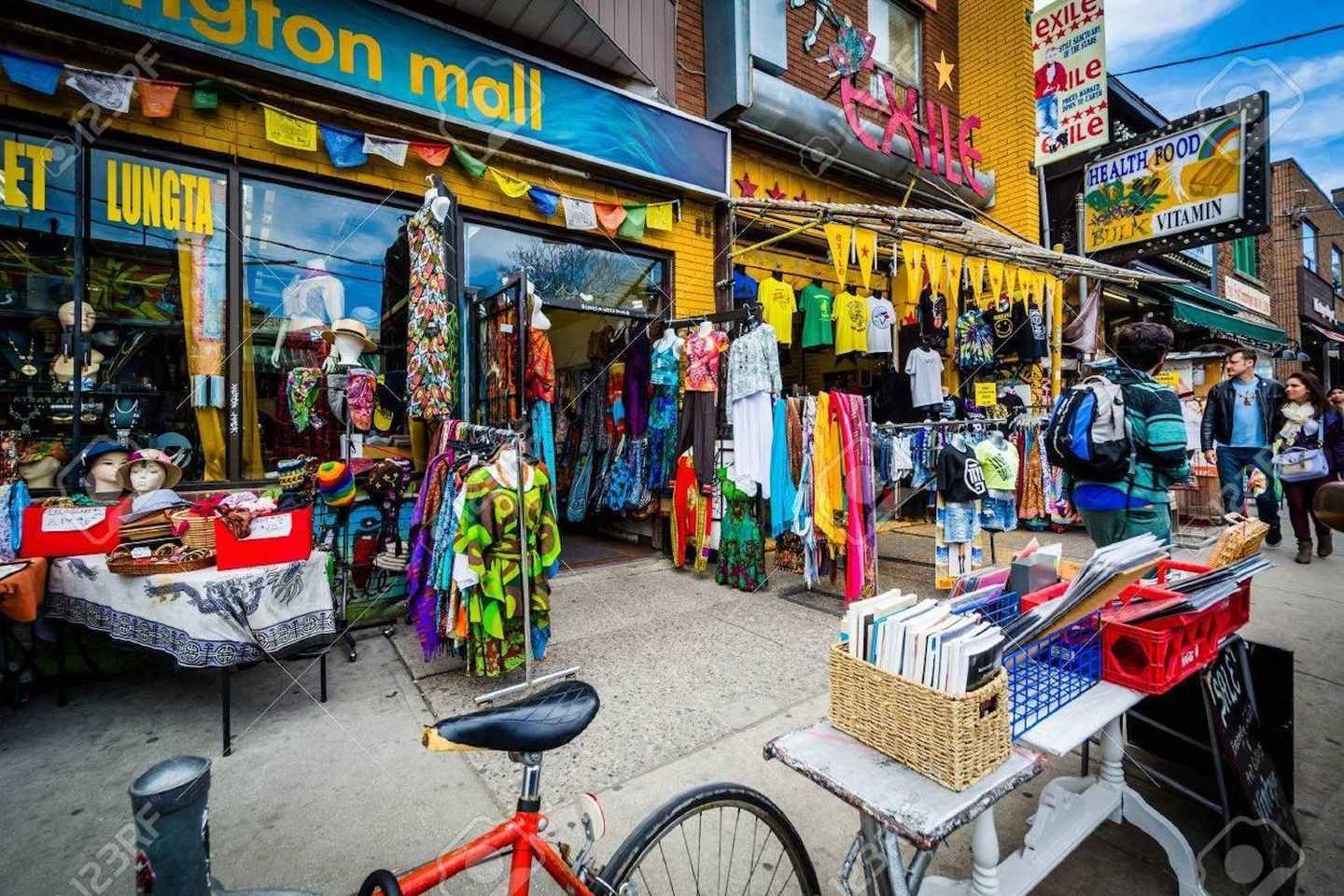
Toronto
## Description Kensington Market is one of Toronto’s best-known neighborhoods for travelers who want atmosphere, variety, and a strong sense of place. It is not a traditional market in the narrow sense, but rather a dense urban district filled with independent shops, vintage clothing stores, grocers, cafés, bakeries, produce stands, restaurants, and street life that spills into the sidewalks. The area is famous for its mix of cultures and its long history as a neighborhood shaped by waves of immigration, creative entrepreneurship, and community reinvention. Walking through Kensington Market feels less like visiting a single attraction and more like stepping into a living collage of Toronto itself. What makes Kensington special is its refusal to feel polished in a predictable way. Its charm comes from variety, visual noise, and the sense that each storefront has its own personality. One block might be packed with produce, the next with music, used books, or handmade goods. Small alleyways and side streets often reveal murals, patios, and tiny surprises that reward unhurried visitors. The neighborhood also has a social rhythm of its own, especially on weekends when it becomes a magnet for browsers, food lovers, and people simply looking for a place that feels energetic and alive. One lesser-known aspect of Kensington Market is how strongly it reflects Toronto’s broader history of change. It has repeatedly adapted to new residents, new businesses, and shifting urban pressures while still preserving a distinctly independent feel. Another detail many first-time visitors miss is that Kensington is best experienced by combining observation with participation. The neighborhood is not only for looking at; it is for tasting, talking, trying, and wandering. A great visit often includes a snack, a coffee, a small purchase, and a few minutes spent people-watching from a curb or patio. Kensington Market is also a useful place to understand Toronto’s everyday creativity. It does not announce itself with monumental architecture or famous landmarks. Instead, it builds its identity from layers of storefront signage, murals, commerce, and community life. That makes it one of the city’s most authentic urban experiences, especially for travelers who prefer neighborhoods over tourist compounds. ## Location Kensington Market is in downtown Toronto, Ontario, close to Chinatown, the University of Toronto area, and several of the city’s central neighborhoods. Its location makes it easy to reach from much of central Toronto by streetcar, subway, bus, taxi, rideshare, or on foot if you are already nearby. Because the streets are compact and the area is highly walkable, most visitors explore it best on foot once they arrive. If you are planning a broader downtown day, Kensington pairs naturally with nearby cultural areas, galleries, food stops, and city walking routes. For visitors staying in the core, it is one of the easiest districts to add to an itinerary without needing a car. Public transit is usually the most practical option, and because parking can be limited or inconvenient, it is often better to leave the car behind entirely. ## Tips Go hungry and keep your schedule flexible. Kensington Market is one of the best neighborhoods in Toronto for spontaneous eating, browsing, and detours. If you try to over-plan the experience, you may miss what makes it fun. The best visits usually happen when you leave room for unplanned discoveries, whether that means a bakery stop, a vintage find, or a street musician drawing a crowd. Visit at different times if you can. Weekdays can feel more relaxed, while weekends are livelier and more crowded. Both moods have value, and the best choice depends on whether you want a calmer wander or a more animated urban scene. Morning visits are often easier if you want to take in the shops before they become too busy. Wear comfortable shoes. Kensington is compact, but it encourages a lot of walking, stopping, and turning into side streets. If you are interested in photography, the neighborhood is rich in texture, but be respectful of businesses and residents while you shoot. Try to support local vendors when you can, because the district’s character depends on the continued presence of independent operators. Do not expect uniformity. Some visitors want one clear “best” thing to do, but Kensington works differently. The point is the accumulation of impressions. The neighborhood is most rewarding when you let its diversity define the visit. ## Conclusion Kensington Market is one of Toronto’s essential neighborhoods, offering food, culture, and urban character in one dense and memorable walk. It is ideal for travelers who want to see the city through everyday life rather than landmarks alone. ## FAQ ### Is Kensington Market a real market? It is more accurately described as a neighborhood with a historic market identity rather than a single enclosed marketplace. Visitors come for the district’s shops, food, and street atmosphere. ### How long should I spend there? A short visit can take an hour, but two to four hours is better if you want to browse, eat, and explore side streets. Many travelers end up staying longer than planned. ### Is it expensive? It depends on where you stop. You can spend very little by simply walking around, but food, vintage goods, and specialty items can range from affordable to premium depending on the business. ### Is it family-friendly? Yes, especially during daytime hours. Families often enjoy the food variety, the pedestrian-friendly feel, and the colorful street life. ### What is the best way to experience it? Walk slowly, sample something local, and leave room for curiosity. Kensington is best when you treat it as a neighborhood to be explored rather than a checklist of attractions. ## Links - [Wikipedia](https://en.wikipedia.org/wiki/Kensington_Market)
GemVoyage Team • World

Comments