GemVoyage Team • World
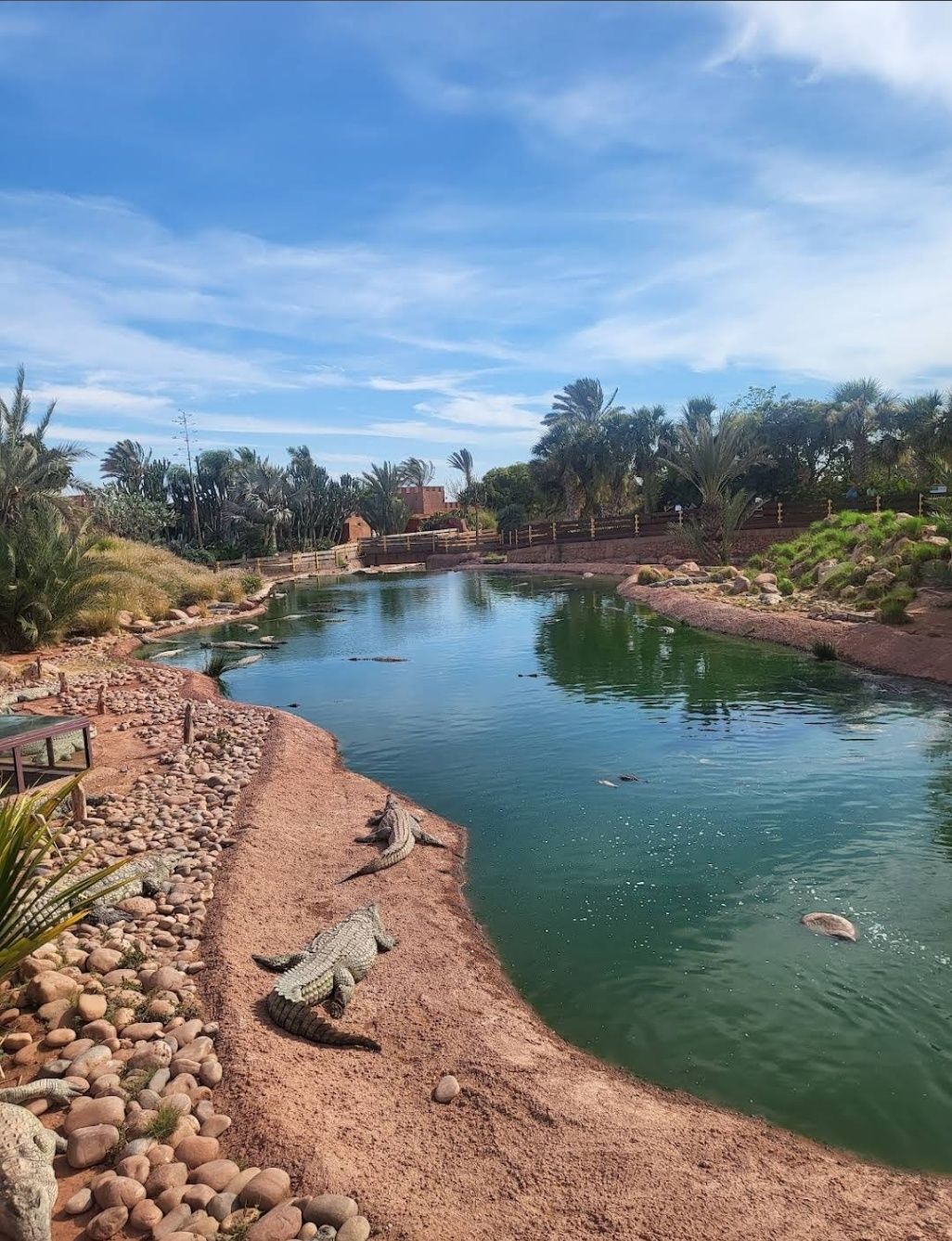
Crocopark Agadir is Morocco’s first crocodile park, offering visitors a fascinating journey into the world of one of nature’s most ancient and powerful reptiles. Opened in 2015, the park is home to over 300 Nile crocodiles, along with turtles, iguanas, anacondas, and a wide range of exotic plants. More than just a zoo, Crocopark is a well-designed ecological park that combines education, conservation, and family-friendly entertainment.
What makes Crocopark unique is its immersive design. Guests wander along carefully planned pathways, bridges, and observation decks that provide safe yet close-up views of crocodiles basking in the sun, gliding through the water, or snapping their jaws during feeding sessions. The park also emphasizes environmental education, helping visitors learn about the importance of biodiversity and conservation.
Little-known facts:
---
Crocopark is located in Agadir, a major coastal city in the Souss-Massa region of Morocco. It sits about 14 kilometers east of Agadir’s city center, along the Marrakech–Agadir highway, making it easy to reach for both locals and tourists.
---
---
Crocopark in Agadir is more than a wildlife attraction—it’s a unique combination of a crocodile sanctuary and a botanical garden. With its impressive collection of Nile crocodiles, exotic reptiles, and thousands of plant species, it offers an enriching and exciting experience for visitors of all ages. Whether you’re interested in conservation, botany, or simply enjoying an unusual day out, Crocopark is one of Agadir’s must-visit destinations.
---
1. What animals can I see at Crocopark?
The main attraction is Nile crocodiles, but you can also see turtles, iguanas, snakes, and a wide variety of plants.
2. How long does a visit usually take?
Most visitors spend around 2–3 hours exploring the park, including the reptile areas and the botanical gardens.
3. Is Crocopark suitable for children?
Yes, the park is family-friendly, with safe observation decks and educational displays designed for all ages.
4. When is the best time to visit Crocopark?
Morning or late afternoon visits are best to avoid the midday heat, though feeding times are also worth planning around.
5. Is there food available inside the park?
Yes, there are cafés and rest areas within Crocopark where visitors can buy snacks and refreshments.
6. Do I need to book tickets in advance?
While you can buy tickets on-site, booking in advance online is recommended during peak tourist seasons.
---
Discover more hidden gems you might love.

Taiwan
## Description Pirate Village Theme Park is a small but imaginative attraction in Taiwan that brings the spirit of seafaring adventure to life. Designed primarily for families with children, the park is centered around a colorful pirate theme, complete with ship-shaped playgrounds, lookout towers, rope bridges, and interactive installations that encourage exploration and physical activity. Rather than focusing on high-thrill rides, Pirate Village emphasizes creative play, storytelling, and hands-on fun in an open-air setting. What makes Pirate Village Theme Park unique is its community-driven concept. Unlike large commercial theme parks, this attraction was developed as a recreational and cultural space that blends leisure with local identity. Many of the structures are designed to be both playful and educational, helping children develop coordination, imagination, and social skills. A lesser-known fact is that the park often incorporates locally inspired design elements, subtly reflecting Taiwan’s coastal history and maritime culture. Another interesting detail is that Pirate Village regularly hosts small-scale events, such as weekend performances or seasonal activities, which are usually aimed at local families rather than tourists. For travelers looking for a relaxed, off-the-beaten-path experience—especially those traveling with young children—Pirate Village Theme Park offers a pleasant break from Taiwan’s busy city attractions. ## Location Pirate Village Theme Park is located in **Taiwan**, in the **Yunlin County** region, within **Douliu City**. Yunlin County is situated in central-western Taiwan and is known for its slower pace of life compared to major metropolitan areas like Taipei or Kaohsiung. The most convenient way to reach the park is by train to Douliu Station on the Taiwan Railways Administration (TRA) line. From the station, visitors can take a local taxi or bus to reach the park area within a short time. If you are traveling by car, driving is a practical option, as parking is generally easier to find than in larger cities. Visitors coming from other parts of Taiwan may consider combining a visit to Pirate Village with other nearby family attractions or local food stops in Yunlin County. ## Tips * Pirate Village Theme Park is best suited for families with young children, so adults traveling without kids may find the visit relatively short. * Visit during weekdays or early mornings on weekends to avoid local crowds, especially during school holidays. * Bring sun protection such as hats, sunscreen, and water, as much of the park is outdoors. * Wear comfortable shoes, as children are encouraged to climb, run, and explore different play structures. * Check local announcements or social media pages before visiting, as special events or maintenance closures may affect opening times. * Combine your visit with nearby local markets or cafés to make the trip more rewarding. ## Conclusion Pirate Village Theme Park is a charming, low-key attraction that offers imaginative play and family-friendly fun in central Taiwan. While it may not be a large-scale theme park, its creative design, relaxed atmosphere, and local character make it a worthwhile stop for families seeking a simple and enjoyable outing. ## FAQ **Is Pirate Village Theme Park suitable for all ages?** The park is mainly designed for children, especially those in preschool and elementary school age groups. Adults can accompany children but may find limited activities for themselves. **Is there an entrance fee?** In many cases, Pirate Village Theme Park is free or very low-cost, as it functions as a public or community-oriented attraction. Fees, if any, may apply during special events. **How much time should I plan for a visit?** Most visitors spend about one to two hours exploring the park, depending on crowd levels and children’s interest. **Is the park accessible by public transportation?** Yes, it is accessible via train and local buses, though taxis or private cars offer the most convenience. **Are food and drinks available inside the park?** Food options may be limited inside the park itself, so it is a good idea to bring snacks or plan to eat nearby. ## Links * [Yunlin County Government Tourism](https://tour.yunlin.gov.tw/wt-front/Home/Index)
GemVoyage Team • World

Seville
## Description Casa de Pilatos is one of Seville’s finest palace houses, and it offers a beautifully layered view of Andalusian aristocratic taste. The building combines Mudéjar, Gothic, Renaissance, and classical influences in a way that feels distinctly Seville: elegant, intimate, richly detailed, and full of color. Unlike larger monumental palaces that can feel ceremonial from a distance, Casa de Pilatos is engaging because it feels lived in, even while it displays a carefully composed noble identity. The courtyards, tilework, columns, carved ceilings, and quiet rooms all work together to create an atmosphere of refined domestic power. One of the most attractive features of Casa de Pilatos is the way it rewards close observation. The palace is filled with azulejos, decorative stonework, and interior spaces that look different from one angle to another. A little-known fact is that the house became a model for later aristocratic and historicist taste in Seville, which means its influence extended beyond its own walls. Another detail that many visitors do not realize at first is that the palace reflects a long process of collecting, adapting, and reworking styles over time rather than a single fixed architectural plan. That layering is part of why the house feels so rich: it is a conversation between centuries. The visit is especially satisfying for travelers who enjoy architecture, decorative arts, and quieter historic spaces. Casa de Pilatos does not overwhelm you with scale. Instead, it draws you in with proportion, texture, and detail. If you take your time, you start to notice how the courtyards organize light and shadow, how the tile panels repeat motifs, and how the rooms communicate status through design rather than spectacle. This is the kind of place that stays in memory because it is both elegant and human in scale. ## Location Casa de Pilatos is in central Seville, Andalusia, Spain, in the historic core of the city and not far from the area of Santa Catalina and other well-known old-town streets. Because it is centrally located, it is easy to reach on foot if you are already sightseeing in Seville’s old center. Buses and taxis also work well, but for most visitors a walk is the easiest and most enjoyable option, especially if you want to combine the palace with nearby churches, cafés, and smaller streets. From a practical point of view, the palace fits naturally into a half-day route through the old town. You can visit Casa de Pilatos before or after other central sites without needing a complicated transfer. If you arrive during hot weather, try to come earlier in the day so that the internal courtyards feel cooler and more comfortable. The compact location makes it easy to include, but the richness of the interiors means you should not treat it as a quick pass-through stop. ## Tips - Buy tickets in advance if you are visiting during a busy travel period. - Allow at least an hour so you can appreciate the courtyards and decorative details. - Look up at the ceilings and down at the tilework; the best details are not always at eye level. - Pair the visit with another nearby historic site so you get a fuller sense of Seville’s old center. - Go earlier in the day if you want softer light for photography. - Move slowly through the house, because the beauty here is in the accumulation of small details. ## Conclusion Casa de Pilatos is a refined and memorable palace that shows another side of Seville’s historic richness. It is elegant, quietly dramatic, and ideal for travelers who appreciate architecture and atmosphere. ## FAQ ### Is Casa de Pilatos open to visitors? Yes. It is a visiting palace with public access, though opening hours can vary. ### How long does a visit take? Most visitors need about one hour, though architecture lovers may stay longer. ### Is it suitable for families? Yes, especially if the group enjoys historic buildings and decorative art. ### What makes it different from other Seville palaces? Its blend of styles, intimate scale, and exceptional tile and courtyard details make it especially distinctive. ## Links - [Official website](https://www.fundacionmedinaceli.org/patrimonio/casa-de-pilatos/) - [Wikipedia](https://en.wikipedia.org/wiki/Casa_de_Pilatos) - [Seville tourism information](https://www.visitasevilla.es/en)
GemVoyage Team • World

Nantes
## Description The Passage Pommeraye is one of the most striking covered passages in France, and a true architectural masterpiece from the 19th century. Built between 1840 and 1843, it is both a shopping arcade and a monument of historical significance. What sets it apart is its unique three-level structure, which cleverly adapts to the natural slope of the land between Rue de la Fosse and Rue Santeuil. This allows visitors to walk through the gallery while experiencing a gradual elevation, framed by ornate staircases, decorative sculptures, and elegant ironwork. The atmosphere inside is one of timeless sophistication. Light streams in through a glass roof, highlighting neoclassical statues and intricate details that make every corner worth admiring. The arcade houses a variety of boutiques, from luxury shops to independent stores, making it both a shopping destination and a cultural experience. A little-known fact about the Passage Pommeraye is that it was once considered a risky investment. Louis Pommeraye, a local lawyer turned developer, envisioned the arcade as a way to connect two streets of different heights. Many thought the project was too ambitious and doomed to fail. Yet today, it is one of Nantes’ most celebrated landmarks and a symbol of the city’s entrepreneurial spirit. Another fun detail is that the passage has been featured in several films, including Jacques Demy’s *Lola* (1961), cementing its place in French cinematic history. ## Location The Passage Pommeraye is located in **Nantes**, the capital of the **Loire-Atlantique** department in the **Pays de la Loire** region of western **France**. It sits in the heart of the city center, connecting **Rue de la Fosse** with **Rue Crébillon** and **Rue Santeuil**, making it an essential stop for anyone exploring Nantes. Getting there is easy. From the Nantes train station (Gare de Nantes), it’s about a 20-minute walk or a short ride on the city’s efficient tram network—Line 1 to the “Commerce” stop places you within minutes of the passage. Visitors coming from Paris can reach Nantes in just over two hours via high-speed TGV train, making the Passage Pommeraye a convenient and rewarding day-trip highlight. ## Tips * **Take your time:** While you can walk through the passage in minutes, slow down to admire the statues, balustrades, and architectural details. * **Visit on a weekday:** Weekends and holidays can be crowded, especially during sales seasons or Christmas. A weekday visit provides a calmer experience. * **Look up:** The glass roof and decorative sculptures are among the most remarkable elements—don’t miss them while focusing only on the shops. * **Combine with nearby attractions:** The passage is centrally located, close to Place Royale and the Graslin district, where you’ll find theaters, cafés, and other cultural landmarks. * **Enjoy seasonal magic:** During the Christmas period, the arcade is beautifully decorated, creating an enchanting festive atmosphere. * **Photography tip:** Arrive early in the morning to capture the arcade without too many people in the frame. ## Conclusion The Passage Pommeraye is not just a shopping arcade but a masterpiece of 19th-century urban design. With its harmonious blend of architecture, light, and history, it has become one of Nantes’ most treasured sites. Whether for shopping, sightseeing, or simply soaking up the atmosphere, it offers a memorable experience that combines elegance with everyday life. ## FAQ **1. What makes the Passage Pommeraye unique?** Its three-level design that adapts to a sloping street, combined with ornate sculptures and architectural details, makes it one of the most distinctive arcades in Europe. **2. Is the Passage Pommeraye free to enter?** Yes, entry is completely free, and visitors can walk through at any time during opening hours. **3. What kind of shops can be found inside?** The passage features a mix of luxury boutiques, independent shops, jewelry stores, fashion outlets, and cafés. **4. Can I visit the Passage Pommeraye at night?** The shops close in the evening, but the passage itself remains open for walking until later hours, allowing visitors to enjoy its illuminated beauty. **5. How long does a visit usually take?** A casual walk-through might take 15–20 minutes, but to explore shops and enjoy the atmosphere, allow at least an hour. **6. Is the Passage Pommeraye accessible for people with limited mobility?** Yes, elevators have been added in recent years to improve accessibility, although the original staircases remain a prominent feature. ## Links * [Passage Pommeraye](https://en.wikipedia.org/wiki/Passage_Pommeraye)
GemVoyage Team • World

Hong Kong
## Description Tai O Fishing Village is one of the most atmospheric places in Hong Kong because it preserves a way of life that feels very different from the city’s skyscraper identity. Located on the western side of Lantau Island, Tai O is known for its stilt houses, narrow waterways, fishing heritage, and the sense that time moves more slowly here than in Hong Kong's urban core. For travelers looking for a place that combines cultural history, coastal scenery, and a strong local character, Tai O delivers all three in a single visit. The village is especially distinctive because it has kept much of its fishing-community layout, even as Hong Kong developed around it. The stilt houses, built above tidal waters and connected by wooden walkways, create a visual landscape that is unique in the region. Boat traffic still matters here, seafood is still central to the local economy, and the village still feels shaped by the rhythms of sea and tide. In the early morning, Tai O can feel hushed and contemplative. Later in the day, it becomes more animated as day visitors arrive, shops open, and boats move in and out of the channels. A little-known fact is that Tai O has long been associated with salt production and trade, not just fishing. Another detail many visitors miss is the old village fortifications and temple structures that reflect how communities once protected themselves from pirates, storms, and the uncertainties of coastal life. The area is therefore not simply picturesque; it is historically layered and reveals a deeper story about how people adapted to Hong Kong's shoreline before modern development changed the coastline. The food here is another major reason to visit. Dried seafood, shrimp paste, sweet treats, and simple local dishes are part of Tai O’s identity, and they help visitors understand how the village economy worked for generations. Even if you only spend half a day here, Tai O can feel like a complete change of pace from the rest of Hong Kong, offering a mixture of water, heritage, and community that is increasingly rare. ## Location Tai O Fishing Village is on the western side of Lantau Island in the Hong Kong Special Administrative Region of China. It sits in the Islands District, far from the dense business cores of Hong Kong Island and Kowloon, which is part of what preserves its quieter character. Because it is not on a major rail line, getting there takes a little planning, but that is also what helps keep the area special. The usual route is to travel by MTR to Tung Chung and then continue by bus toward Tai O. This combination is the most practical for most visitors and gives you a smooth connection from the city’s main transport network. Ferries and cable car routes may also be part of a longer day trip if you are combining Tai O with other parts of Lantau Island. If you prefer a more relaxed pace, many travelers visit as part of a full-day itinerary that includes Ngong Ping and the Big Buddha before continuing to Tai O in the afternoon. Once you arrive, much of the village is best explored on foot, though local boat rides are a memorable way to see the stilt houses from the water. Because the village is compact, it is easy to cover the main areas without rushing, but you should allow extra time for food stops, photographs, and slow wandering. ## Tips Visit early in the day or late in the afternoon if you want softer light and fewer crowds. Midday can be busy, especially on weekends and public holidays, and the village is at its best when you can move slowly and take in the details. Take a boat ride if your schedule allows. Seeing Tai O from the water gives you a better sense of how the stilt houses, waterways, and fishing infrastructure fit together. It also helps explain why the village developed the way it did. If you only walk the streets, you still get a strong impression, but the boat perspective adds depth. Try local snacks and dried seafood, but do so with curiosity rather than haste. Many travelers rush through Tai O, take a few photos, and leave without understanding the food culture that has shaped the village for years. Sampling something local makes the visit more meaningful. Wear comfortable shoes and bring sun protection. Tai O is relatively easy to walk, but the experience is more enjoyable when you are prepared for heat, humidity, and a fair amount of time outdoors. If the weather looks unstable, check conditions before you go, since coastal villages are more sensitive to storms and heavy rain. ## Conclusion Tai O Fishing Village offers a rare glimpse of Hong Kong's coastal past, with stilt houses, local food, and a slower rhythm that gives the village a memorable sense of place. ## FAQ ### Why is Tai O famous? Tai O is famous for its stilt houses, fishing heritage, scenic waterways, and its reputation as one of the last traditional fishing villages in Hong Kong. ### How long should I spend in Tai O? Most visitors spend half a day to a full day, depending on whether they plan to add boat rides, food stops, or nearby Lantau attractions. ### Is Tai O easy to reach from central Hong Kong? It takes some planning, but it is straightforward by taking the MTR to Tung Chung and then continuing by bus. ### What should I eat in Tai O? Try local seafood snacks, dried seafood products, and village specialties from small shops and street-side vendors. ## Links - [Discover Hong Kong](https://www.discoverhongkong.com/) - [Wikipedia article](https://en.wikipedia.org/wiki/Tai_O)
GemVoyage Team • World

Mexico City
## Description The Xochimilco Canals are one of Mexico City’s most distinctive attractions because they preserve a living relationship between water, agriculture, celebration, and community. Unlike a standard sightseeing canal ride, Xochimilco offers a colorful world of trajineras, music, food, and floating movement through a landscape that reflects centuries of adaptation. It is one of the few places in the capital where visitors can still feel the legacy of the lake system that once defined the Valley of Mexico. What makes Xochimilco so special is that it is both scenic and cultural. A ride along the canals is visually lively, with brightly painted boats, vendors drifting by, musicians performing, and families and friends gathering for celebrations. At the same time, the area connects to the ancient chinampa system, a form of raised agricultural landscaping that has long been admired for its ingenuity. A lesser-known fact is that these canals are among the last surviving remnants of the pre-Hispanic water landscape of the valley. That makes a visit more than entertainment; it is a window into a surviving historical ecosystem. Another little-known detail is that Xochimilco is not just a tourist attraction but also a place with ongoing local life and ecological importance. The canals and surrounding fields continue to matter to residents, farmers, and conservation efforts. That is why the experience can feel so layered. You are not simply on a boat ride. You are moving through a landscape where heritage, tourism, and environmental questions meet. For many travelers, Xochimilco is memorable because of its atmosphere. It can be playful, crowded, musical, and festive, but it can also be surprisingly reflective if you visit at a calmer time. It is one of those places where the experience changes depending on the hour, the weather, and the energy on the water that day. Because of that, it works well for visitors who enjoy local color and are willing to let an outing unfold at a slower, more social pace. ## Location The Xochimilco Canals are in the Xochimilco borough of southern Mexico City, Mexico. The area is well known throughout the capital and can be reached from central Mexico City by public transport, taxi, or rideshare. One of the most common ways to get there is by taking the light rail system toward Xochimilco and then continuing to the canal departure points. Once you arrive, boats depart from designated embarcaderos. If it is your first time, that is the easiest structure to follow because the canals themselves are extensive and the boat-launch area is where the visitor experience starts. Because the area is farther from the center than some other attractions, plan Xochimilco as its own excursion rather than a quick add-on. That gives you enough time to enjoy the canal ride, food, and atmosphere without rushing back and forth across the city. ## Tips Go with a group if possible, because trajineras are more enjoyable when you can share the cost and the atmosphere. Even if you travel solo or as a couple, the social nature of the experience is a big part of the appeal. Bring cash for boat rental, food, drinks, and optional music. It is easier to enjoy the outing if you are prepared for small on-the-spot purchases. Choose the time of day carefully. Earlier visits can feel calmer, while later outings often become livelier and more festive. Pick the mood you want before you go. Respect the local environment and the people who live and work there. Xochimilco is a heritage landscape, not just a party venue, and a more considerate visit tends to be a better one. ## Conclusion Xochimilco Canals are one of Mexico City’s most unforgettable experiences, blending history, ecology, and celebration on the water. They are ideal for travelers who want something colorful, local, and unlike any conventional city attraction. ## FAQ **What are the Xochimilco Canals famous for?** They are famous for trajineras, festive boat rides, and their connection to the ancient chinampa system. **How do I get there?** The most practical options are public transport to Xochimilco followed by a short transfer to the canal departure points. **Is it only for parties?** No. While it can be lively, it is also a heritage site with agricultural and ecological importance. **How long should I plan for a visit?** A few hours is ideal so you can enjoy the boat ride without feeling rushed. **Is it worth visiting if I have limited time in Mexico City?** Yes, especially if you want a memorable local experience that is different from museums and monuments. ## Links - [UNESCO World Heritage information](https://whc.unesco.org/en/list/412/) - [Wikipedia](https://en.wikipedia.org/wiki/Xochimilco)
GemVoyage Team • World

Cape Town
## Description The Old Biscuit Mill Market is one of Cape Town’s most recognizable weekend destinations because it combines food, design, shopping, and social energy in a way that feels distinctly local. Set in Woodstock, the market has a lively, urban character that sets it apart from coastal or postcard-style tourist attractions. People come here to eat well, browse creatively, and enjoy a scene that feels rooted in Cape Town’s contemporary culture. The market’s appeal lies partly in its setting. The Old Biscuit Mill itself is part of an industrial heritage landscape, which gives the whole area a textured, repurposed feel. That backdrop matters because it makes the experience feel more authentic than a generic pop-up market. You are not just walking through stalls. You are moving through a place where old industrial buildings have been adapted for a new city rhythm. One little-known fact is that the area helped shape Woodstock’s reputation as a creative and entrepreneurial neighborhood. Another is that the market often serves as a meeting point for both residents and visitors, which gives it a mixed energy that feels social without being superficial. Food is usually the biggest draw. You can find breakfast, brunch, fresh produce, artisanal products, baked goods, coffee, and a range of prepared dishes that reflect Cape Town’s diversity. But even if you arrive mainly for eating, it is worth staying long enough to explore the design and craft side too. Clothing, home goods, accessories, and small creative brands often make the market feel broader than a simple food hall. For visitors, the market works best as an experience rather than a quick stop. It is animated, busy, and best enjoyed when you are willing to browse, taste, sit down, and maybe circle back for another look. The energy is one of its strongest assets. On a good weekend morning, it feels like a concentrated snapshot of Cape Town’s urban lifestyle, with enough variety to satisfy both casual visitors and people who want to discover local makers. ## Location The Old Biscuit Mill Market is located in Woodstock, Cape Town, Western Cape, South Africa, in an area just east of the city center. Woodstock has become one of Cape Town’s most interesting urban districts, and the market sits within easy reach of the central business area as well as other inner-city neighborhoods. The simplest way to get there is by ride-hailing service, taxi, or private car. Parking may be available nearby, but a direct ride often makes the visit easier, especially on busy market days. If you are staying in central Cape Town, the journey is short enough that you can comfortably plan a morning visit and still have the rest of the day for other sights. Weekend visits are usually the sweet spot. The market is most alive then, and the surrounding neighborhood tends to feel especially active. Arriving earlier in the day gives you the best selection and the most breathing room before peak crowds build. ## Tips - Arrive early if you want the best food choices and a less crowded experience. - Bring both cash and card options, since different vendors may prefer different payment methods. - Start with food before shopping so you can explore without carrying too much. - Leave time to walk around Woodstock beyond the market itself. The neighborhood adds context to the visit. - If you are going with a group, agree on a meeting point because the market can get busy enough to split people up. ## Conclusion Old Biscuit Mill Market is one of Cape Town’s best places to spend a lively weekend morning, especially if you enjoy food, design, and a distinctly urban local atmosphere. It is casual, creative, and full of movement. ## FAQ ### Is the market only about food? No. Food is a major draw, but the market also includes design, crafts, and lifestyle shopping, which makes it broader and more interesting than a food-only venue. ### When is the best time to visit? Weekend mornings are usually best. That is when the market has the strongest energy and the widest range of visitors and vendors. ### Is it family-friendly? Yes. The market environment is social and lively, and families often find it easy to browse and eat there together. ### Can I visit if I am staying in central Cape Town? Definitely. Woodstock is close enough to make the market an easy half-day outing. ## Links - [Old Biscuit Mill official website](https://www.theoldbiscuitmill.co.za/)
GemVoyage Team • World

Comments