GemVoyage Team • World
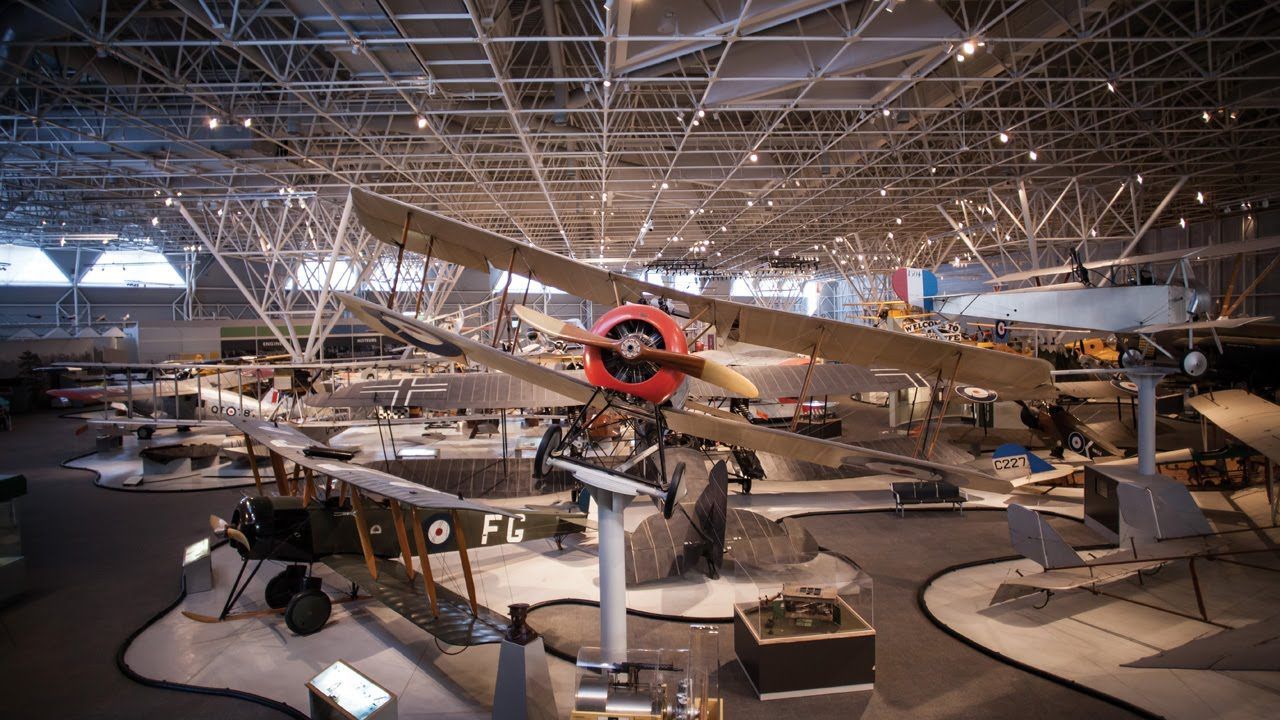
The Canada Aviation and Space Museum, located in Ottawa, Ontario, is one of the most comprehensive aviation museums in the world and the premier institution of its kind in Canada. It showcases the country’s rich history of flight and space exploration, from the earliest biplanes to cutting-edge spacecraft technology.
The museum’s vast collection includes more than 130 aircraft and artifacts representing civil, military, and experimental aviation. Visitors can see iconic planes such as the Avro Arrow, the Silver Dart (Canada’s first powered aircraft), and Second World War fighters like the Spitfire and Hurricane. There’s also an impressive section dedicated to Canadian contributions to space exploration, including displays about the Canadarm, satellite technology, and the role of Canadian astronauts in international missions.
What makes the museum unique is its hands-on, immersive experience. Guests can climb into the cockpits of select aircraft, take guided tours of the restoration hangars, or even book a real sightseeing flight over Ottawa in a vintage Waco UPF-7 biplane (available seasonally). Interactive exhibits explain the physics of flight and the engineering challenges behind space travel, making it an engaging experience for visitors of all ages.
A lesser-known fact is that the museum sits on the site of a former Royal Canadian Air Force base, and its origins date back to 1964, when the National Aeronautical Collection was established. Another little-known feature is the Living History program, where retired pilots and engineers volunteer to share personal stories about the aircraft they flew or maintained — adding a deeply human dimension to the experience.
The Canada Aviation and Space Museum is located at 11 Aviation Parkway, in Ottawa, Ontario, Canada. It sits along the Ottawa River, just 10 minutes northeast of downtown Ottawa and close to the Rockcliffe Airport.
To get there:
The museum’s location offers not only history and technology but also beautiful natural surroundings, making it a great addition to a full day of sightseeing in the capital.
The Canada Aviation and Space Museum is more than a collection of aircraft — it’s a journey through Canada’s technological spirit, courage, and imagination. From early bush pilots who connected remote regions to astronauts who ventured beyond Earth’s atmosphere, the museum celebrates the nation’s boundless drive to explore. Whether you’re an aviation enthusiast, a history lover, or simply curious about humanity’s quest to fly, this Ottawa landmark offers an inspiring and educational experience that soars above expectations.
1. When was the museum founded?
The museum was established in 1964 as the National Aeronautical Collection and became the Canada Aviation and Space Museum in 1982.
2. What are the museum’s main highlights?
Key attractions include the Avro Arrow, Silver Dart, WWII aircraft, Canadarm, and the space exploration gallery.
3. Is it suitable for children?
Yes, the museum is very family-friendly, featuring hands-on activities, simulators, and a dedicated Kids’ Zone.
4. How long should I spend there?
Most visitors spend 2 to 3 hours, though aviation enthusiasts may want to stay longer.
5. Is there parking available?
Yes, there is ample on-site parking for a small daily fee.
6. Can I take a real flight?
Yes, visitors can book sightseeing flights in a vintage Waco UPF-7 biplane during the warmer months.
7. Is it open year-round?
Yes, the museum is open throughout the year, though operating hours may vary seasonally.
Discover more hidden gems you might love.
Rome
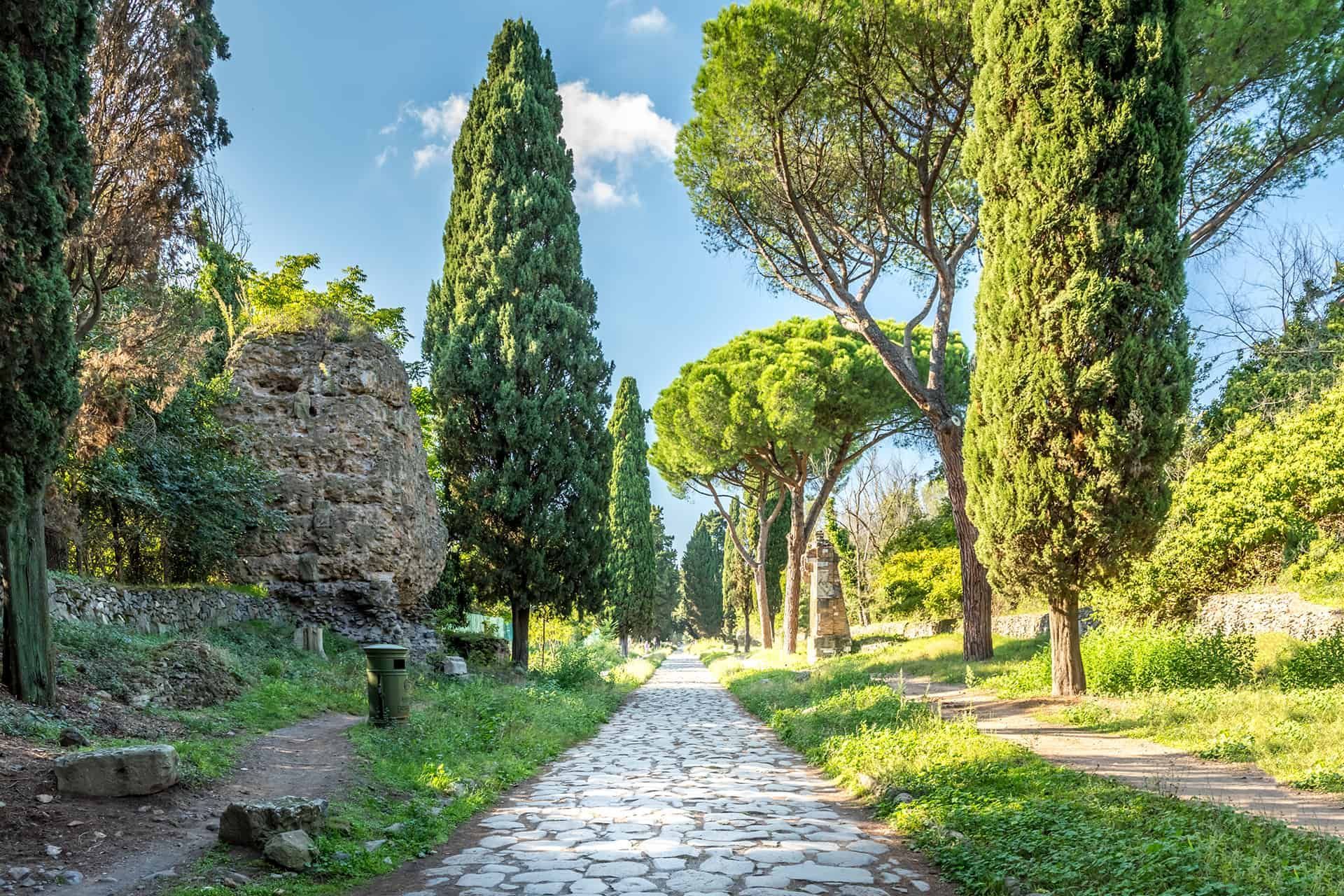
## Description The Appian Way (Via Appia Antica) is one of the most evocative ancient roads in Europe, running southeast from Rome and threading tombs, ruins, and the remains of Roman infrastructure through a pastoral corridor. Lined with funerary monuments and early Christian catacombs, sections of the route preserve original Roman paving and milestones that offer a tangible link to antiquity. Walking, cycling, or riding portions of the Appian Way reveals layers of history: imperial-era tombs, remains of villas, and quieter stretches where the path feels remarkably rural despite being inside Rome's larger urban boundary. Beyond the monuments, the Appian Way is also a public park and archaeological corridor, with protected areas that encourage slow exploration. Many travelers prefer to rent bicycles to cover more ground, though walking smaller stretches provides time to read inscriptions, visit specific catacombs, and take photographs without hurrying. Search-relevant phrases to plan a visit include "Appian Way Rome bike rental", "Via Appia Antica catacombs", and "walk the Appian Way"—terms that match travel guides and visitor resources. ## Location Via Appia Antica begins near the Aurelian Walls and continues southeast into the Roman countryside. Key visitor access points include the Appian Way Park Visitor Center and the areas near the Baths of Caracalla. Public transit options include buses that stop near the main entrances; taxis and bike rentals from central Rome are also common. Parts of the road become parkland with restricted car access, which makes cycling and walking safer and more pleasant. ## Tips - Rent a bike to see more of the route in a single visit: many rental shops offer city pickups and drop-offs near the park. - Visit catacombs with a guide: guided tours provide historical context and access to sites that close early or require reservations. - Wear durable shoes: while paved in places, many stretches have uneven ancient stones—sturdy footwear prevents slips and makes exploration easier. - Start early to avoid midday heat and to capture softer morning light for photography. - Bring water and snacks: services are limited along some stretches, so pack essentials for longer rides or walks. - Respect preservation rules: follow designated paths and do not remove artifacts or disturb archaeological features. ## Conclusion The Appian Way is a living museum and countryside escape rolled into one: accessible, atmospheric, and rich with Roman history. Whether you're cycling past tombs or pausing in a quiet olive grove, the route offers a memorable way to connect with ancient Rome's infrastructure and the everyday topography that shaped imperial travel. ## FAQ Q: How long is the Appian Way and how much can I cover in a day? A: The historic Appian Way stretches for many kilometers; most visitors focus on a 10–20 km segment near Rome that can be walked or cycled in a half-day to full-day depending on pace. Q: Are bicycles available for rent near the Appian Way? A: Yes—bike rental shops and guided bike tours operate from central Rome and near the park entrances. Q: Can I visit catacombs along the Appian Way without a guide? A: Some catacombs permit independent visits, but many recommend or require guided entry to provide context and control visitor numbers—check schedules in advance. Q: Is the Appian Way accessible year-round? A: Generally yes, though some sites and visitor centers follow seasonal hours; winter weather can be cooler and quieter, while spring and fall are popular. Q: Are there food and restroom facilities along the route? A: Basic facilities are available near major access points and visitor centers, but services are sparse in remote stretches—plan accordingly. ## Links - [Appian Way (Wikipedia)](https://en.wikipedia.org/wiki/Appian_Way)
GemVoyage Team • World
Barcelona
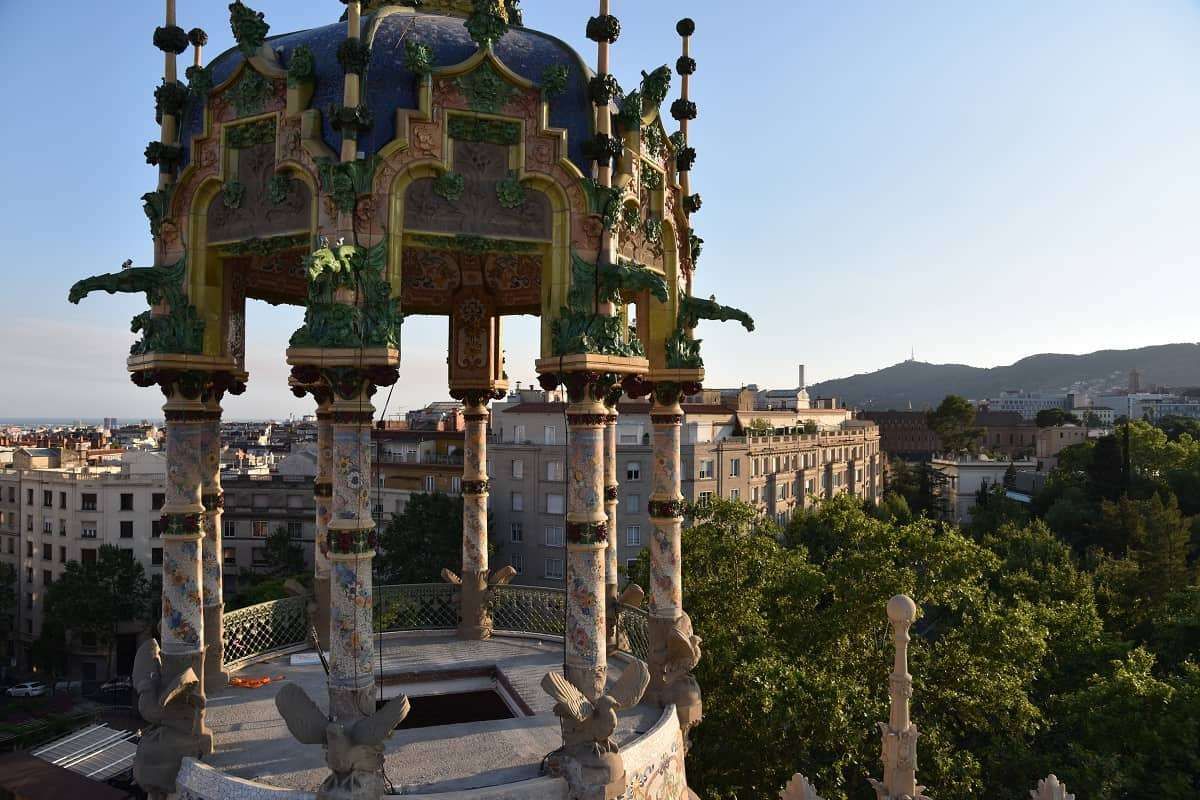
## Description **Torre Andreu**, more commonly known as **La Rotonda**, is one of Barcelona’s most distinctive yet often overlooked pieces of **Modernisme architecture**. Located at the upper edge of the city near the foothills of Tibidabo, this circular, turreted building looks more like a **fairytale castle than a residential structure**, making it one of the most visually unusual landmarks in Barcelona. The building was originally constructed in **1906** as a **luxury private residence** for a wealthy industrial family at a time when Barcelona’s elite were moving uphill away from the dense urban core. Its architectural language reflects the late phase of Catalan Modernisme, but with a lighter, more playful character than the monumental works of Gaudí. The structure’s curved form, decorative balconies, stained glass, floral stonework, and rooftop tower give it a **whimsical, almost theatrical presence**. What truly sets La Rotonda apart is its **cylindrical layout**, which is extremely rare in Barcelona’s residential architecture. While most Modernist buildings rely on flat façades and vertical symmetry, Torre Andreu embraces a soft, flowing geometry that produces constantly shifting perspectives as you walk around it. From different angles, the building seems to change character—from grand to intimate, from playful to mysterious. After serving as a private mansion, the building was later transformed into a **luxury hotel**, gaining the nickname “La Rotonda” due to its circular shape. Over the decades, it hosted visiting elites, business figures, and international guests. Its decline began in the late 20th century as the area lost its tourism focus, and the building passed through phases of limited use, abandonment, and restoration attempts. A little-known fact is that Torre Andreu spent many years in a **state of legal and architectural limbo**, with disputes over ownership and protection status delaying proper restoration. Another lesser-known detail is that its rooftops once hosted **social gatherings with views stretching across the entire city and toward the Mediterranean**, making it one of the most exclusive view points in pre-war Barcelona. Today, La Rotonda stands as a **symbol of architectural memory suspended between preservation and neglect**. While parts of the structure have undergone restoration at different times, it remains largely inaccessible to the public. Despite this, it continues to attract architects, photographers, and urban explorers who see it as a **ghost of Barcelona’s upper-class expansion era**, frozen between past luxury and uncertain future use. Emotionally, Torre Andreu is a place of contrast. It feels playful yet melancholic, elegant yet isolated. It reminds visitors that not all architectural masterpieces sit in crowded tourist centers—some survive quietly at the city’s edges, waiting to be rediscovered. ## Location **Torre Andreu (La Rotonda)** is located in the **Sant Gervasi–La Bonanova area**, near the start of **Avinguda del Tibidabo**, one of Barcelona’s most elegant upper-city avenues. **City:** Barcelona **Region:** Catalonia (Catalunya) **Country:** Spain **District:** Sarrià-Sant Gervasi **Nearby Landmark:** Plaça Kennedy ### How to Get There: * **By Tramvia Blau:** Take the historic **Blue Tram** from Plaça Kennedy up toward Tibidabo and get off at the early stops. * **By FGC (Train):** Take **FGC Line L7** to **Avinguda Tibidabo Station**, then walk about 10–12 minutes uphill. * **By bus:** Several lines from the city center serve Plaça Kennedy and Avinguda Tibidabo. * **By taxi:** A convenient option given the uphill location. * **By car:** Limited street parking is available; traffic can be heavy during peak hours. This location places La Rotonda along a scenic route that connects the city to **Tibidabo Mountain, the funicular, and the upper residential quarters**. ## Tips * **Admire it from the street:** The building is **not generally open to the public**, so plan for an exterior visit. * **Visit during daylight:** Details in stone, glass, and ironwork are best visible in strong natural light. * **Combine with Avinguda Tibidabo:** The walk itself features some of Barcelona’s most impressive mansions. * **Photography enthusiasts:** A wide-angle lens works best due to the building’s curved geometry. * **Do not expect tourist facilities:** No tickets, gift shops, or official visitor services are available on-site. * **Urban-exploration atmosphere:** The charm lies in observing a historic building existing quietly within daily city life. * **Respect private property limits:** Security patrols may restrict close access to entrances. ## Conclusion **Torre Andreu (La Rotonda)** is one of Barcelona’s most unusual Modernist buildings—**playful in form, dramatic in history, and quiet in presence**. Once a symbol of luxury living at the city’s upper edge, it now stands as a reminder that architectural brilliance does not always remain in the spotlight. For those willing to explore beyond the standard tourist circuit, La Rotonda offers a rare encounter with **Barcelona’s forgotten elegance and unresolved heritage**. ## FAQ **1. Why is Torre Andreu called “La Rotonda”?** Because of its **distinct circular shape**, which is rare in Barcelona’s residential architecture. **2. Can visitors go inside La Rotonda?** No. It is **not generally open to the public** and is viewed from the exterior only. **3. Who designed Torre Andreu?** It was designed in the early 20th century in the **Catalan Modernisme style**, attributed to architect **Adolf Ruiz i Casamitjana**. **4. Was it always a hotel?** No. It was originally built as a **private luxury residence** and later converted into a hotel. **5. Is Torre Andreu protected as a heritage site?** Yes. It is recognized as part of **Barcelona’s protected architectural heritage**, though restoration has been slow. **6. How long does a visit typically take?** About **10 to 20 minutes**, mainly for observation and photography. ## Links * [Visit Barcelona](https://www.barcelonaturisme.com)
GemVoyage Team • World
Munich
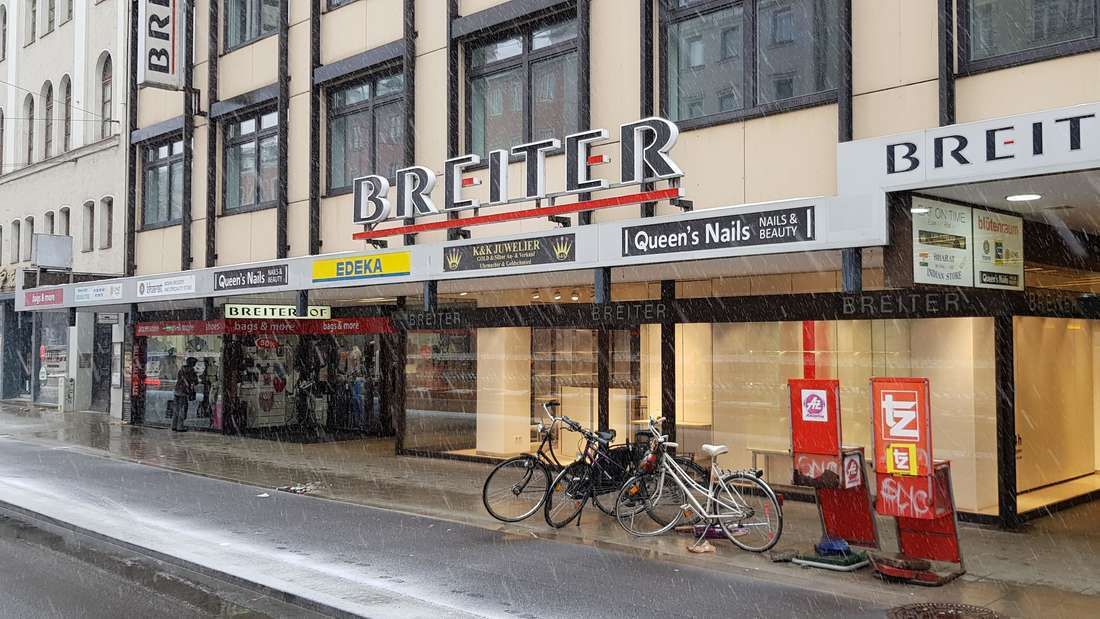
## Description **Breiterhof Passage** is a discreet but culturally significant pedestrian passageway in the heart of Munich’s old town. Unlike the city’s grand squares or monumental avenues, Breiterhof Passage represents a more **intimate layer of urban history**, where commerce, architecture, and everyday life intersect quietly rather than dramatically. The passage dates back to the **postwar reconstruction period**, when Munich rebuilt much of its historic core after World War II. Instead of restoring medieval structures wholesale, planners integrated modern functionality with traditional urban patterns. Breiterhof Passage exemplifies this approach: a short, covered walkway connecting streets while sheltering small shops, cafés, and offices. Its modest scale reflects a deliberate choice to prioritize **human movement and local commerce** over architectural spectacle. What makes Breiterhof Passage unique is its **contrast with Munich’s surrounding grandeur**. Just steps away from busy shopping streets and historic landmarks, the passage offers a slower, enclosed environment that feels almost private. A lesser-known fact is that passages like Breiterhof were designed to maintain pedestrian permeability in dense urban blocks, preserving historic movement patterns even when buildings were rebuilt. Another overlooked detail is that many businesses here are long-standing local operations rather than international chains, giving the space a distinctly Munich character. The passage is not a destination in itself, but a **transitional urban experience**. It rewards attentive visitors who appreciate the city’s smaller architectural gestures and the continuity of everyday life embedded within them. ## Location **Country:** Germany **State:** Bavaria **City:** Munich **District:** Altstadt-Lehel Breiterhof Passage is located in Munich’s historic center, close to major shopping streets and within easy walking distance of Marienplatz. ### How to Get There * **By metro or S-Bahn:** * Travel to **Marienplatz** station, then walk approximately 3–5 minutes. * **By tram:** * Several tram lines stop near the old town perimeter, followed by a short walk. * **On foot:** * Ideal when exploring Altstadt-Lehel, as the passage connects naturally to pedestrian routes. * **By bicycle:** * Bike parking is available nearby, though cycling through the passage itself is not permitted. ## Tips * **Visit during business hours:** The passage is most lively when shops and cafés are open. * **Look beyond storefronts:** Architectural details and spatial proportions are easy to miss if rushed. * **Use it as a shortcut:** It provides a calmer alternative to crowded shopping streets. * **Combine with old town exploration:** It fits naturally into a walking itinerary through central Munich. * **Respect the quiet tone:** This is a working urban space, not a tourist attraction. * **Photography is permitted:** Be mindful of people working or dining inside. ## Conclusion Breiterhof Passage is a subtle reminder that cities are shaped as much by small connective spaces as by major landmarks. Modest, functional, and quietly local, it offers insight into Munich’s postwar urban identity and everyday rhythms. ## FAQ **1. Is Breiterhof Passage a tourist attraction?** No, it is primarily a functional pedestrian passage used by locals. **2. Is there an entrance fee?** No, access is completely free. **3. How long does it take to visit?** Only a few minutes, unless stopping at a café or shop. **4. Is it historically significant?** Yes, as part of Munich’s postwar reconstruction and pedestrian network. **5. Is it suitable for children?** Yes, though there are no child-specific activities. **6. Can it be visited at night?** Access may vary depending on building hours, but daytime visits are recommended. ## Links * [Munich tourism board](https://www.munich.travel)
GemVoyage Team • World
Lisbon
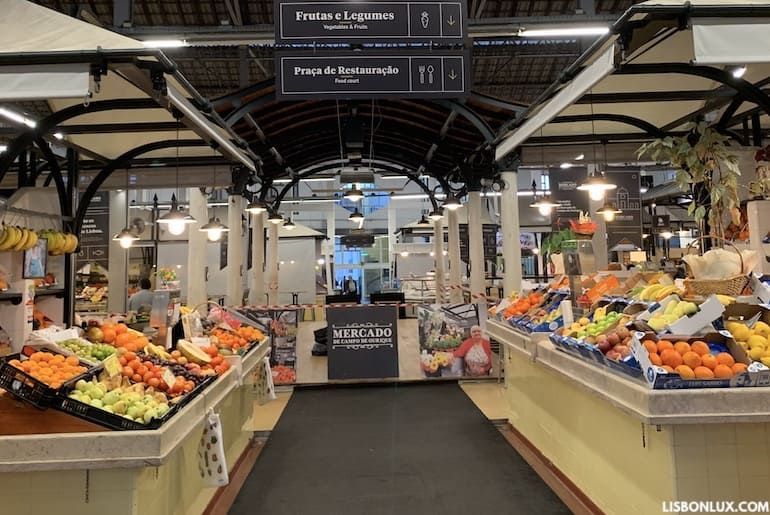
## Description Mercado de Campo de Ourique is a lively neighborhood market in Lisbon that blends traditional market stalls with contemporary food vendors, offering an authentic cross-section of Portuguese culinary life. The market serves locals with fresh produce, fish, meat and pantry items, while an inner food-hall atmosphere provides ready-to-eat dishes, pastries and coffee. What sets Campo de Ourique apart is its local, residential character — it’s not just a tourist attraction but a functioning community hub where Lisbon residents shop and socialize. The market’s architecture is typically covered and airy, with stalls organized around central aisles. Recent renovations have injected a modern food-court vibe alongside still-active traditional vendors, making it a place where you can buy grocery staples in the morning and return later for a relaxed meal. Little-known facts: Campo de Ourique historically developed as a self-contained neighborhood with a strong shopping tradition, and the market has long been a point where multiple culinary generations intersect. ## Location Mercado de Campo de Ourique sits in the Campo de Ourique neighborhood in Lisbon, Portugal, in the western part of central Lisbon near the Estrela and Rato districts. The neighborhood is primarily residential with shops, bakeries and small restaurants lining the streets. Getting there: The neighborhood is accessible by tram, bus and metro. The Rato Metro station and several bus lines serve the area; trams and short walks from nearby attractions make it easy to combine a market visit with broader neighborhood exploration. Taxis and rideshares can drop you near the market’s main entrance. ## Tips - Best times: Morning is ideal for shopping fresh produce and avoiding lunch crowds; midday is excellent for sampling prepared dishes. - What to try: Don’t miss fresh pastries, Portuguese cheeses, cured meats and regional specialties. Many stalls offer ready-to-eat plates — ask vendors for local recommendations. - Payment: Vendors accept cards and cash; small stalls may prefer cash for tiny purchases. - Local etiquette: Bring a reusable bag for purchases; be polite in queues and avoid blocking aisles when tasting or photographing. - Combine visits: Explore nearby bakeries and cafés in Campo de Ourique for a fuller neighborhood taste. ## Conclusion Mercado de Campo de Ourique offers a warm, authentic Lisbon market experience where traditional shopping and contemporary food culture coexist. It’s perfect for visitors seeking genuine neighborhood life, excellent local food and the chance to taste Portuguese everyday cuisine alongside longtime market traditions. ## FAQ Q: Is the market touristy? A: It retains a strong local clientele, though visitors are welcome and many stalls cater to diverse tastes. Q: Are there vegetarian options? A: Yes. Many vendors and food stalls offer vegetarian and vegan-friendly dishes. Q: Can I take food to go? A: Absolutely; many stalls prepare takeaway plates and sandwiches. Q: Is parking available nearby? A: Street parking and small public car parks exist, but public transport is recommended. ## Links [Lisbon Travel Guide](https://www.visitlisboa.com/en)
GemVoyage Team • World
Lille
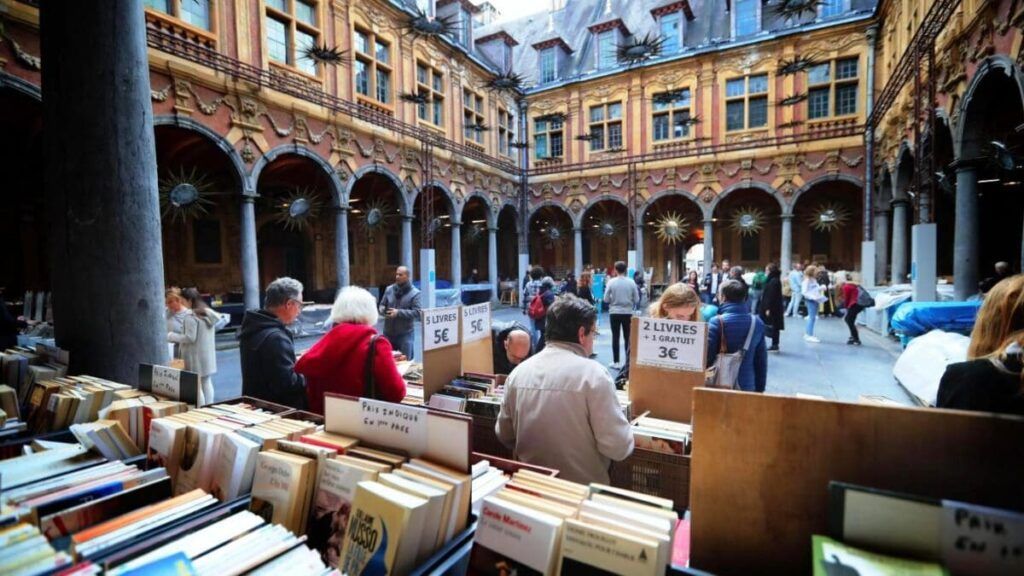
## Description The Vieille Bourse Book Market is one of Lille's most charming cultural experiences because it takes place inside a splendid 17th-century building that already feels like a work of art before the books even appear. The old stock exchange, known as the Vieille Bourse, frames a courtyard where book sellers, collectors, and occasional flower vendors gather under elegant arcades. The result is an atmosphere that feels intimate, intellectual, and unmistakably French, but with enough spontaneity to keep it from feeling formal or sterile. The market is particularly appealing for visitors who enjoy places with layered use. The building itself is a historical monument tied to Lille's commercial past, while the courtyard market represents an entirely different kind of exchange: ideas, stories, secondhand finds, and casual conversation. Instead of gold, shares, or mercantile records, the courtyard now trades in books, prints, and hidden treasures. That transformation gives the site a quiet symbolism that many travelers appreciate once they pause long enough to look around. One little-known fact is that the building was originally linked to the city's prosperous trading culture and was designed to reflect civic confidence as much as practical commerce. Another detail many visitors miss is that the courtyard often hosts more than books; during various times, chess players, collectors, and casual strollers also animate the space, making it a flexible urban room rather than a fixed monument. This flexibility is part of what makes the market memorable. It feels like Lille has turned an old commercial building into a living social space without losing its historical dignity. For book lovers, the experience can be surprisingly rewarding. You may not always find rare editions, but you often find character, atmosphere, and small discoveries that feel more personal than shopping in a modern chain store. Even if you do not buy anything, the combination of architecture, browsing, and street life makes the market a strong reason to spend time in Lille's center. ## Location The Vieille Bourse Book Market is in central Lille, in the Hauts-de-France region of France, around Place du Général de Gaulle. The building sits in one of the city's most walkable and recognizable areas, close to the Grand'Place and not far from Lille's main retail streets, cafés, and public transit stops. Because the site is in the heart of the city center, reaching it is easy whether you arrive by train, metro, bus, or on foot. If you are coming from Lille-Flandres station, the market is a short and simple walk away. That makes it ideal for a first stop after arriving in the city. The surrounding streets are also excellent for a broader walking loop through the old center, with historic façades, public squares, and food stops nearby. The best recommendation is to visit on a day when the courtyard market is active and to combine the stop with a coffee, lunch, or an extended walk through downtown Lille. Because the city center is compact and pleasant to explore, the market fits naturally into a half-day or full-day itinerary. ## Tips Go when the market is open and allow yourself time to browse slowly. The best finds are often the ones you were not actively searching for, and the courtyard rewards casual wandering rather than targeted shopping. Bring cash just in case, although many sellers may also accept other forms of payment. If you are interested in books, ask about editions, language, and condition politely. The vendors are usually used to casual browsers as well as serious collectors. Visit the market as part of a wider Lille center walk. The surrounding architecture is as rewarding as the books themselves, and the contrast between the lively square outside and the quiet courtyard inside helps explain why the site is so beloved. If you enjoy photography, the courtyard light can be beautiful when it filters through the arcades. Still, be considerate of sellers and visitors who are there to browse, not to perform for the camera. ## Conclusion The Vieille Bourse Book Market is a small but memorable part of Lille, combining architecture, literary browsing, and an inviting courtyard atmosphere in one elegant historic setting. ## FAQ ### What is sold at the Vieille Bourse Book Market? Mostly secondhand books, but you may also find prints, magazines, and other collectible paper goods. ### When is the market open? It typically appears on specific days and times, so checking the local schedule before visiting is a good idea. ### Is the Vieille Bourse itself worth seeing? Yes. The building is a major historic landmark and worth visiting even if the book market is not operating that day. ### How long do I need there? The market itself can be seen in a short visit, but most people stay longer to browse and enjoy the surrounding square. ## Links - [Lille tourism](https://www.lilletourism.com/) - [Wikipedia article](https://en.wikipedia.org/wiki/Vieille_Bourse)
GemVoyage Team • World

Rome
## Description Janiculum Hill (Gianicolo) stands as one of Rome’s most rewarding scenic vantage points, offering sweeping panoramas of the city’s rooftops, domes and spires, with St. Peter’s Basilica prominently on the skyline. Unlike the classical seven hills of ancient Rome, Janiculum sits to the west of the Tiber and has a distinct character: it combines leafy public gardens, impressive monuments to Italy’s 19th-century unification heroes, and pockets of quiet away from the densest tourist routes. Visitors come to linger on terraces and balustrades, photograph the city at golden hour, and stroll the shaded promenades lined with cypress and plane trees. What makes Janiculum special is its layered atmosphere — it’s part memorial, part urban park and part living neighborhood. Statues and memorials, including the commanding equestrian statue of Giuseppe Garibaldi, recall Italy’s Risorgimento period and add historic depth to the views. The hill is studded with small chapels, fountains such as the striking Fontana dell'Acqua Paola (also called Il Fontanone), and hidden viewpoints that look across the Tiber to the heart of ancient Rome. Little-known facts: Janiculum is home to several international monuments (including busts and memorials to foreign volunteers who fought for Italy) and there’s a long-standing local tradition of a noon cannon shot — a historical custom that punctuates the day and ties the hill into Rome’s lived rituals. ## Location Janiculum Hill is located in Rome, Lazio region, Italy, on the west bank of the Tiber River opposite the historic Trastevere and the ancient core of the city. The main terraces and the most frequented viewpoints cluster along the Via Garibaldi and the Passeggiata del Gianicolo, a ridge that runs north-south. The nearest neighborhoods are Trastevere (below the hill) and the residential Monteverde and Gianicolense districts. To get there: from central Rome, one of the most pleasant routes is to walk up from Piazza Trilussa in Trastevere and ascend via the Viale del Gianicolo or the stairways that connect Trastevere’s lanes to the hill’s terraces. Public transport options include buses that serve nearby stops (check local routes such as lines that head to Trastevere and Monteverde) or taking tram/bus to the Trastevere rail station and walking up. Taxis or ride-hailing services can drop you near the top terraces for a short walk. For visitors who prefer a guided introduction, many walking tours of Trastevere and the Janiculum combine history and views. ## Tips - Timing: For the most stunning light, aim for the hour before sunset (golden hour) for warm, cinematic views and photographs. Early morning offers quieter conditions and softer light. The hill can be breezy in late afternoon. - Crowds: The terraces are popular but not overcrowded like central squares. Weekdays and early mornings are best to avoid local visitors during weekends. - Security & comfort: Pickpocketing is less common here than in dense tourist hubs, but keep usual precautions. Wear comfortable shoes for cobbled paths and steps. - Amenities: There are a few cafés and kiosks nearby, but consider bringing water, especially in summer. Public restrooms are limited; plan accordingly. - Seasons: Spring and autumn are ideal for pleasant temperatures; summer can be hot and busier. Winter offers crisp air and clearer long-distance visibility on good days. - Photography: Bring a zoom lens for close-ups of city details and a wide angle for sweeping skyline shots. Some viewpoints are fenced; respect barriers and private property. ## Conclusion Janiculum Hill is a peaceful, evocative corner of Rome where panoramic views meet commemorative monuments and shady walks. It rewards visitors who step just a little off the busiest tourist routes with moments of true perspective—on the city’s urban spread, its historical layers, and its daily life. Whether you come for sunset, a reflective stroll among monuments, or to trace lesser-known aspects of modern Italian history, Janiculum offers an intimate, memorable encounter with Rome. ## FAQ Q: Is Janiculum Hill within walking distance from the historic center? A: Yes. From Trastevere and several central points it is a manageable walk; stairways and slopes connect it to the historic center. Q: Is there an entrance fee? A: No. Janiculum’s public terraces and gardens are free to visit. Q: Are there guided tours available? A: Yes. Many walking tours of Trastevere and specialized history tours include Janiculum; private guides can provide deeper context on the monuments. Q: Is the area safe at night? A: Generally yes, but standard urban precautions apply—stick to well-lit areas and main promenades. Q: Can I drive up? A: Driving is possible to some upper roads and viewpoints, but parking is limited. A drop-off is convenient. ## Links [Wikipedia: Gianicolo (Janiculum)](https://en.wikipedia.org/wiki/Janiculum) [Roma Turismo / Visit Rome (official tourism guides)](https://www.turismoroma.it)
GemVoyage Team • World

Comments